

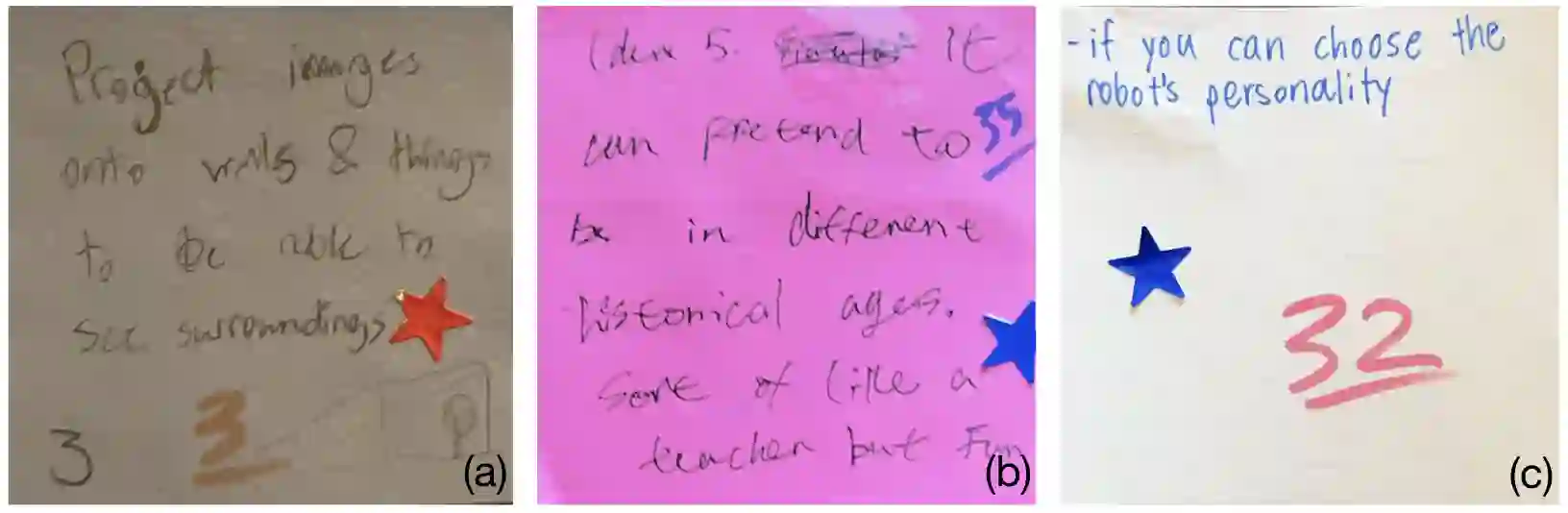
Fun acts as a catalyst for learning by enhancing motivation, active engagement and knowledge retention. As social robots gain traction as educational tools, understanding how their unique affordances can be leveraged to cultivate fun becomes crucial. This research investigates the concept of fun in educational games involving social robots to support the design of REMind:a robot-mediated role-play game aimed at encouraging bystander intervention against peer bullying among children. To incorporate fun elements into design of REMind, we conducted a user-centered Research through Design (RtD) study with focus groups of children to gain a deeper understanding of their perceptions of fun. We analyzed children's ideas by using Framework Analysis and leveraging LeBlanc's Taxonomy of Game Pleasures and identified 28 elements of fun that can be incorporated into robot-mediated games. We present our observations, discuss their impact on REMind's design, and offer recommendations for designing fun educational games using social robots.
翻译:趣味性通过增强动机、促进主动参与和提升知识保持能力,成为学习的催化剂。随着社交机器人作为教育工具日益普及,理解如何利用其独特的功能特性来培养趣味性变得至关重要。本研究探讨了涉及社交机器人的教育游戏中的趣味性概念,以支持REMind的设计:这是一款旨在鼓励儿童对同伴欺凌行为进行旁观者干预的机器人介导角色扮演游戏。为了将趣味元素融入REMind的设计,我们采用以用户为中心的设计研究法,通过儿童焦点小组深入了解他们对趣味性的认知。我们运用框架分析法,结合LeBlanc的游戏愉悦分类学,对儿童的设计理念进行分析,识别出28种可融入机器人介导游戏的趣味元素。我们展示了观察结果,讨论了这些发现对REMind设计的影响,并为利用社交机器人设计趣味性教育游戏提出了建议。





相关内容





 微信扫码咨询专知VIP会员