

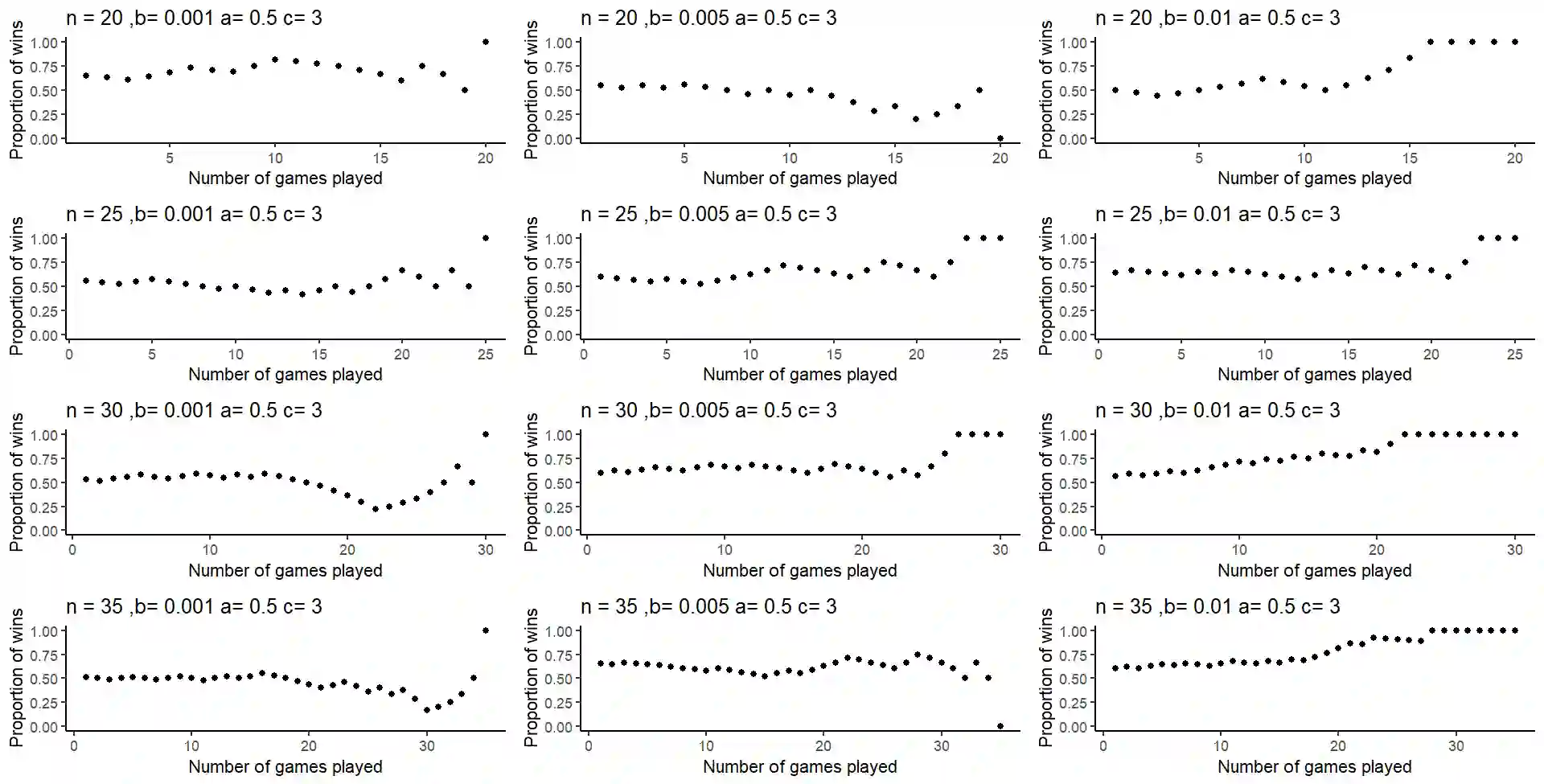
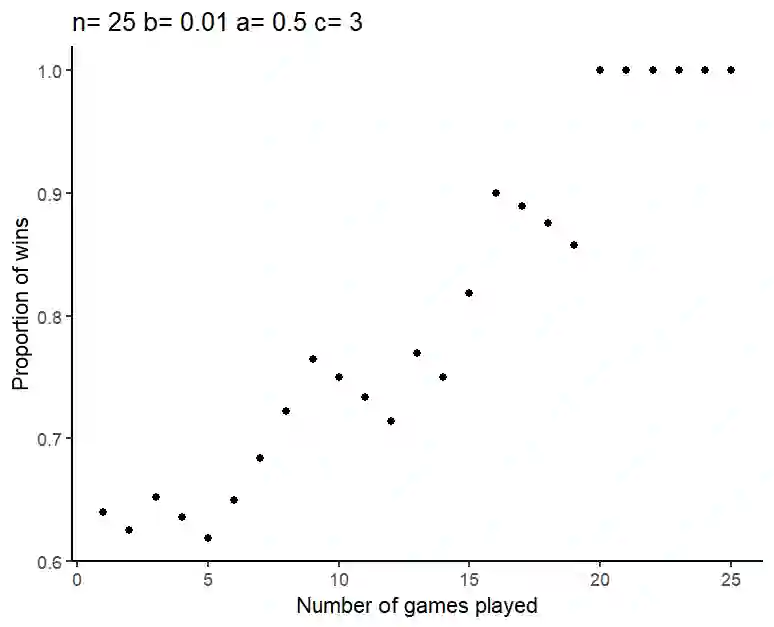
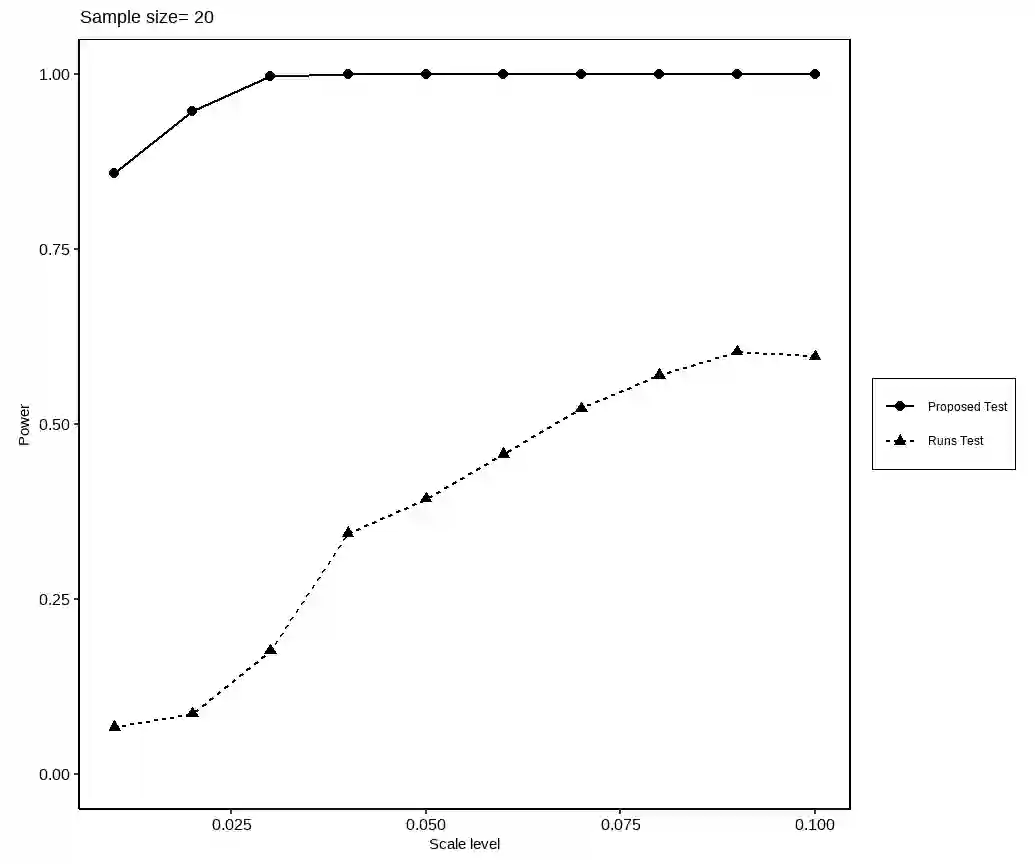
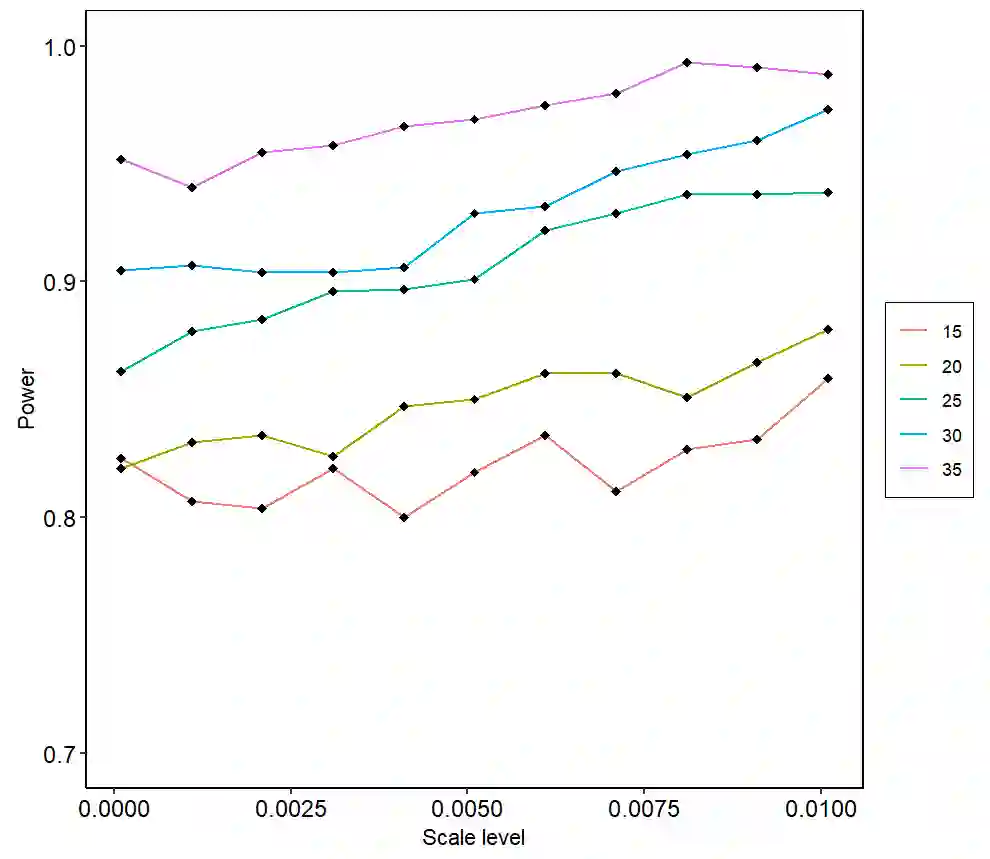
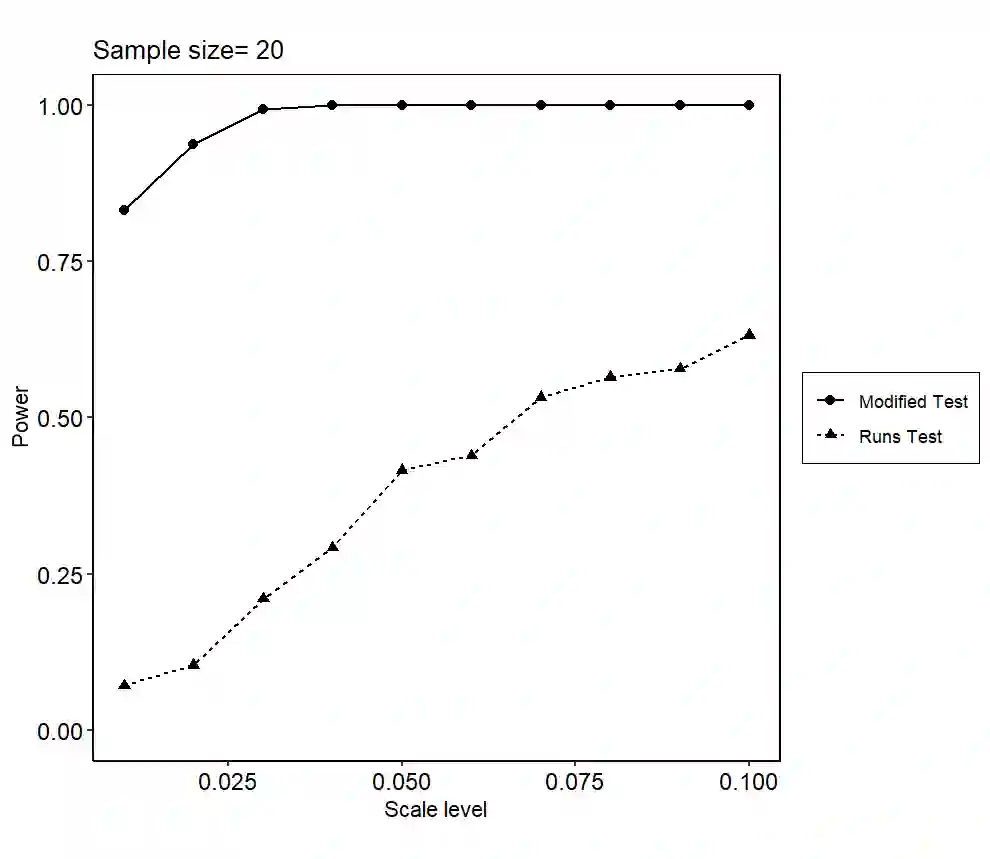
In many circumstances given an ordered sequence of one or more types of elements/ symbols, the objective is to determine any existence of randomness in occurrence of one of the elements,say type 1 element. Such a method can be useful in determining existence of any non-random pattern in the wins or loses of a player in a series of games played. Existing methods of tests based on total number of runs or tests based on length of longest run (Mosteller (1941)) can be used for testing the null hypothesis of randomness in the entire sequence, and not a specific type of element. Additionally, the Runs Test tends to show results contradictory to the intuition visualised by the graphs of say, win proportions over time due to method used in computation of runs. This paper develops a test approach to address this problem by computing the gaps between two consecutive type 1 elements and thereafter following the idea of "pattern" in occurrence and "directional" trend (increasing, decreasing or constant), employs the use of exact Binomial test, Kenall's Tau and Siegel-Tukey test for scale problem. Further modifications suggested by Jan Vegelius(1982) have been applied in the Siegel Tukey test to adjust for tied ranks and achieve more accurate results. This approach is distribution-free and suitable for small sizes. Also comparisons with the conventional runs test shows the superiority of the proposed approach under the null hypothesis of randomness in the occurrence of type 1 elements.
翻译:在许多情况下,给定一个由一种或多种类型元素/符号组成的有序序列,目标是确定其中某一类元素(例如类型1元素)出现时是否存在随机性。这类方法可用于判断玩家在一系列比赛中胜负结果是否存在非随机模式。现有基于游程总数或最长游程长度的检验方法(Mosteller, 1941)仅适用于检验整个序列的随机性原假设,而无法针对特定类型元素。此外,由于游程计算方式的差异,游程检验的结果往往与直观观察(例如随时间变化的胜率图)相矛盾。本文提出一种解决该问题的检验方法:首先计算连续类型1元素之间的间隔,随后基于“模式”出现与“方向性”趋势(递增、递减或恒定)的概念,采用精确二项检验、Kendall's Tau 及 Siegel-Tukey 尺度检验。在 Siegel-Tukey 检验中,应用了 Jan Vegelius(1982)提出的改进方案以处理秩次结(ties)并获得更精确结果。该方法无分布假设且适用于小样本。与传统游程检验的对比表明,在类型1元素出现的随机性原假设下,本方法具有更优性能。




相关内容



 微信扫码咨询专知VIP会员