

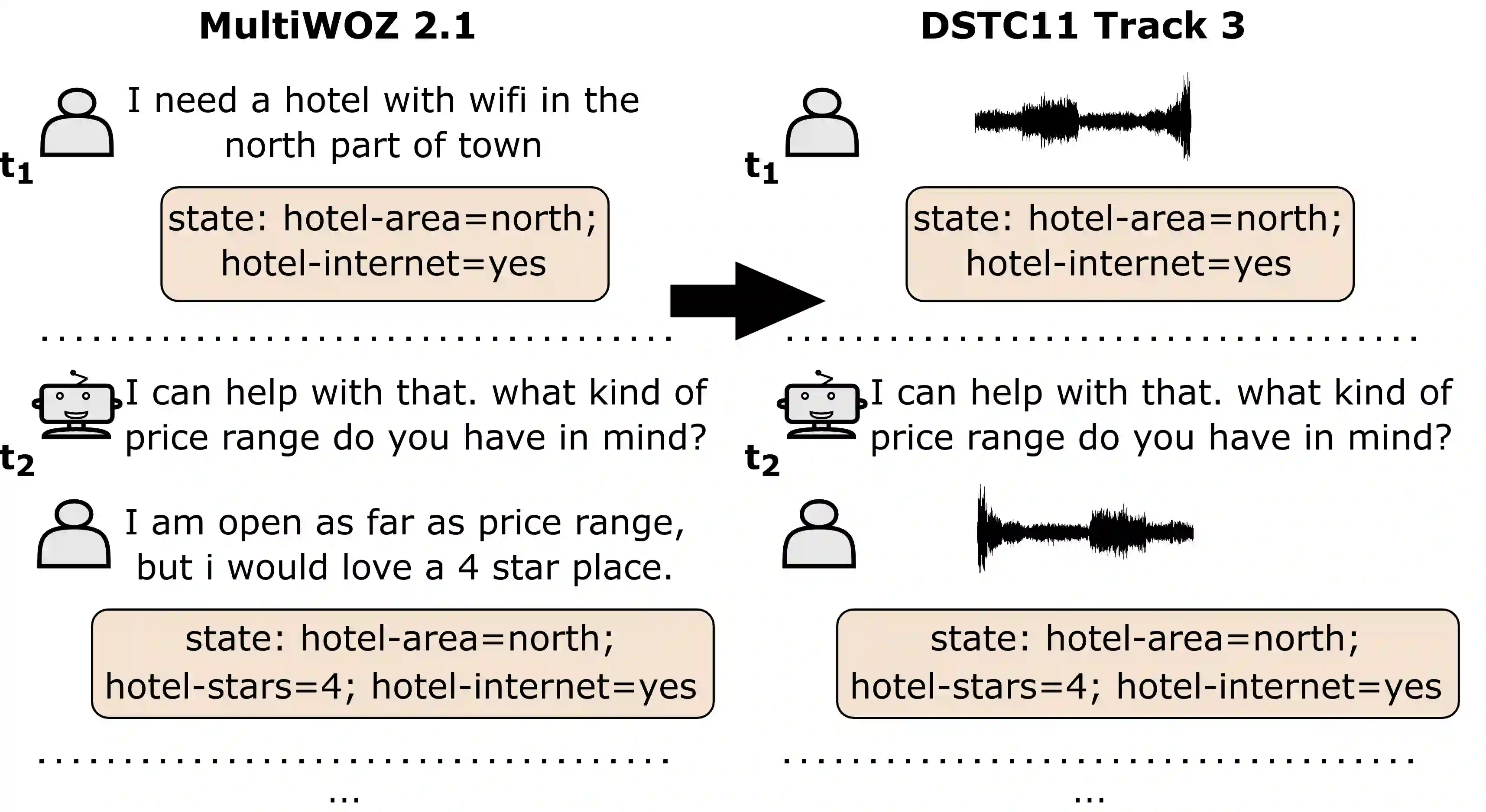
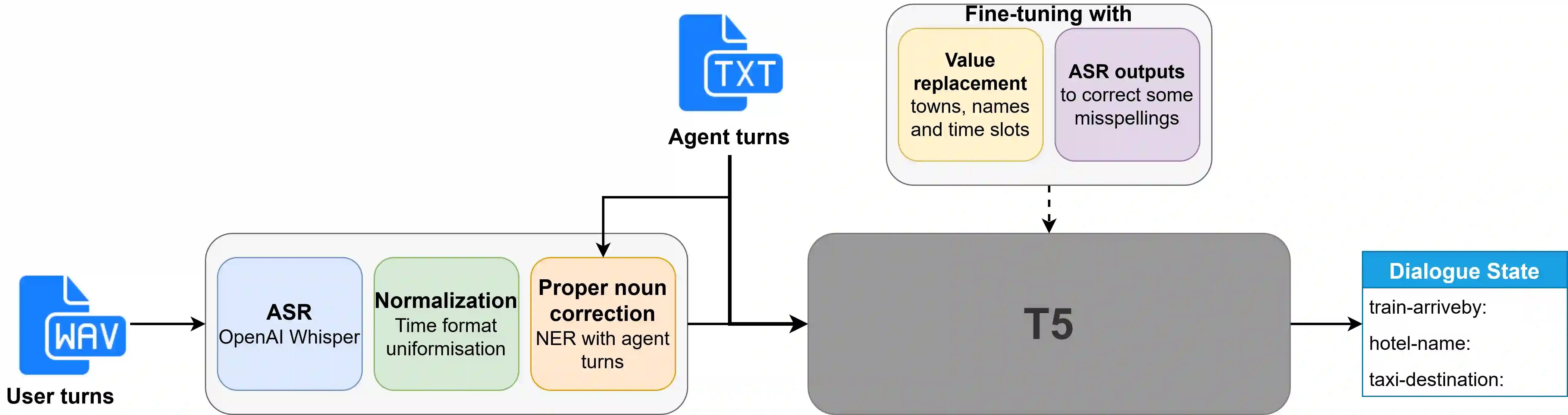
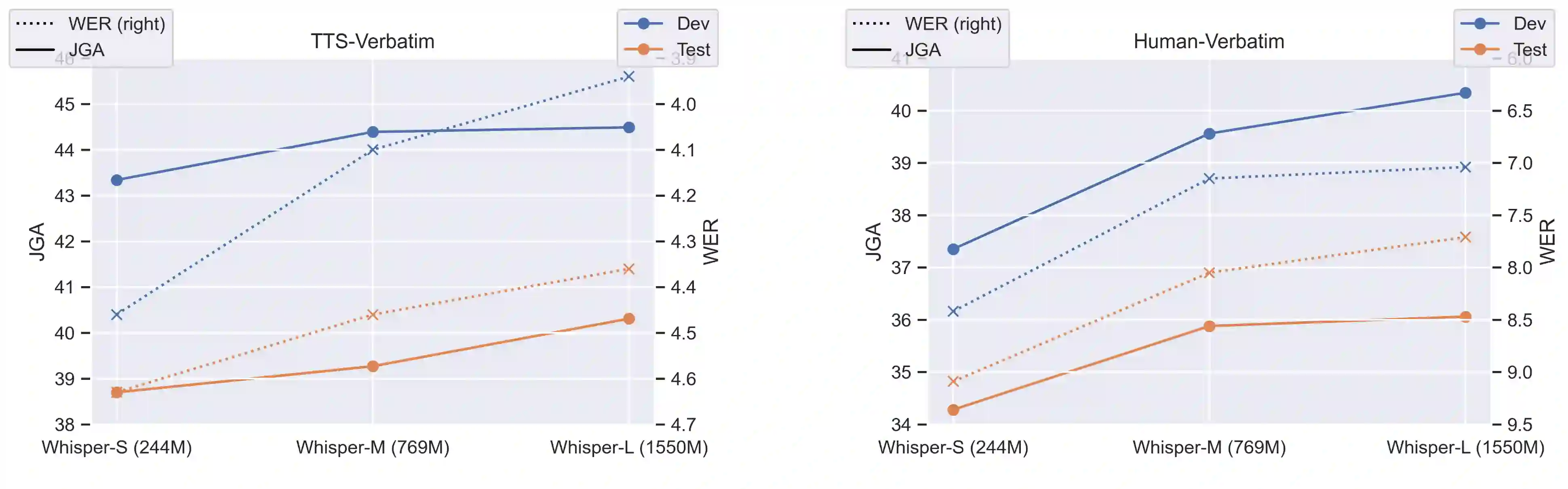
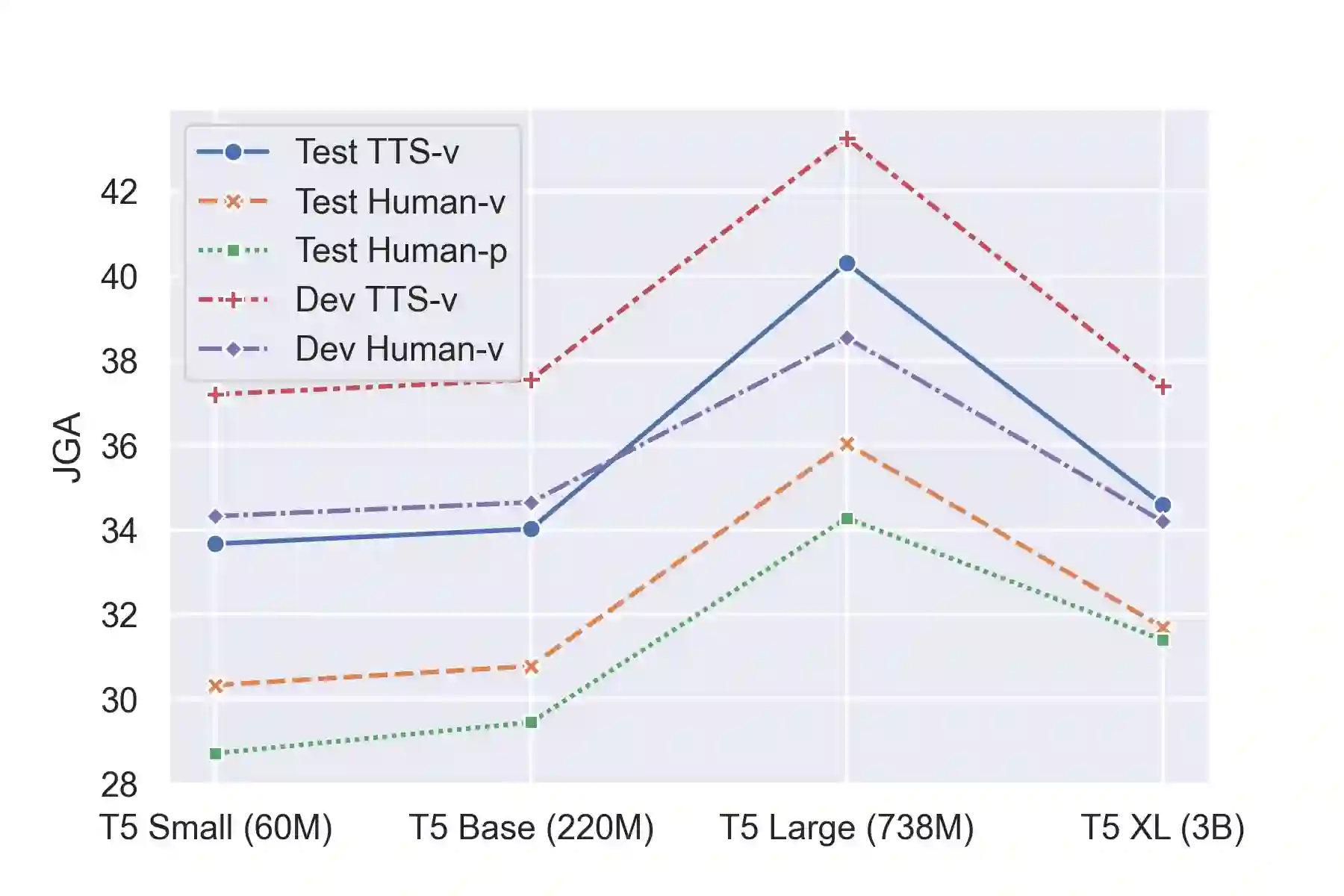
Though Dialogue State Tracking (DST) is a core component of spoken dialogue systems, recent work on this task mostly deals with chat corpora, disregarding the discrepancies between spoken and written language.In this paper, we propose OLISIA, a cascade system which integrates an Automatic Speech Recognition (ASR) model and a DST model. We introduce several adaptations in the ASR and DST modules to improve integration and robustness to spoken conversations.With these adaptations, our system ranked first in DSTC11 Track 3, a benchmark to evaluate spoken DST. We conduct an in-depth analysis of the results and find that normalizing the ASR outputs and adapting the DST inputs through data augmentation, along with increasing the pre-trained models size all play an important role in reducing the performance discrepancy between written and spoken conversations.
翻译:尽管对话状态跟踪(DST)是口语对话系统的核心组件,但近期该领域研究大多针对聊天语料库,忽视了口语与书面语之间的差异。本文提出OLISIA级联系统,集成了自动语音识别(ASR)模型与DST模型。我们在ASR和DST模块中引入多项适应性调整,以提升系统整合性及对口语对话的鲁棒性。通过上述改进,本系统在DSTC11 Track 3(口语DST评估基准)中位列第一。我们对实验结果进行深度分析后发现:规范化ASR输出、通过数据增强适配DST输入,以及扩大预训练模型规模,均对缩小书面与口语对话间的性能差异具有重要作用。





相关内容




 微信扫码咨询专知VIP会员