

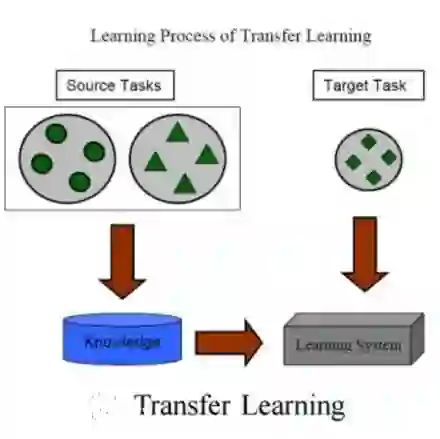
Deep learning-based intelligent vehicle perception has been developing prominently in recent years to provide a reliable source for motion planning and decision making in autonomous driving. A large number of powerful deep learning-based methods can achieve excellent performance in solving various perception problems of autonomous driving. However, these deep learning methods still have several limitations, for example, the assumption that lab-training (source domain) and real-testing (target domain) data follow the same feature distribution may not be practical in the real world. There is often a dramatic domain gap between them in many real-world cases. As a solution to this challenge, deep transfer learning can handle situations excellently by transferring the knowledge from one domain to another. Deep transfer learning aims to improve task performance in a new domain by leveraging the knowledge of similar tasks learned in another domain before. Nevertheless, there are currently no survey papers on the topic of deep transfer learning for intelligent vehicle perception. To the best of our knowledge, this paper represents the first comprehensive survey on the topic of the deep transfer learning for intelligent vehicle perception. This paper discusses the domain gaps related to the differences of sensor, data, and model for the intelligent vehicle perception. The recent applications, challenges, future researches in intelligent vehicle perception are also explored.
翻译:基于深度学习的智能车辆感知技术近年来发展显著,为自动驾驶中的运动规划与决策提供了可靠依据。大量基于深度学习的强大方法能够在解决自动驾驶各类感知问题时取得优异性能。然而,这些深度学习方法仍存在若干局限,例如,假设实验室训练数据(源域)与实际测试数据(目标域)遵循相同特征分布这一前提在现实世界中往往难以成立。在许多实际场景中,两者之间通常存在显著的领域差异。针对这一挑战,深度迁移学习通过将知识从一个领域迁移至另一领域,能够出色地处理此类情况。深度迁移学习旨在利用先前在其他领域学习到的相似任务知识,提升新领域中的任务性能。然而,目前尚无关于面向智能车辆感知的深度迁移学习主题的综述论文。据我们所知,本文首次对面向智能车辆感知的深度迁移学习主题进行了全面综述。本文讨论了与智能车辆感知中传感器、数据和模型差异相关的领域差距,并探讨了智能车辆感知领域的最新应用、面临的挑战及未来研究方向。




相关内容



 微信扫码咨询专知VIP会员