

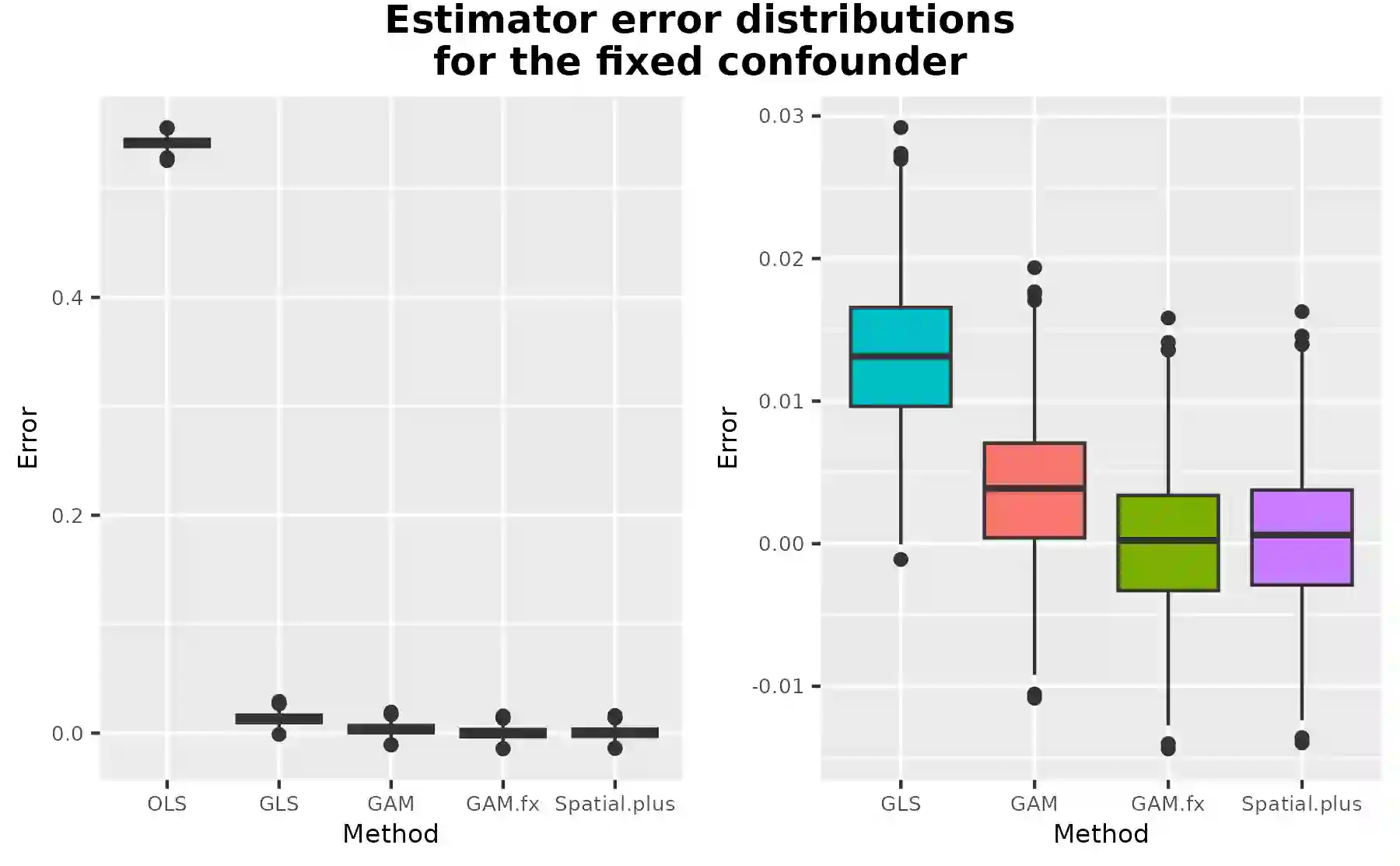
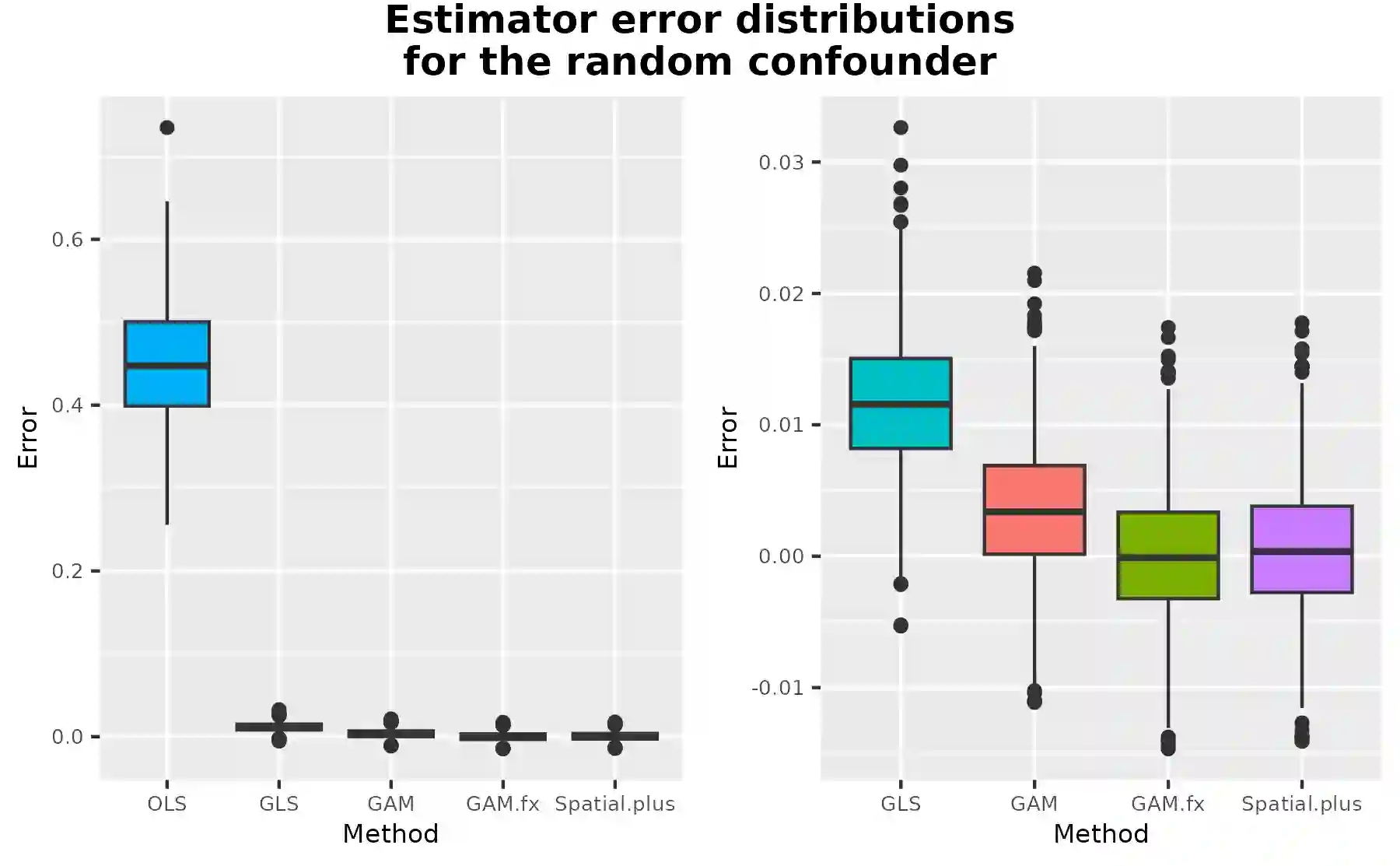
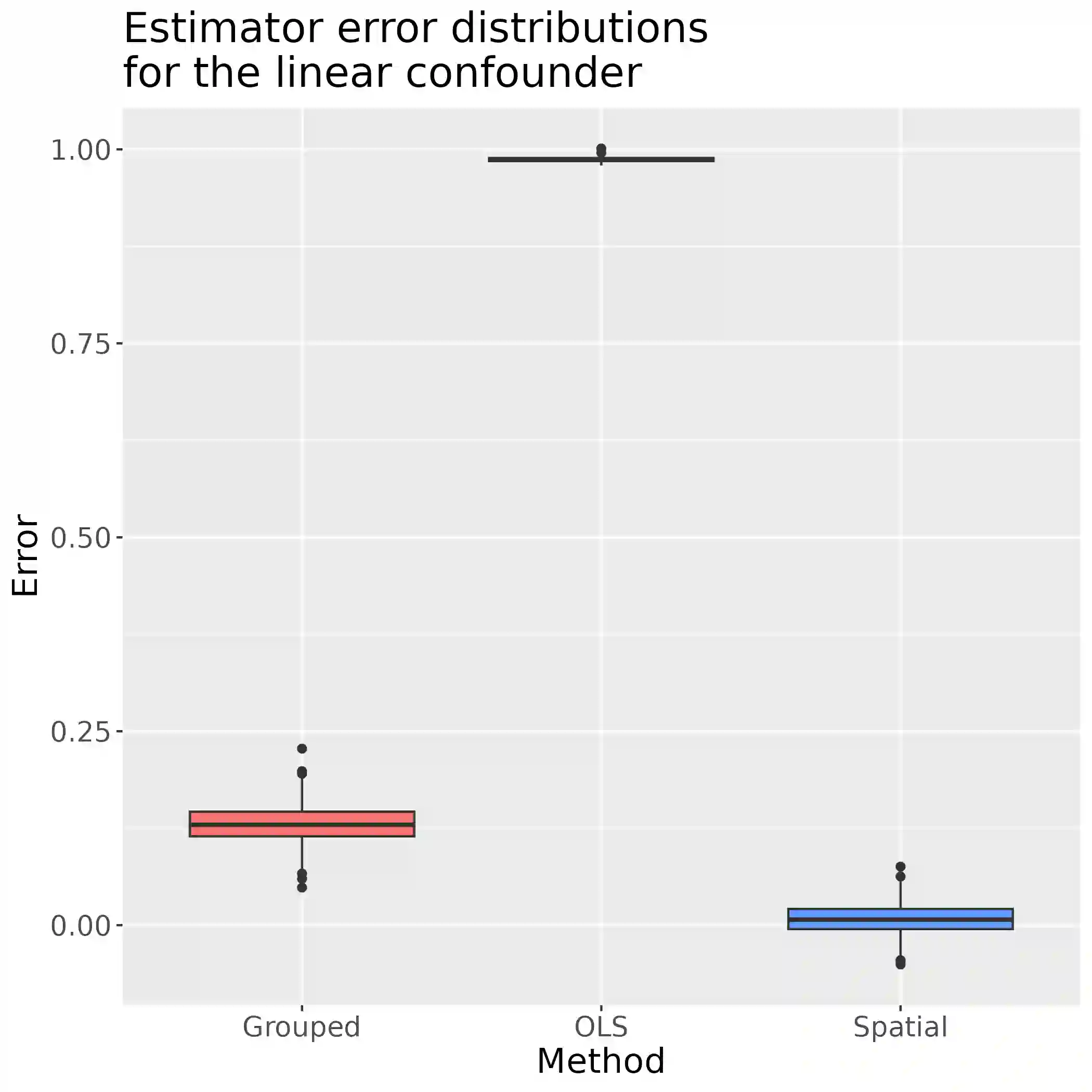
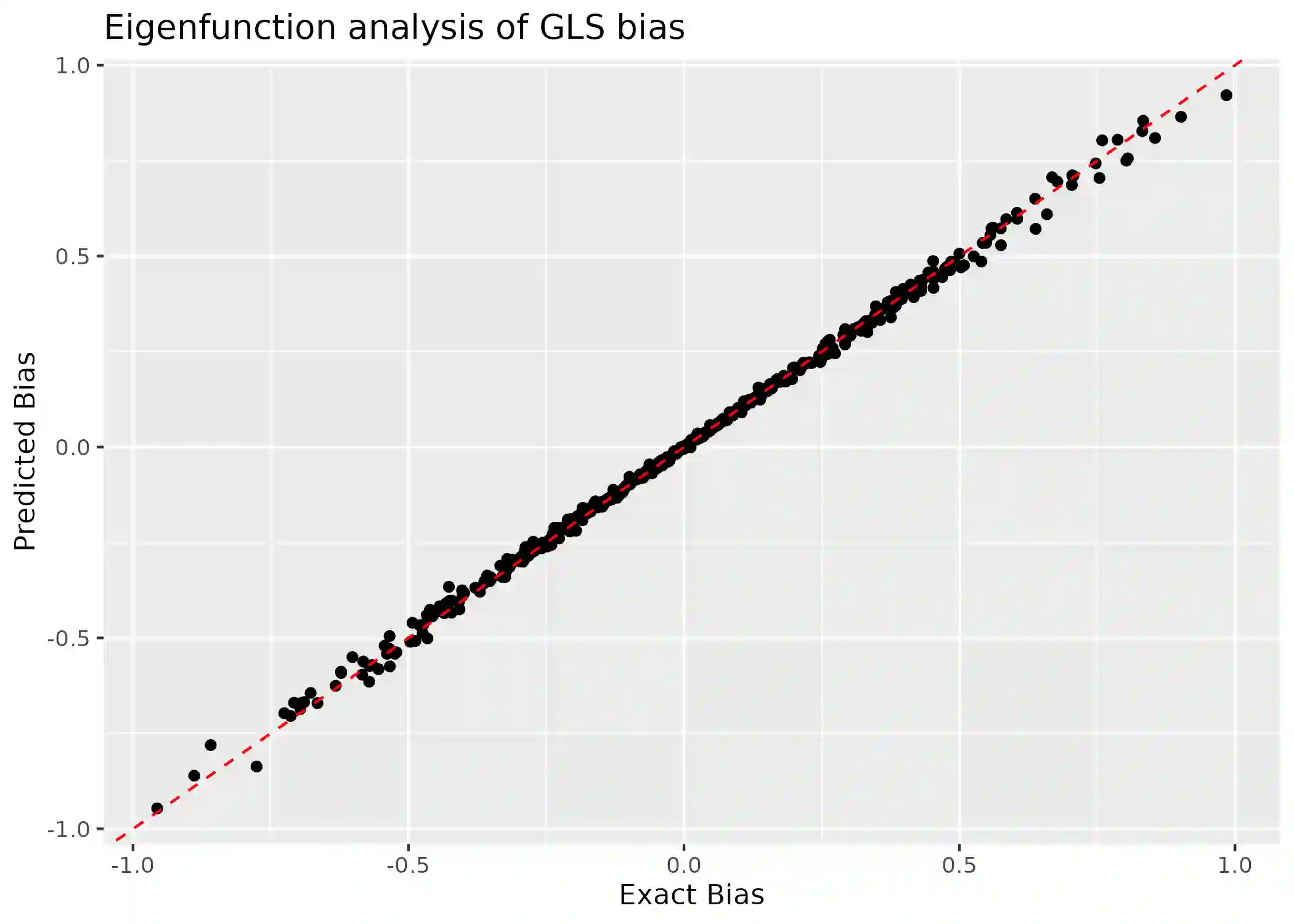
This paper addresses the asymptotic performance of popular spatial regression estimators on the task of estimating the effect of an exposure on an outcome in the presence of an unmeasured spatially-structured confounder. This setting is often referred to as "spatial confounding." We consider spline models, Gaussian processes (GP), generalized least squares (GLS), and restricted spatial regression (RSR) under two data generation processes: one where the confounder is a fixed effect and one where it is a random effect. The literature on spatial confounding is confusing and contradictory, and our results correct and clarify several misunderstandings. We first show that, like an unadjusted OLS estimator, RSR is asymptotically biased under any spatial confounding scenario. We then prove a novel result on the consistency of the GLS estimator under spatial confounding. We finally prove that estimators like GLS, GP, and splines, that are consistent under confounding by a fixed effect will also be consistent under confounding by a random effect. We conclude that, contrary to much of the recent literature on spatial confounding, traditional estimators based on partially linear models are amenable to estimating effects in the presence of spatial confounding. We support our theoretical arguments with simulation studies.
翻译:本文研究了在未观测的空间结构混杂因素存在时,常用空间回归估计量在估计暴露对结局影响任务中的渐近性能。该场景常被称为“空间共线性”。我们考虑了样条模型、高斯过程(GP)、广义最小二乘(GLS)和受限空间回归(RSR)两种数据生成过程:一种将混杂因素视为固定效应,另一种将其视为随机效应。关于空间共线性的文献存在混淆和矛盾,我们的结果纠正并澄清了若干误解。首先,我们证明与未调整的OLS估计量类似,RSR在任何空间共线性场景下都具有渐近偏倚。随后,我们证明了GLS估计量在空间共线性下一致性的新结论。最后,我们证明在固定效应混杂下具有一致性的估计量(如GLS、GP和样条)在随机效应混杂下同样具有一致性。我们得出结论:与近期大部分关于空间共线性的文献相反,基于部分线性模型的传统估计量适用于估计空间共线性存在下的效应。我们通过模拟研究支持了理论论证。




相关内容




 微信扫码咨询专知VIP会员