

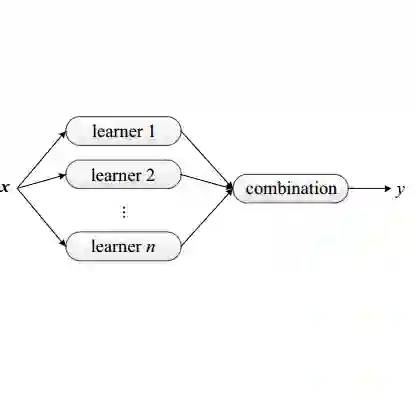
Since coral reef ecosystems face threats from human activities and climate change, coral conservation programs are implemented worldwide. Monitoring coral health provides references for guiding conservation activities. However, current labor-intensive methods result in a backlog of unsorted images, highlighting the need for automated classification. Few studies have simultaneously utilized accurate annotations along with updated algorithms and datasets. This study aimed to create a dataset representing common coral conditions and associated stressors in the Indo-Pacific. Concurrently, it assessed existing classification algorithms and proposed a new multi-label method for automatically detecting coral conditions and extracting ecological information. A dataset containing over 20,000 high-resolution coral images of different health conditions and stressors was constructed based on the field survey. Seven representative deep learning architectures were tested on this dataset, and their performance was quantitatively evaluated using the F1 metric and the match ratio. Based on this evaluation, a new method utilizing the ensemble learning approach was proposed. The proposed method accurately classified coral conditions as healthy, compromised, dead, and rubble; it also identified corresponding stressors, including competition, disease, predation, and physical issues. This method can help develop the coral image archive, guide conservation activities, and provide references for decision-making for reef managers and conservationists. The proposed ensemble learning approach outperforms others on the dataset, showing State-Of-The-Art (SOTA) performance. Future research should improve its generalizability and accuracy to support global coral conservation efforts.
翻译:由于珊瑚礁生态系统面临人类活动和气候变化的威胁,全球范围内正在实施珊瑚保护计划。监测珊瑚健康状况可为指导保护行动提供参考。然而,当前劳动密集型方法导致大量未分类图像积压,凸显了自动化分类的需求。现有研究较少同时利用精确标注与更新算法及数据集。本研究旨在构建一个代表印度-太平洋地区常见珊瑚状态及相关胁迫因子的数据集,同时评估现有分类算法,并提出一种用于自动检测珊瑚状态及提取生态信息的新型多标签方法。基于实地调查,构建了包含超过20,000张不同健康状态及胁迫因子高分辨率珊瑚图像的数据集。在该数据集上测试了七种代表性深度学习架构,并利用F1度量与匹配率对其性能进行定量评估。基于此评估,提出了一种采用集成学习的新方法。该方法能够准确将珊瑚状态分类为健康、受损、死亡及碎屑,并识别相应胁迫因子,包括竞争、疾病、捕食及物理问题。该方法有助于构建珊瑚图像档案、指导保护行动,并为珊瑚礁管理者和保护人员提供决策参考。所提出的集成学习方法在该数据集上表现优于其他方法,达到当前最优水平。未来研究应提升其泛化能力与精度,以支持全球珊瑚保护工作。




相关内容




 微信扫码咨询专知VIP会员