

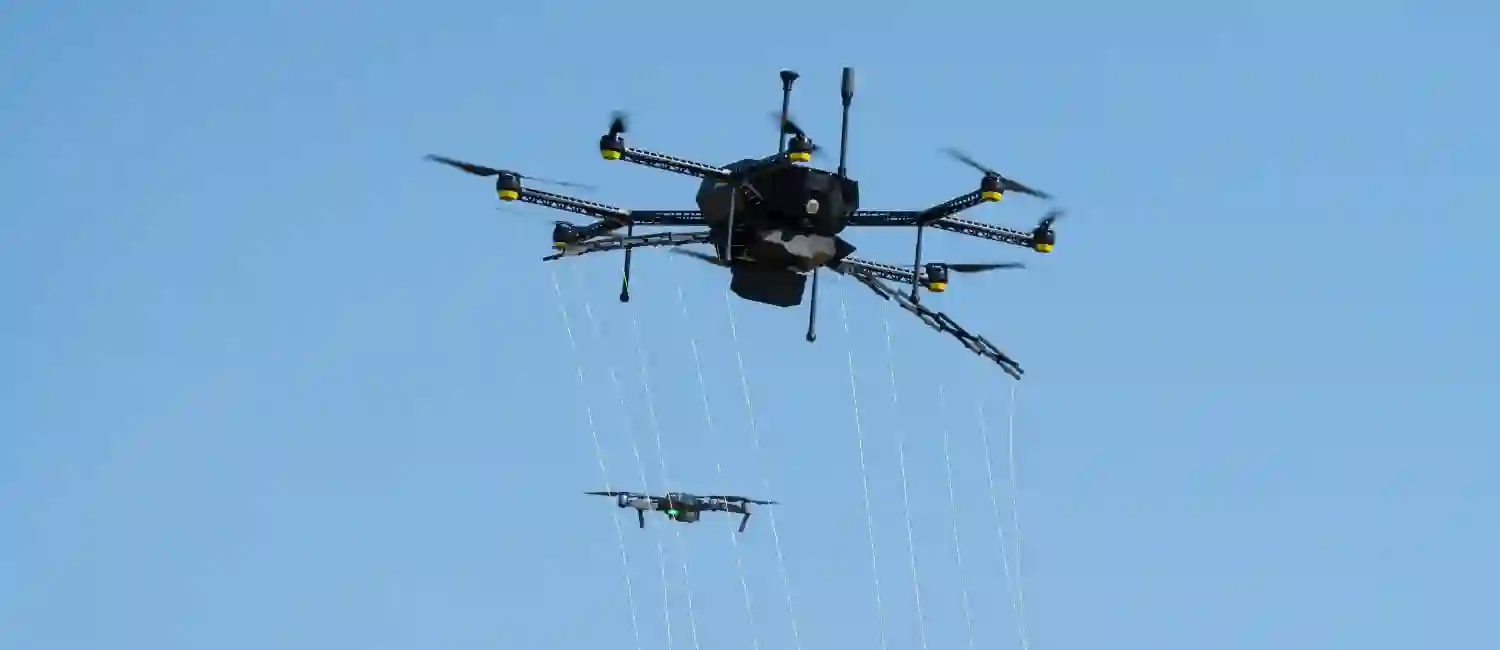
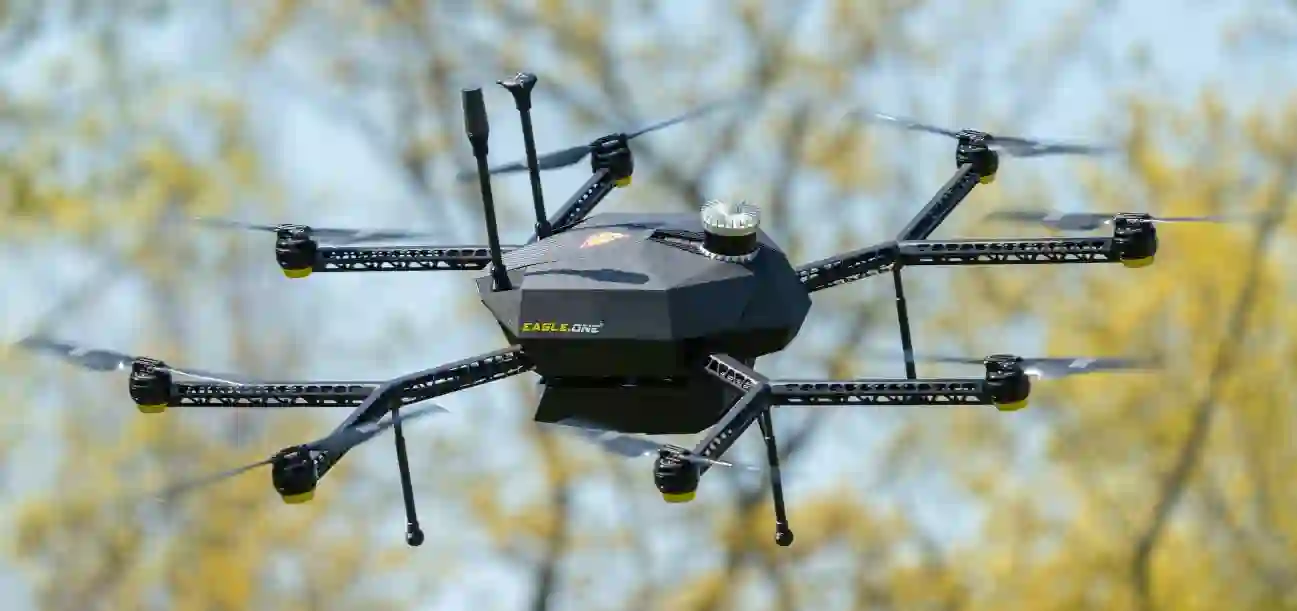
A new robust and accurate approach for the detection and localization of flying objects with the purpose of highly dynamic aerial interception and agile multi-robot interaction is presented in this paper. The approach is proposed for use onboard an autonomous aerial vehicle equipped with a 3D LiDAR sensor providing input data for the algorithm. It relies on a novel 3D occupancy voxel mapping method for the target detection and a cluster-based multiple hypothesis tracker to compensate uncertainty of the sensory data. When compared to state-of-the-art methods of onboard detection of other flying objects, the presented approach provides superior localization accuracy and robustness to different environments and appearance changes of the target, as well as a greater detection range. Furthermore, in combination with the proposed multi-target tracker, sporadic false positives are suppressed, state estimation of the target is provided and the detection latency is negligible. This makes the detector suitable for tasks of agile multi-robot interaction, such as autonomous aerial interception or formation control where precise, robust, and fast relative localization of other robots is crucial. We demonstrate the practical usability and performance of the system in simulated and real-world experiments.
翻译:本文提出了一种新颖的鲁棒且精确的飞行目标检测与定位方法,旨在实现高度动态的空中拦截与敏捷的多机器人交互。该方法专为搭载三维激光雷达传感器的自主飞行器设计,利用该传感器提供算法输入数据。其核心技术包括用于目标检测的新型三维占据体素映射方法,以及基于聚类的多假设跟踪器,以补偿传感数据的不确定性。与现有其他飞行目标机载检测方法相比,本方法在定位精度、对不同环境与目标外观变化的鲁棒性以及检测距离方面均表现出显著优势。此外,结合所提出的多目标跟踪器,偶发的误检被有效抑制,实现了目标状态估计,且检测延迟可忽略不计。这使得该检测器适用于敏捷多机器人交互任务,例如自主空中拦截或编队控制——此类任务中,对其他机器人的精确、鲁棒且快速相对定位至关重要。我们通过仿真与真实环境实验验证了该系统的实际可用性与性能。




相关内容



 微信扫码咨询专知VIP会员