

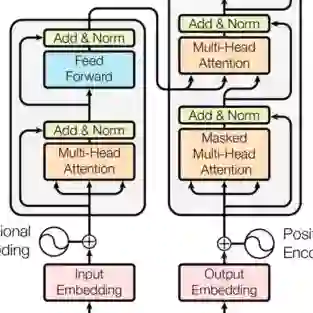
Patient healthcare utilization consists of irregularly time-stamped events, such as outpatient visits, inpatient admissions, and emergency encounters, forming individualized care trajectories. Modeling these trajectories is crucial for understanding utilization patterns and predicting future care needs, but is challenging due to temporal irregularity and severe class imbalance. In this work, we build on the Transformer Hawkes Process framework to model patient trajectories in continuous time. By combining Transformer-based history encoding with Hawkes process dynamics, the model captures event dependencies and jointly predicts event type and time-to-event. To address extreme imbalance, we introduce an imbalance-aware training strategy using inverse square-root class weighting. This improves sensitivity to rare but clinically important events without altering the data distribution. Experiments on real-world data demonstrate improved performance and provide clinically meaningful insights for identifying high-risk patient populations.
翻译:患者医疗资源利用由时间戳不规则的事件组成,例如门诊就诊、住院入院和急诊接触,形成个体化的护理轨迹。对这些轨迹进行建模对于理解资源利用模式和预测未来护理需求至关重要,但由于时间不规则性和严重的类别不平衡而面临挑战。在本工作中,我们基于Transformer霍克斯过程框架在连续时间下对患者轨迹进行建模。通过将基于Transformer的历史编码与霍克斯过程动态相结合,该模型捕捉事件依赖关系,并联合预测事件类型和事件发生时间。为应对极端不平衡,我们采用了一种基于逆平方根类别加权的失衡感知训练策略,在不改变数据分布的情况下提升了对罕见但临床重要事件的敏感性。真实世界数据上的实验展示了性能提升,并为识别高风险患者群体提供了具有临床意义的见解。




相关内容


 微信扫码咨询专知VIP会员