

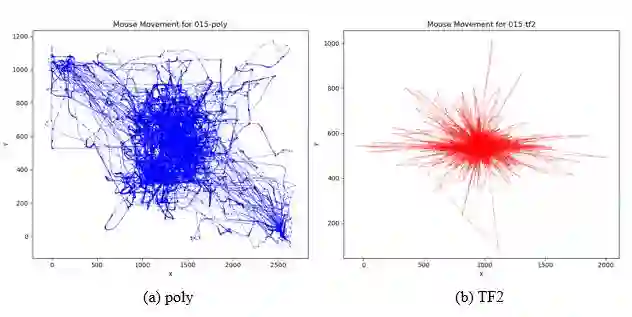
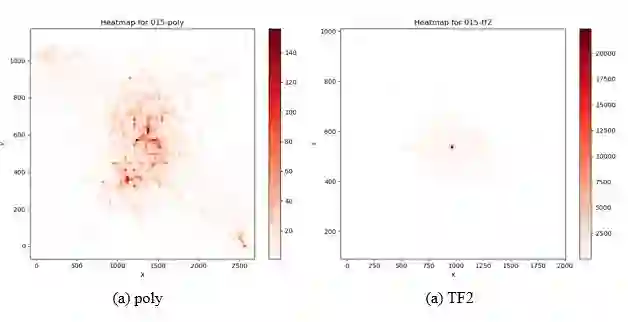
In the realm of computer security, the importance of efficient and reliable user authentication methods has become increasingly critical. This paper examines the potential of mouse movement dynamics as a consistent metric for continuous authentication. By analyzing user mouse movement patterns in two contrasting gaming scenarios, "Team Fortress" and Poly Bridge we investigate the distinctive behavioral patterns inherent in high-intensity and low-intensity UI interactions. The study extends beyond conventional methodologies by employing a range of machine learning models. These models are carefully selected to assess their effectiveness in capturing and interpreting the subtleties of user behavior as reflected in their mouse movements. This multifaceted approach allows for a more nuanced and comprehensive understanding of user interaction patterns. Our findings reveal that mouse movement dynamics can serve as a reliable indicator for continuous user authentication. The diverse machine learning models employed in this study demonstrate competent performance in user verification, marking an improvement over previous methods used in this field. This research contributes to the ongoing efforts to enhance computer security and highlights the potential of leveraging user behavior, specifically mouse dynamics, in developing robust authentication systems.
翻译:在计算机安全领域,高效可靠的用户身份验证方法日益重要。本文探索了鼠标移动动态作为持续身份验证一致性指标的潜力。通过分析用户在《军团要塞》与《造桥模拟器》两种截然不同的游戏场景中的鼠标移动模式,我们研究了高强度与低强度用户界面交互中固有的行为特征差异。本研究超越了传统方法,采用了一系列机器学习模型。这些模型经过精心挑选,用于评估它们在捕捉和解读鼠标移动所反映的用户行为细微差异方面的有效性。这种多维方法使我们能够更细致全面地理解用户交互模式。研究结果表明,鼠标移动动态可作为持续用户身份验证的可靠指标。本研究所采用的多类机器学习模型在用户验证中展现了良好的性能,相较于该领域先前的方法实现了明显改进。此项研究为增强计算机安全的持续努力做出了贡献,并凸显了利用用户行为(特别是鼠标动态)开发稳健身份验证系统的潜力。




相关内容

Source: Apple - iOS 8




 微信扫码咨询专知VIP会员