

The ability of AI systems to improve their behavior during deployment is becoming increasingly important. As inference moves beyond the static execution of a fixed trained model, a growing body of work studies how models can refine their behavior on the fly by exploiting test-time information and additional computation. These developments have largely evolved along two directions: methods that modify the model's state using test-time signals, and methods that improve predictions through extra inference-time resources such as more sampling and tool use. However, these directions are often studied in separate communities with different terminology, making their connections harder to see. In this survey, we present feedback-driven Test-Time Intelligence (TTI) as a unified perspective for understanding such deployment-time improvement. We use this view to relate test-time adaptation, test-time learning, and test-time scaling, highlighting both their distinctions and their growing overlap in hybrid systems. This unified framework helps connect previously fragmented ideas and provides a clearer conceptual foundation for studying inference-time self-improvement. We review major methodological paradigms, representative applications, and open challenges across vision, language, multimodal learning, generative models, robotics, and healthcare. Our goal is to provide a coherent foundation and research roadmap for the study of self-improving AI systems at test time.
暂无翻译




Swarm-based optimization algorithms have demonstrated remarkable success in solving complex problems, yet their widespread adoption remains limited due to poor transparency in how algorithmic components influence performance. This work presents a multi-faceted explainability framework for Particle Swarm Optimization (PSO) through two complementary perspectives: landscape-based and algorithmic explainability. From the landscape-based perspective, we develop a comprehensive characterization framework using Exploratory Landscape Analysis (ELA) to quantify problem difficulty, multimodality, and ruggedness, extracting ELA meta-features, dispersion measures, and information content statistics, while a machine learning approach employing Decision Tree and Random Forest classifiers enables prediction of optimal topology-specific hyperparameter configurations for unseen problems. From the algorithmic explainability perspective, we integrate IOHxplainer for temporal convergence profiling and Search Trajectory Networks (STN) for spatial navigation mapping, proposing three novel STN metrics-Connectivity Density, Fragmentation Score, and Search Efficiency-that enhance visual explainability by quantifying topology-specific search organization and transition effectiveness. Through systematic experimentation across 24 benchmark functions in multiple dimensions with Star, Ring, and Von Neumann topologies, we establish practical guidelines for topology selection and parameter configuration. Our findings uncover the black-box nature of PSO, providing greater transparency and interpretability to swarm intelligence systems. The source code is available at https://github.com/GitNitin02/ioh_pso.
暂无翻译
Reinforcement learning achieves strong traffic signal control performance in simulation, yet policies trained in simulators often fail once deployed in the real world, a failure known as the Sim-to-Real gap. When RL is applied to traffic signal control, this gap arises from several sources: sensing, action execution, traffic dynamics, and the control objective. Their relative impact and the reliability of existing Sim-to-Real mitigation methods remain insufficiently understood, and the field lacks a standard benchmark for systematically measuring the gap and evaluating mitigation methods. We present Sim2Signal, a benchmark that decomposes the Sim-to-Real gap into observation, action, transition, and reward gaps, corresponding to mismatches in the four components of the underlying MDP, and induces each gap in isolation under a shared protocol. We evaluate 18 mitigation methods on 2 base controllers, across 33 gap settings and 10 calibrated networks built from 5 real-world locations. We find that direct transfer consistently degrades performance across all four gap sources, but the severity of the degradation does not predict the effectiveness of mitigation. Instead, mitigation effectiveness depends strongly on the network and gap setting: outside the action gap, a method that helps in one case may fail in another. The most effective methods generally estimate what the gap changes, rather than make the policy insensitive through domain randomization or invariant representations. Our code is available at https://github.com/Red-Pheonix/Sim2RealTSCBenchMark
暂无翻译
Peer review is central to scientific quality, yet reliance on simple heuristics, namely lazy thinking and non-specific critiques, has threatened review quality. Prior work frames lazy thinking detection as single-label classification and stops at detection, yet review segments often exhibit multiple co-occurring issues, and reviewers benefit more from actionable, guideline-aware feedback than from labels alone. We further show that off-the-shelf LLMs prompted for feedback frequently rewrite the entire review or address the authors rather than the reviewer, motivating an inference-time approach. We introduce an LLM-driven framework that decomposes reviews into argumentative segments, identifies issues violating ACL Rolling Review (ARR) guidelines, and generates targeted feedback using issue-specific templates refined by a novel iterative, reranking-based generation algorithm. In a controlled rewriting study, our feedback reduces guideline violations by up to 92.4\%. We also release LazyReviewPlus, the first multi-label dataset of 1,309 sentences annotated for detecting lazy thinking and lack of specificity.
暂无翻译
AI tutors are most useful when they adapt to each student's strengths, weaknesses, and preferred guidance, but evidence about which guidance works for which student is sparse, slow, and costly to collect from real learners. Student simulators can provide this signal as a proxy, yet existing approaches are limited: state-tracking models fit student behavior but struggle to process explanations or corrections, while LLM role-play follows guidance fluently but does not reliably match the competence of the student being imitated. We present StudentSim, a training framework that turns sparse per-student data into individualized simulators through pooled training followed by per-student specialization. The resulting simulators both mirror a student's own responses and update them under tutor guidance. We also introduce StudentSimEval, a standardized protocol covering 60 students across chess, second-language English writing, and mathematics, using public learner datasets with de-identified records shared for research. StudentSimEval measures behavioral fidelity (F), or how well a simulator matches a student's responses, and guidance responsiveness (R), or how readily it updates under tutor guidance, with all methods fit and evaluated on the same records. Across all three domains, StudentSim outperforms GPT-5.4 on both metrics. In chess, StudentSim reaches F=0.51 and R=0.91, compared with 0.23 and 0.72 for GPT-5.4 and 0.45 and 0.27 for Maia2. As a proof of concept, using StudentSim as a reward model for tutor reinforcement learning produces a chess tutor that expert humans rate as more accurate, better-guided, and more personalized than a no-RL baseline and a tutor trained against a GPT-5.4 simulator reward. Code is available at https://github.com/microsoft/StudentSim.
暂无翻译
Markov chain pool decoding (MCPD) devised by Knill et al. (1996) identifies likely positive clones from noisy pooled-test results. The standard MCPD estimates clone-wise posterior probabilities using Gibbs sampling, but it may allocate excessive computational effort to low-scoring clones. This paper focuses on parallelizing MCPD on GPU architectures. Whereas the standard MCPD employs systematic-scan updates, we propose a score-weighted update scheme that updates high-scoring clones more frequently. We prove that the stationary distribution of the proposed Markov chain coincides with the target posterior distribution. To enable efficient GPU parallelization, we further incorporate the unbiased MCMC framework of Jacob et al. (2020) and employ a slot-refilling technique based on the arguments by Glynn and Heidelberger (1991) about the coupling of Markov chains. Experiments involving 1,298 clones, 97 pools, and three true positives demonstrate improved recovery compared with uniform decoders, while maintaining high overlap under high-noise conditions.
暂无翻译
Contemporary oncology drug development increasingly requires efficient dose-optimization strategies that evaluate monotherapy (Mono) and combination therapy (Combo) while balancing activity, efficacy, and tolerability. We propose a staggered seamless phase I/II design for settings in which a novel agent is evaluated alone and in combination with an established therapy. In phase I, Mono dose finding begins first, and Combo subtrials can be opened adaptively once a prespecified combination-initiation signal based on early clinical or biological information is observed. Dose assignment uses a model-assisted rule based on toxicity and early activity, with backfilling at tolerable and potentially promising regimens. At the end of phase I, two candidate regimens are selected from the evaluated Mono and Combo regimens using an efficacy-toxicity utility based on accumulated toxicity and treatment-response data. Phase II seamlessly carries forward patients treated at the selected regimens, enrolls additional patients as needed, and applies Bayesian futility and efficacy stopping boundaries to identify a final recommended optimal biological dose (OBD). Simulation studies showed that the proposed design shortened phase I trial duration relative to the comparator designs while maintaining competitive OBD-selection performance and acceptable safety. The seamless phase II component further reduced the need for additional enrollment and supported efficient final OBD selection.
暂无翻译
Machine-learnt corrections can complement numerical weather prediction only if they adapt to the evolving model state while preserving dynamical consistency and numerical stability. To test this within a global forecasting model, we couple the Met Office (UKMO) Unified Model (UM) with distributed RL agents through rank-local tensors. A DDPG actor shares weights across the 70 vertical model levels of each atmospheric column and applies bounded potential-temperature corrections to the model tendencies. Across ten nudged training forecasts, nudging calculations towards the UKMO operational analysis provides an immediate counterfactual target. The frozen policy is then evaluated in a non-nudged forecast for inference. The coupled workflow successfully completes training and remains numerically stable in the evaluated case. Relative to a matched native UM forecast at +6 h, the learnt policy reduces Z$_{500}$ MAE in four of six latitude bands, including reductions of 45.8% and 40.8% in the northern and southern tropics. MSLP error too decreases in three bands, with a maximum reduction of 27.3% at 0-30°N. This single-case experiment demonstrates significant promise and feasibility of distributed online learning followed by non-nudged inference, laying the groundwork for RL-based bias correction and parametrisations within operational systems.
暂无翻译
Here we present an analytic approximation for the entropy of floating-point numbers, along with bounds on the error of this approximation. It is well-known that the differential entropy is tightly linked to the discrete entropy of a uniformly quantized random variable. Our approximation uncovers a different quantity that provides this link for floating-point quantization. Additionally, we prove that the entropy of a floating-point quantized random variable is approximately unchanged under scaling. Closed-form expressions for the floating-point entropy of common distributions are provided and compared to exact results.
暂无翻译
Pretrained transformers provide rich, general-purpose embeddings, which are transferred to downstream tasks. However, current transfer strategies: fine-tuning and probing, either distort the pretrained geometric structure of the embeddings or lack sufficient expressivity to capture task-relevant signals. These issues become even more pronounced when supervised data are scarce. Here, we introduce Freeze, Diffuse, Decode (FDD), a novel diffusion-based framework that adapts pre-trained embeddings to downstream tasks while preserving their underlying geometric structure. FDD propagates supervised signal along the intrinsic manifold of frozen embeddings, enabling a geometry-aware adaptation of the embedding space. Applied to antimicrobial peptide design, FDD yields low-dimensional, predictive, and interpretable representations that support property prediction, retrieval, and latent-space interpolation.
暂无翻译
There is growing interest in the proposed use of EEG signals as biometric credentials, but thus far there has been little research on the reliability and security of such biometrics. Prior adversarial tests have focused on deep-learning classifiers and assumed attackers have full access to the classifier model. This has left unexamined other, more popular categories of neural signature methods as well as the more realistic case of an adversary having only black-box access to a classifier. In this paper we develop a collection of adaptive attack algorithms which learn to fool an authentication system via targeted alterations of stolen EEG recordings, without requiring any knowledge of the authentication system itself. Tested on 6 public datasets spanning three recording conditions (reacting to visual stimuli, imagining hand movements, and resting), it reveals that different signaturing approaches vary significantly in their degrees of vulnerability to adversarial attacks. We show that vulnerability to spoofing attack is greatly impacted by the recording conditions, with significant variation depending on task at time of recording. Finally, we provide recommendations for improving neural signature biometrics based on the results of our adversarial testing.
暂无翻译
Teach and Repeat (T&R) topometric navigation enables robots to autonomously repeat previously traversed paths without relying on GPS, making it well suited for operations in GPS-denied environments such as underground mines and lunar navigation. State-of-the-art T&R systems typically rely on iterative closest point (ICP)-based estimation; however, in geometrically degenerate environments with sparsely structured terrain, ICP often becomes ill-conditioned, resulting in degraded localization and unreliable navigation performance. To address this challenge, we present a degeneracy-resilient Frequency-Modulated Continuous-Wave (FMCW) lidar T&R navigation system consisting of Doppler velocity-based odometry and degeneracy-aware scan-to-map localization. Leveraging FMCW lidar, which provides per-point radial velocity measurements via the Doppler effect, we extend a geometry-independent, correspondence-free motion estimation to include principled pose uncertainty estimation that remains stable in degenerate environments. We further propose a curvature-enhanced degeneracy-aware localization method that leverages per-point curvature for improved data association and adaptive registration formulation, and unifies translational and rotational scales to enable consistent degeneracy detection. Closed-loop field experiments spanning environments with varying structural richness demonstrate that the proposed system reliably completes autonomous navigation, including in a challenging flat airport test field where a conventional ICP-based system fails. We release the implementation of this work at: https://opensource_code/place_holder.
暂无翻译
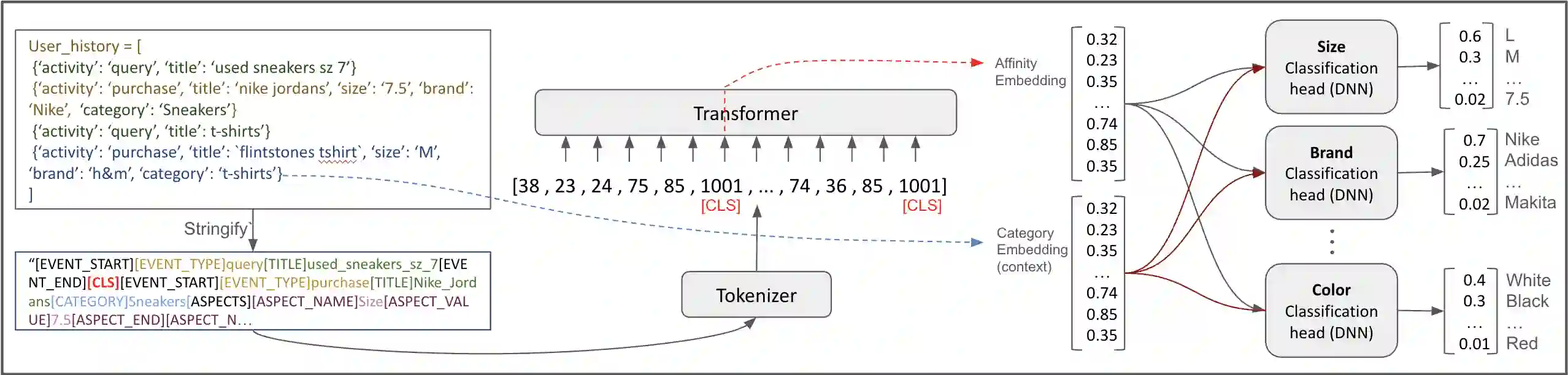
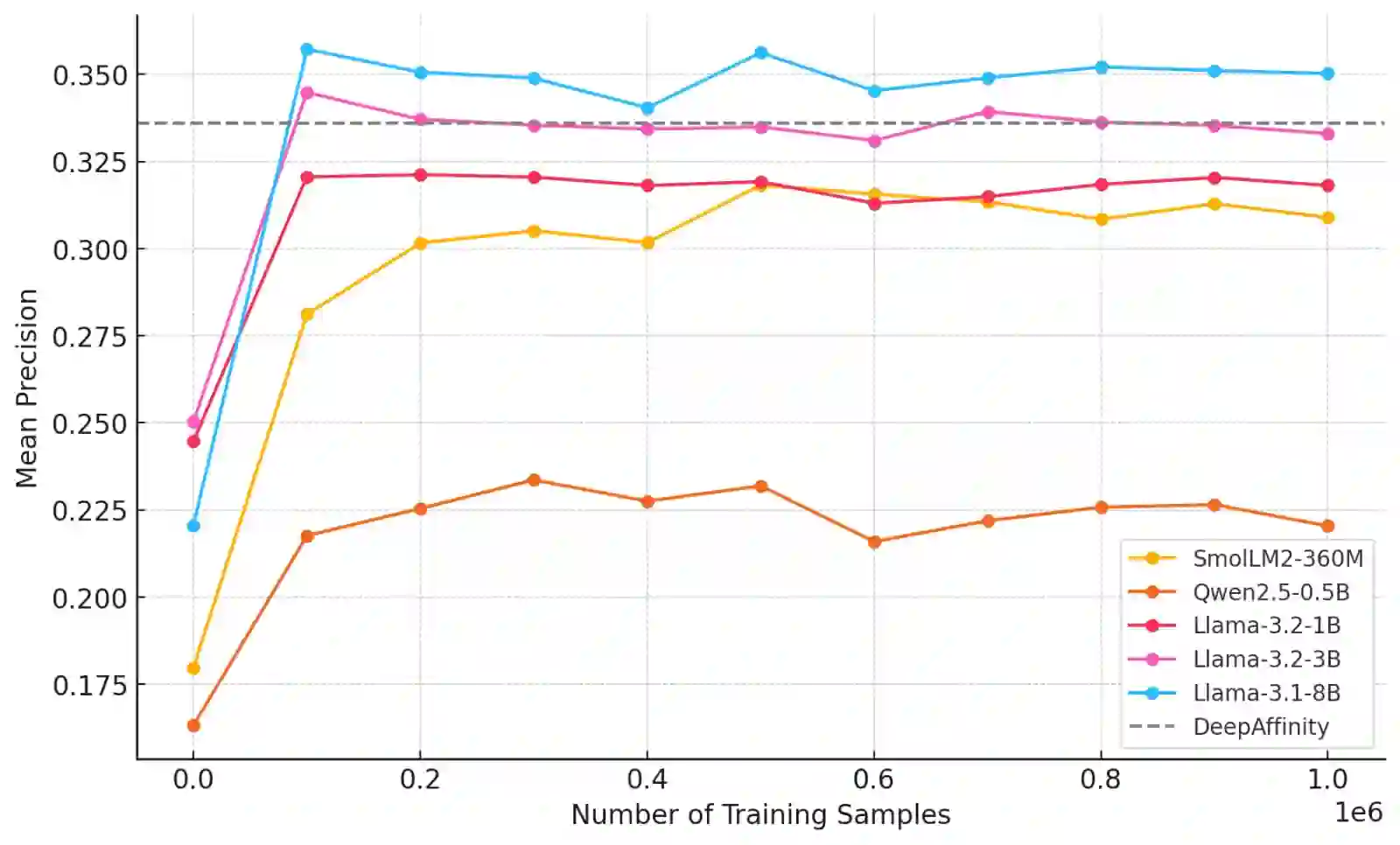
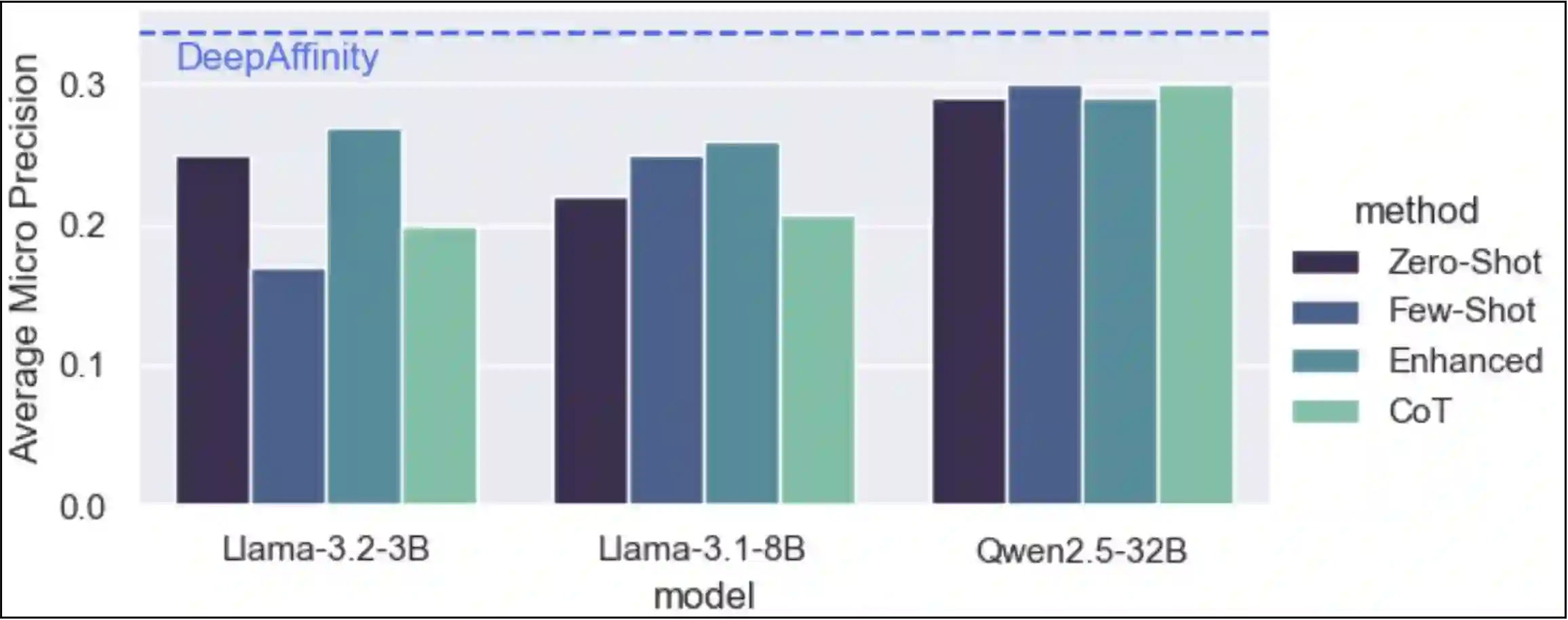
We explore predicting eCommerce user preferences for product aspects such as brand, size, and color - a task we define as Aspect Affinity. Solving this task improves customer understanding and enables fine-grained personalization in recommendation, search, and marketing. We frame Aspect Affinity as a temporal prediction task: forecasting a users future aspect choices from their time-ordered interaction history, capturing long-term preferences that evolve beyond the current session. To this end, we propose DeepAffinity, which leverages Small Language Models (SLMs) with structured prompts and specialized prediction heads fine-tuned for this task. We show DeepAffinity outperforms standard generative fine-tuning methods, while general-purpose open-source LLMs perform poorly without task-specific tuning, highlighting their limits in modeling nuanced behavior. Finally, DeepAffinity enhances recommendation quality on a large-scale multinational eCommerce platform.
暂无翻译
A compressed student has two shapes that need not agree: the weight it deploys at inference and the weight family its training can reach. We show that a state-of-the-art weight-inheritance distiller, Low-Rank Clone (LRC), deploys a full-width student MLP but ties training to a teacher-induced slice, leaving 62.5-81.4% of each deployed matrix's independent linear degrees of freedom unreachable-paid for at inference, never trainable. Our principle is one line: train what you deploy. From the identical LRC warm start, we make the training object the entire deployed matrix, with no change in deployed shape, deployed parameter count, or inference FLOPs, via two mergeable realizations (Dense-LRC and CORE-LRC) that both collapse to one deployed weight. This recovers stranded capacity: taking the stronger realization per teacher, +2.36/+2.71/+10.45 Avg9 over matched-budget plain-LRC baselines across three teachers (Llama3.2-3B, Llama3.1-8B, Qwen2.5-3B), with the largest gain on the widest teacher (Qwen), where it reaches the original recipe's approx. 20B-token accuracy at 10B tokens (2x token efficiency); there the strictly same-lineage arm still recovers +6.39, the fully controlled figure. Controls strongly support attributing the gain to the enlarged reachable set, rather than to added parameters or the recipe. From approx. 10B distillation tokens plus a short SFT, a half-parameter 1.5B student matches its approx. 9T-token teacher's 9-task macro-average, within evaluation noise and with a residual MMLU deficit, and a 2.7B student beats Meta's own official compression of Llama3.1-8B at ~900x fewer compression tokens (a token count under unmatched recipes, not a compute claim). All results are from single-seed runs on the LRC backbone.
暂无翻译
Scaling offline goal-conditioned reinforcement learning (GCRL) to long-horizon tasks is difficult because (1) long-range value learning depends on shorter-range estimates that may still be inaccurate, and (2) max-based value backups can amplify overestimation through repeated propagation. We propose DCRL (Divide-and-Conquer RL), which recursively decomposes each trajectory segment into a balanced binary tree and trains the values from leaves to root. Each parent is therefore updated only after its children, using an exact factorization of the observed route rather than selecting among noisy alternatives. Since this objective learns values along demonstrated routes that are not necessarily optimal, DCRL jointly propagates values across trajectories to discover shorter routes. Thanks to the balanced binary tree, DCRL reduces worst-case bootstrap depth from linear to logarithmic, and this shorter dependency structure empirically corresponds to much slower error accumulation. Across diverse goal-reaching tasks, DCRL substantially outperforms prior flat offline GCRL methods, and on the five most challenging long-horizon OGBench tasks, it improves the best prior average score from 55 to 64, surpassing all flat and hierarchical baselines.
暂无翻译







 微信扫码咨询专知VIP会员