

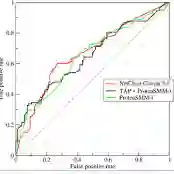
Deep learning can read physiological states from the electrocardiogram (ECG), prompting attempts to detect psychological stress. We asked how much information about perceived stress the maternal ECG carries. In 144 pregnant women, with every cross-validation split taken over participants, across 94 arms spanning 21 self-supervised, foundation-model, and heart-rate-variability architectures, the best discrimination of moderate-to-high stress (PSS-10 >= 19) was AUC 0.604 (95% CI 0.511-0.696), and AUC >= 0.70 was rejected in all eleven arms tested. Three pre-registered tests in a second cohort from the same center, recorded on different hardware, were null, at 30% power. Which of the three simultaneously recorded ECG channels was analyzed accounted for 96% of the predicted score's variance, against 4% between women; across 20 combinations of channel rule, label variant, and visit, the external correlation with perceived stress ranged from r = -0.095 to r = +0.307, a spread no larger than such a search produces by chance (raw one-sided p of the maximum 0.011; calibrated max-statistic p = 0.583). Hair cortisol was not predicted either. In the second cohort, PSS-10 scores were not stable across administrations spanning pregnancy and the postpartum period (ICC 0.06-0.16), so one administration is a weak measure of a woman's stress level at another visit. A single-recording ECG screener for perceived stress is excluded in this population, and multi-channel studies must pre-register their channel rule.
翻译:暂无翻译




相关内容


 微信扫码咨询专知VIP会员