

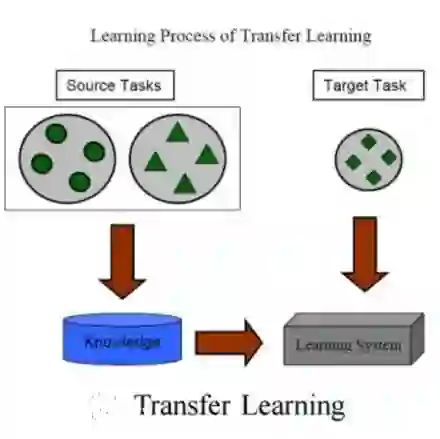
Prompt tuning, in which prompts are optimized to adapt large-scale pre-trained language models to downstream tasks instead of fine-tuning the full model parameters, has been shown to be particularly effective when the prompts are trained in a multi-task transfer learning setting. These methods generally involve individually training prompts for each source task and then aggregating them to provide the initialization of the prompt for the target task. However, this approach critically ignores the fact that some of the source tasks could be negatively or positively interfering with each other. We argue that when we extract knowledge from source tasks via training source prompts, we need to consider this correlation among source tasks for better transfer to target tasks. To this end, we propose a Bayesian approach where we work with the posterior distribution of prompts across source tasks. We obtain representative source prompts corresponding to the samples from the posterior utilizing Stein Variational Gradient Descent, which are then aggregated to constitute the initial target prompt. We show extensive experimental results on the standard benchmark NLP tasks, where our Bayesian multi-task transfer learning approach outperforms the state-of-the-art methods in many settings. Furthermore, our approach requires no auxiliary models other than the prompt itself, achieving a high degree of parameter efficiency.
翻译:提示调优通过优化提示来适配大规模预训练语言模型至下游任务,而非微调完整模型参数。研究表明,当提示在多任务迁移学习框架中训练时,该方法尤为高效。现有方法通常为每个源任务单独训练提示,再通过聚合这些提示为目标任务提供初始化。然而,这一策略忽略了源任务间可能存在的正负向干扰。我们认为,当通过训练源提示从源任务中提取知识时,需考虑此类任务相关性以实现更优的迁移性能。为此,我们提出一种贝叶斯方法,通过构建源任务提示的后验分布来建模任务相关性。利用斯坦因变分梯度下降从后验分布中采样得到代表性源提示,并将其聚合形成初始目标提示。在标准NLP基准任务上的大量实验表明,我们的贝叶斯多任务迁移学习方法在多种设置下均优于现有最先进方法。此外,该方法除提示本身外无需任何辅助模型,实现了极高的参数效率。




相关内容

 微信扫码咨询专知VIP会员