

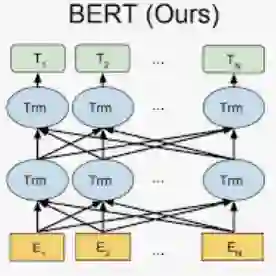
Finding an agreement among diverse opinions is a challenging topic in multiagent systems. Recently, large language models (LLMs) have shown great potential in addressing this challenge due to their remarkable capabilities in comprehending human opinions and generating human-like text. However, they typically rely on extensive human-annotated data. In this paper, we propose Self-Agreement, a novel framework for fine-tuning LLMs to autonomously find agreement using data generated by LLM itself. Specifically, our approach employs the generative pre-trained transformer-3 (GPT-3) to generate multiple opinions for each question in a question dataset and create several agreement candidates among these opinions. Then, a bidirectional encoder representations from transformers (BERT)-based model evaluates the agreement score of each agreement candidate and selects the one with the highest agreement score. This process yields a dataset of question-opinion-agreements, which we use to fine-tune a pre-trained LLM for discovering agreements among diverse opinions. Remarkably, a pre-trained LLM fine-tuned by our Self-Agreement framework achieves comparable performance to GPT-3 with only 1/25 of its parameters, showcasing its ability to identify agreement among various opinions without the need for human-annotated data.
翻译:在多智能体系统中,达成多元意见共识是一项具有挑战性的课题。近年来,大型语言模型(LLMs)凭借其理解人类意见及生成类人文本的卓越能力,在应对这一挑战中展现出巨大潜力,但其通常依赖大量人工标注数据。本文提出自我一致性(Self-Agreement)——一种利用LLM自身生成数据来微调模型使其自主寻找共识的新框架。具体而言,我们的方法采用生成式预训练Transformer-3(GPT-3)为问答数据集中的每个问题生成多元意见,并从中创建若干候选共识方案。随后,基于双向编码器表示Transformer(BERT)的模型评估每个候选共识的一致性得分,并选取得分最高的方案。通过此流程,我们构建了“问题-意见-共识”数据集,并基于此微调预训练LLM以发现多元意见间的共识。值得注意的是,经自我一致性框架微调的预训练LLM在参数量仅为GPT-3的1/25时,仍能达到与其相当的性能,充分彰显了其无需人工标注数据即可识别多元意见共识的能力。




相关内容



 微信扫码咨询专知VIP会员