

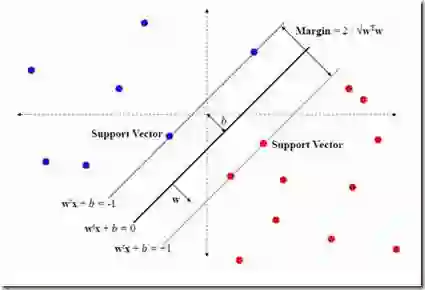
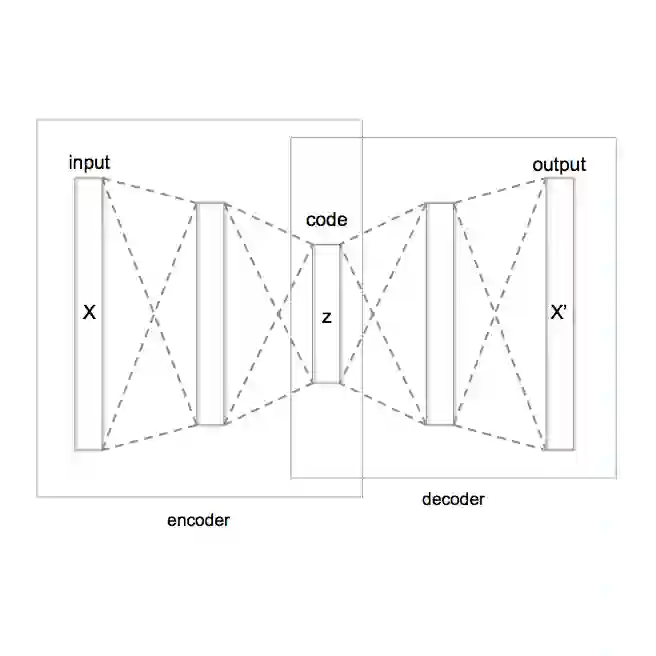
In recent years, Artificial Neural Networks (ANNs) have been introduced in Structural Health Monitoring (SHM) systems. A semi-supervised method with a data-driven approach allows the ANN training on data acquired from an undamaged structural condition to detect structural damages. In standard approaches, after the training stage, a decision rule is manually defined to detect anomalous data. However, this process could be made automatic using machine learning methods, whom performances are maximised using hyperparameter optimization techniques. The paper proposes a semi-supervised method with a data-driven approach to detect structural anomalies. The methodology consists of: (i) a Variational Autoencoder (VAE) to approximate undamaged data distribution and (ii) a One-Class Support Vector Machine (OC-SVM) to discriminate different health conditions using damage sensitive features extracted from VAE's signal reconstruction. The method is applied to a scale steel structure that was tested in nine damage's scenarios by IASC-ASCE Structural Health Monitoring Task Group.
翻译:近年来,人工神经网络(ANNs)已引入结构健康监测(SHM)系统。基于数据驱动的半监督方法允许利用从无损结构状态采集的数据训练ANN,从而检测结构损伤。在标准方法中,训练阶段后需手动定义决策规则以检测异常数据。然而,该过程可通过机器学习方法实现自动化,其性能通过超参数优化技术最大化。本文提出一种基于数据驱动的半监督方法以检测结构异常。该方法包括:(i) 使用变分自编码器(VAE)近似无损数据分布;(ii) 采用一类支持向量机(OC-SVM),利用从VAE信号重构中提取的损伤敏感特征区分不同健康状态。该方法应用于IASC-ASCE结构健康监测任务组在九种损伤场景下测试的缩比钢结构模型。




相关内容

 微信扫码咨询专知VIP会员