

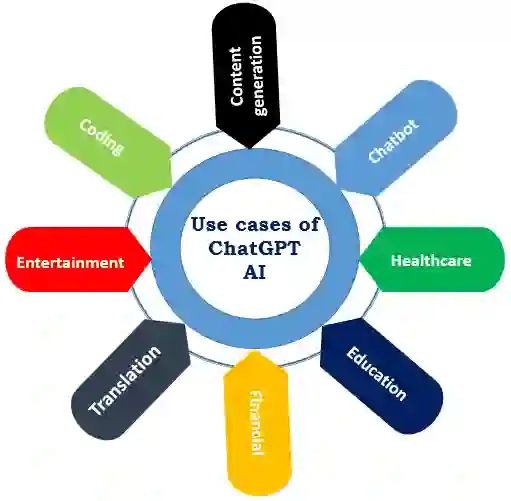
Large language models have revolutionized the field of artificial intelligence and have been used in various applications. Among these models, ChatGPT (Chat Generative Pre-trained Transformer) has been developed by OpenAI, it stands out as a powerful tool that has been widely adopted. ChatGPT has been successfully applied in numerous areas, including chatbots, content generation, language translation, personalized recommendations, and even medical diagnosis and treatment. Its success in these applications can be attributed to its ability to generate human-like responses, understand natural language, and adapt to different contexts. Its versatility and accuracy make it a powerful tool for natural language processing (NLP). However, there are also limitations to ChatGPT, such as its tendency to produce biased responses and its potential to perpetuate harmful language patterns. This article provides a comprehensive overview of ChatGPT, its applications, advantages, and limitations. Additionally, the paper emphasizes the importance of ethical considerations when using this robust tool in real-world scenarios. Finally, This paper contributes to ongoing discussions surrounding artificial intelligence and its impact on vision and NLP domains by providing insights into prompt engineering techniques.
翻译:大型语言模型已彻底改变了人工智能领域,并被广泛应用于各类场景。其中,由OpenAI开发的ChatGPT(聊天生成预训练Transformer)作为一款已被广泛采纳的强大工具脱颖而出。ChatGPT已成功应用于众多领域,包括聊天机器人、内容生成、语言翻译、个性化推荐,甚至医疗诊断与治疗。其成功归因于生成类人响应、理解自然语言以及适应不同语境的能力。这种多功能性与准确性使其成为自然语言处理(NLP)领域的强大工具。然而,ChatGPT也存在局限性,例如可能产生带有偏见的响应,并可能延续有害的语言模式。本文对ChatGPT及其应用、优势和局限进行了全面概述。此外,论文强调了在现实场景中使用这一强大工具时伦理考量的重要性。最后,本文通过提供提示工程技术的见解,为围绕人工智能及其对视觉与NLP领域影响的持续讨论贡献了力量。





相关内容



 微信扫码咨询专知VIP会员