

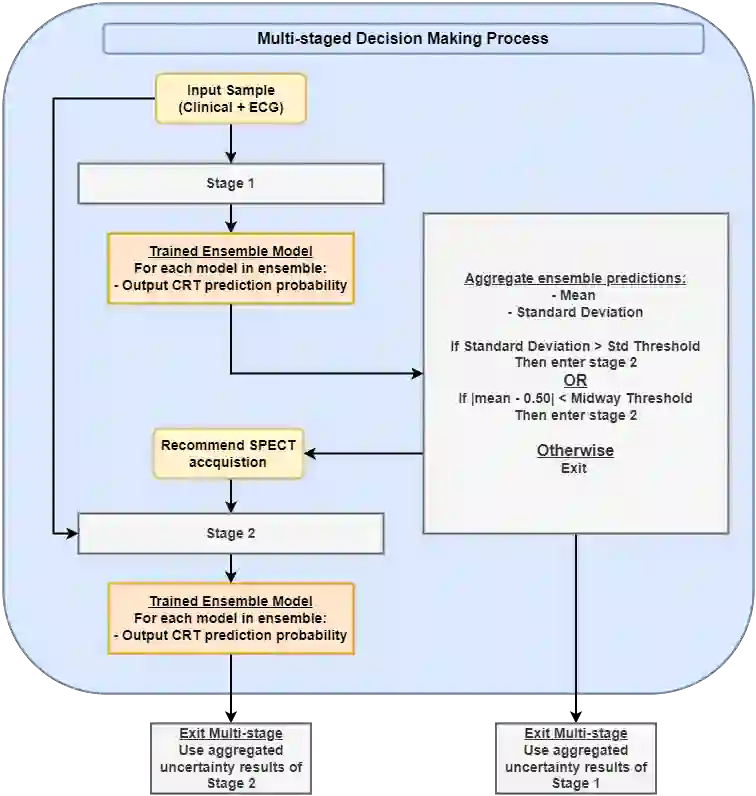
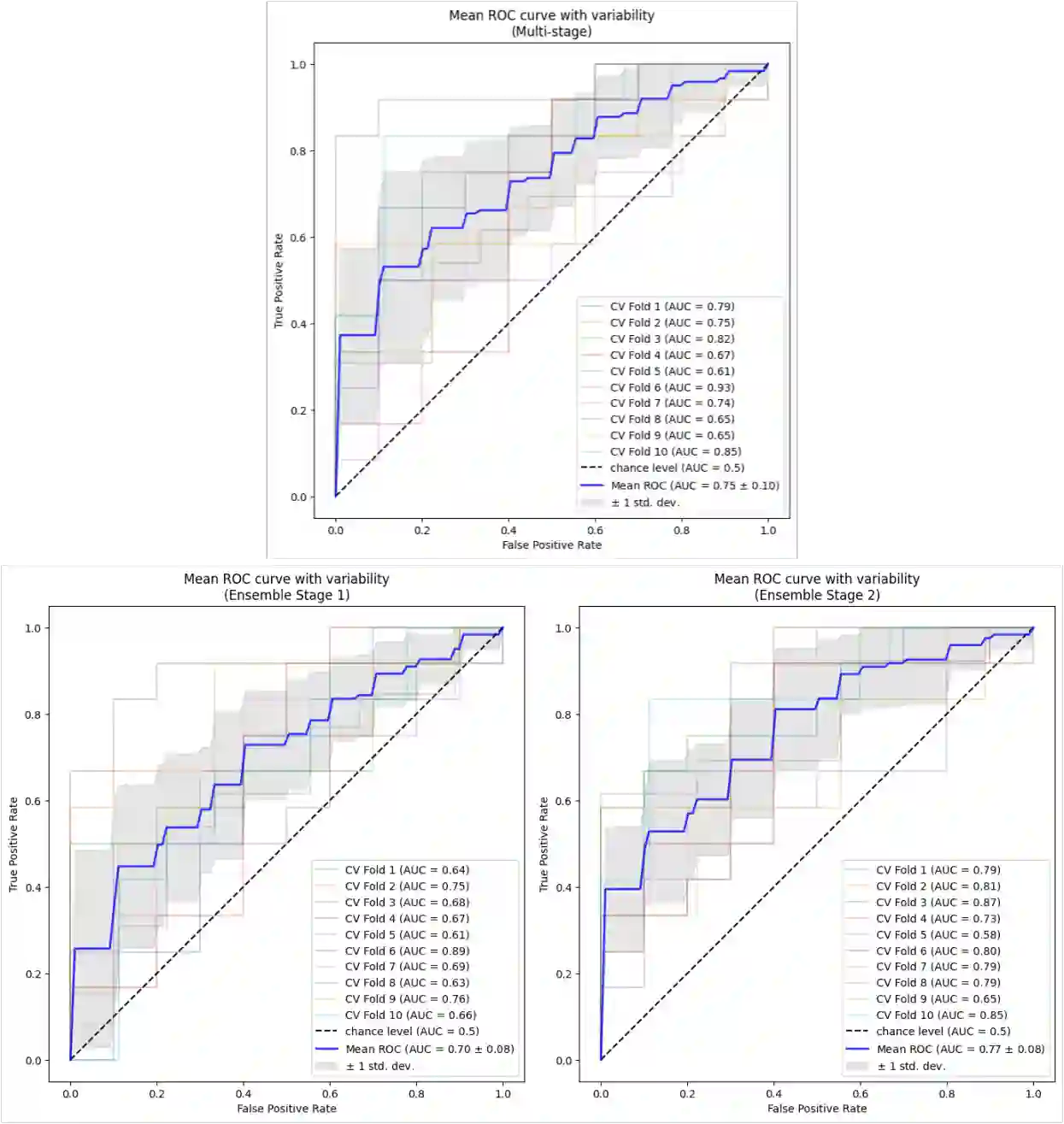
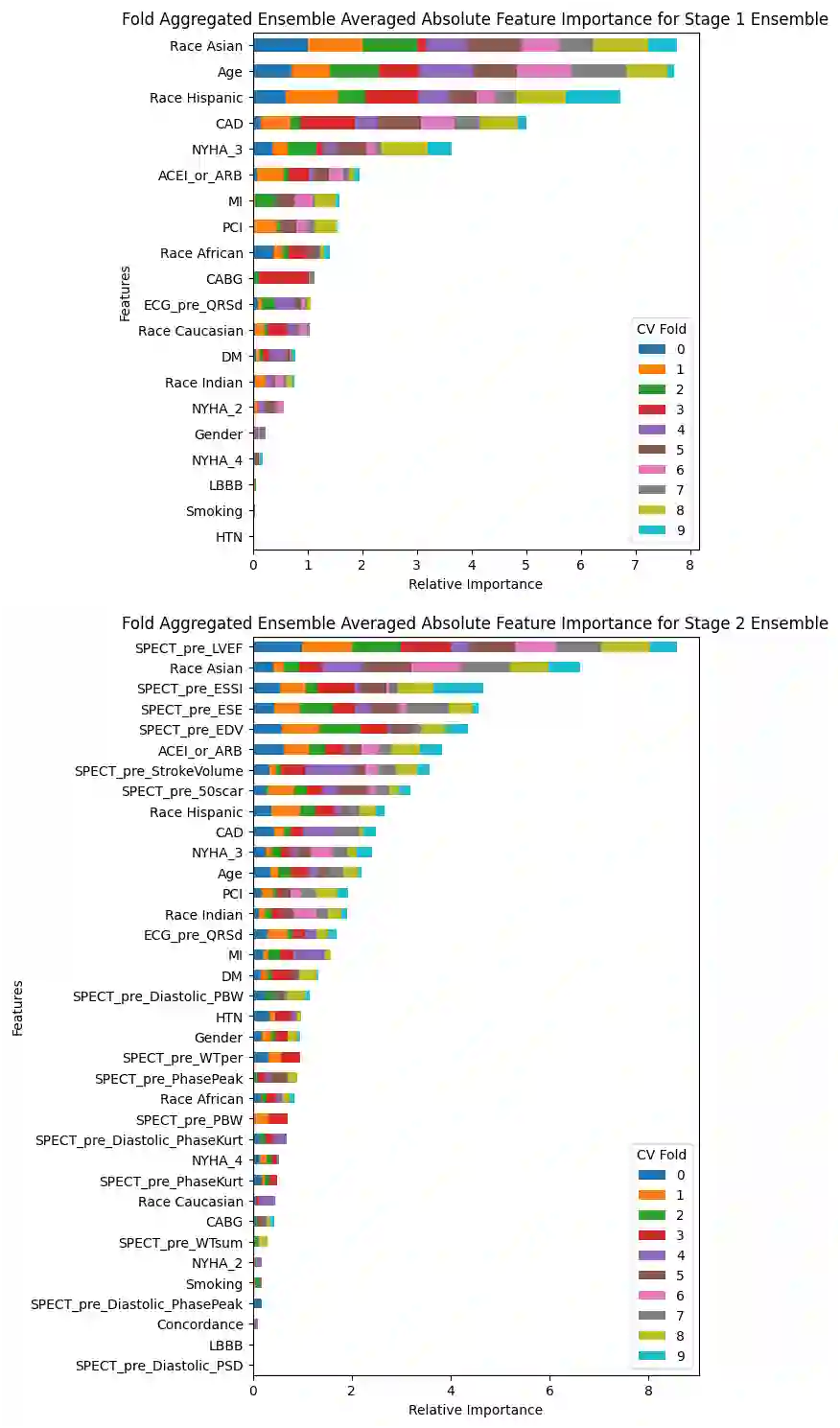
Aims. The purpose of this study is to create a multi-stage machine learning model to predict cardiac resynchronization therapy (CRT) response for heart failure (HF) patients. This model exploits uncertainty quantification to recommend additional collection of single-photon emission computed tomography myocardial perfusion imaging (SPECT MPI) variables if baseline clinical variables and features from electrocardiogram (ECG) are not sufficient. Methods. 218 patients who underwent rest-gated SPECT MPI were enrolled in this study. CRT response was defined as an increase in left ventricular ejection fraction (LVEF) > 5% at a 6 month follow-up. A multi-stage ML model was created by combining two ensemble models. Results. The response rate for CRT was 55.5% (n = 121) with overall male gender 61.0% (n = 133), an average age of 62.0, and LVEF of 27.7. The multi-stage model performed similarly to Ensemble 2 (which utilized the additional SPECT data) with AUC of 0.75 vs. 0.77, accuracy of 0.71 vs. 0.69, sensitivity of 0.70 vs. 0.72, and specificity 0.72 vs. 0.65, respectively. However, the multi-stage model only required SPECT MPI data for 52.7% of the patients across all folds. Conclusions. By using rule-based logic stemming from uncertainty quantification, the multi-stage model was able to reduce the need for additional SPECT MPI data acquisition without sacrificing performance.
翻译:目的。本研究旨在构建一个多阶段机器学习模型,用于预测心力衰竭(HF)患者对心脏再同步化治疗(CRT)的反应。该模型利用不确定性量化,在基线临床变量和心电图(ECG)特征不足时,推荐额外采集单光子发射计算机断层扫描心肌灌注成像(SPECT MPI)变量。方法。本研究纳入218例接受静息门控SPECT MPI的患者。CRT反应定义为6个月随访时左心室射血分数(LVEF)增加>5%。通过结合两种集成模型构建多阶段机器学习模型。结果。CRT反应率为55.5%(n=121),总体男性占比61.0%(n=133),平均年龄62.0岁,LVEF为27.7%。多阶段模型与集成模型2(利用了额外SPECT数据)表现相似,AUC分别为0.75 vs. 0.77,准确率0.71 vs. 0.69,灵敏度0.70 vs. 0.72,特异度0.72 vs. 0.65。然而,多阶段模型仅在全部折中52.7%的患者需要SPECT MPI数据。结论。通过采用基于不确定性量化的规则逻辑,多阶段模型能够在不牺牲性能的前提下减少额外SPECT MPI数据采集的需求。




相关内容





 微信扫码咨询专知VIP会员