

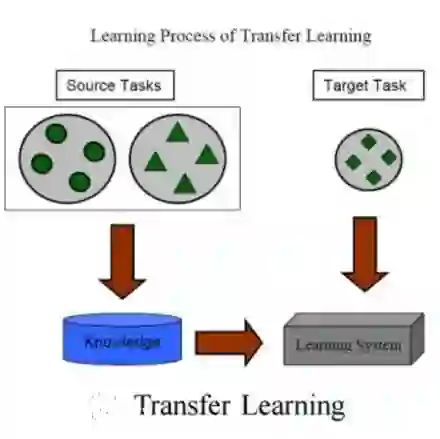
Disease detection from smartphone data represents an open research challenge in mobile health (m-health) systems. COVID-19 and its respiratory symptoms are an important case study in this area and their early detection is a potential real instrument to counteract the pandemic situation. The efficacy of this solution mainly depends on the performances of AI algorithms applied to the collected data and their possible implementation directly on the users' mobile devices. Considering these issues, and the limited amount of available data, in this paper we present the experimental evaluation of 3 different deep learning models, compared also with hand-crafted features, and of two main approaches of transfer learning in the considered scenario: both feature extraction and fine-tuning. Specifically, we considered VGGish, YAMNET, and L\textsuperscript{3}-Net (including 12 different configurations) evaluated through user-independent experiments on 4 different datasets (13,447 samples in total). Results clearly show the advantages of L\textsuperscript{3}-Net in all the experimental settings as it overcomes the other solutions by 12.3\% in terms of Precision-Recall AUC as features extractor, and by 10\% when the model is fine-tuned. Moreover, we note that to fine-tune only the fully-connected layers of the pre-trained models generally leads to worse performances, with an average drop of 6.6\% with respect to feature extraction. %highlighting the need for further investigations. Finally, we evaluate the memory footprints of the different models for their possible applications on commercial mobile devices.
翻译:从智能手机数据中进行疾病检测是移动健康(m-health)系统中一个开放的研究挑战。新冠肺炎及其呼吸道症状是该领域的重要案例研究,其早期检测是应对大流行状况的潜在实用工具。该解决方案的有效性主要取决于应用于收集数据的AI算法性能及其直接在用户移动设备上实施的可能性。考虑到这些问题以及可用数据量的限制,本文针对三种不同深度学习模型(同时与传统手工特征进行对比)和两种主要迁移学习方法(特征提取和微调)在所述场景中进行了实验评估。具体而言,我们研究了VGGish、YAMNET和L³-Net(包含12种不同配置)在四个不同数据集(总计13,447个样本)上的用户无关实验评估。结果表明,L³-Net在所有实验设置中均具有显著优势:作为特征提取器时,其在精确率-召回率AUC指标上比其他方案提升12.3%;经过微调时提升10%。此外,我们注意到仅对预训练模型的全连接层进行微调通常会导致性能下降,相较于特征提取方法平均降低6.6%。最后,我们评估了不同模型在商用移动设备上应用的内存占用情况。




相关内容


 微信扫码咨询专知VIP会员