

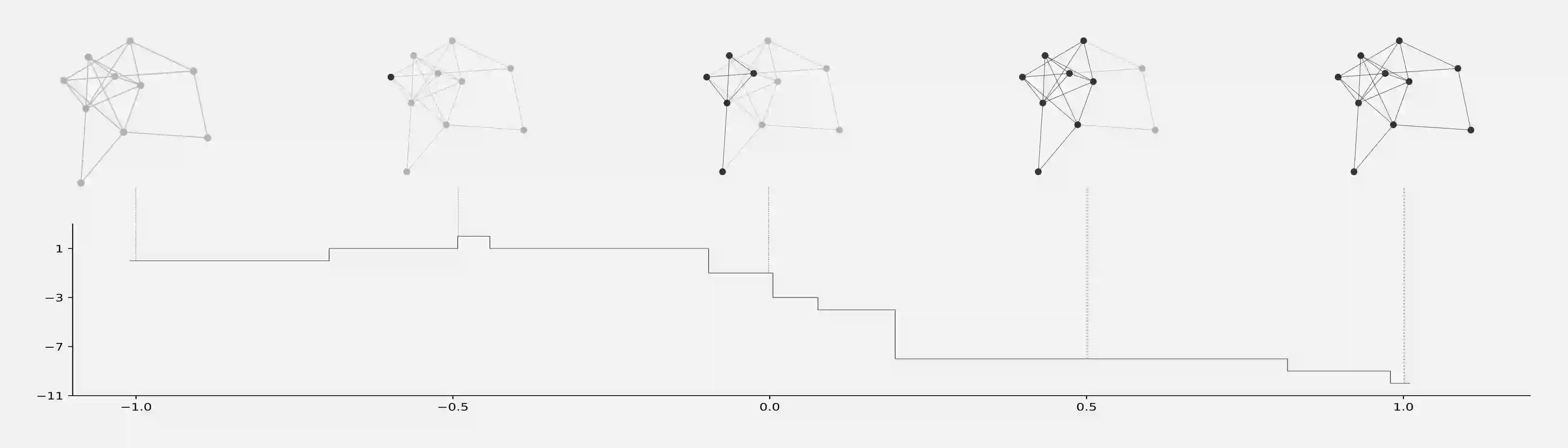
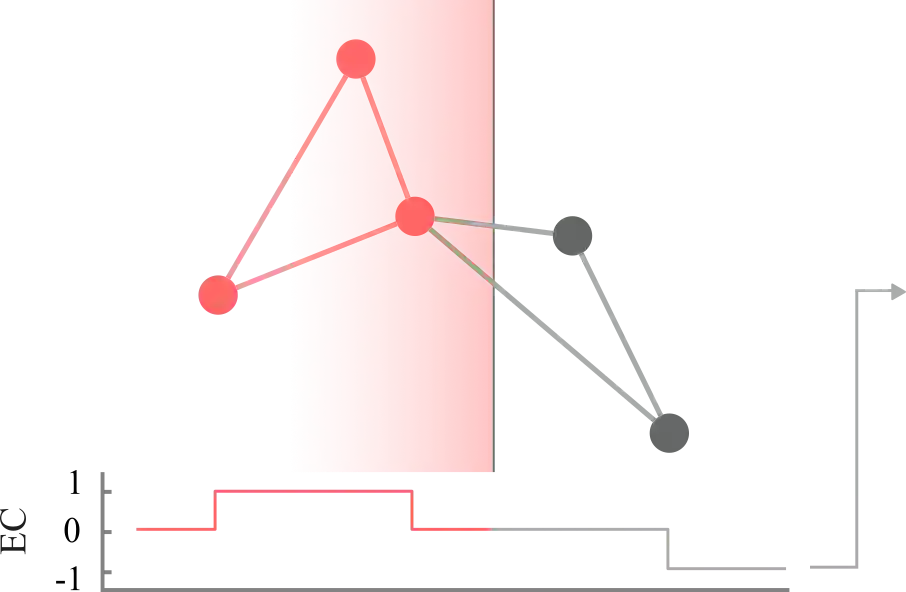
The Euler Characteristic Transform (ECT) has proven to be a powerful representation, combining geometrical and topological characteristics of shapes and graphs. However, the ECT was hitherto unable to learn task-specific representations. We overcome this issue and develop a novel computational layer that enables learning the ECT in an end-to-end fashion. Our method, the Differentiable Euler Characteristic Transform (DECT), is fast and computationally efficient, while exhibiting performance on a par with more complex models in both graph and point cloud classification tasks. Moreover, we show that this seemingly simple statistic provides the same topological expressivity as more complex topological deep learning layers.
翻译:欧拉特征变换已被证明是一种强大的表示方法,它结合了形状和图的几何与拓扑特征。然而,欧拉特征变换迄今为止无法学习任务特定的表示。我们克服了这一难题,开发了一种新型计算层,能够以端到端的方式学习欧拉特征变换。我们的方法——可微欧拉特征变换(DECT)——快速且计算高效,同时在图和点云分类任务中展现出与更复杂模型相当的性能。此外,我们表明,这一看似简单的统计量提供了与更复杂的拓扑深度学习层相同的拓扑表达能力。





相关内容


 微信扫码咨询专知VIP会员