

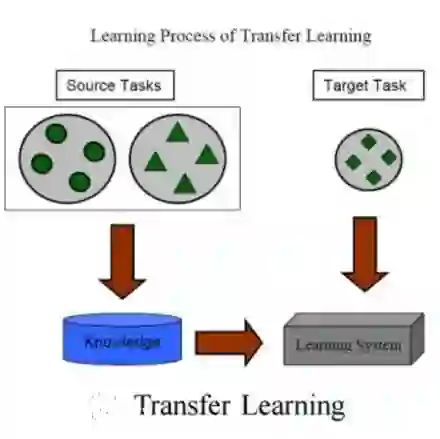
The adoption of deep learning in ECG diagnosis is often hindered by the scarcity of large, well-labeled datasets in real-world scenarios, leading to the use of transfer learning to leverage features learned from larger datasets. Yet the prevailing assumption that transfer learning consistently outperforms training from scratch has never been systematically validated. In this study, we conduct the first extensive empirical study on the effectiveness of transfer learning in multi-label ECG classification, by investigating comparing the fine-tuning performance with that of training from scratch, covering a variety of ECG datasets and deep neural networks. We confirm that fine-tuning is the preferable choice for small downstream datasets; however, when the dataset is sufficiently large, training from scratch can achieve comparable performance, albeit requiring a longer training time to catch up. Furthermore, we find that transfer learning exhibits better compatibility with convolutional neural networks than with recurrent neural networks, which are the two most prevalent architectures for time-series ECG applications. Our results underscore the importance of transfer learning in ECG diagnosis, yet depending on the amount of available data, researchers may opt not to use it, considering the non-negligible cost associated with pre-training.
翻译:深度学习在心电图诊断中的应用常因现实场景中大规模、高质量标注数据集的稀缺而受限,这促使研究者采用迁移学习以利用从更大规模数据集中学习到的特征。然而,关于迁移学习始终优于从零开始训练这一普遍假设,此前从未得到系统性验证。本研究首次针对多标签心电图分类任务中迁移学习的有效性开展了大规模实证分析,通过比较微调策略与从零开始训练的性能差异,涵盖了多种心电图数据集与深度神经网络架构。我们证实,对于小型下游数据集,微调是更优选择;然而,当数据集规模足够大时,从零开始训练也能达到相当性能,尽管需要更长的训练时间才能追平效果。此外,我们发现迁移学习在卷积神经网络中比在循环神经网络中表现出更好的兼容性,而这两类架构正是时序心电图分析中最常用的模型。我们的研究结果凸显了迁移学习在心电图诊断中的重要性,但根据可用数据量的不同,考虑到预训练所需的不可忽视成本,研究者亦可选择不采用该技术。




相关内容




 微信扫码咨询专知VIP会员