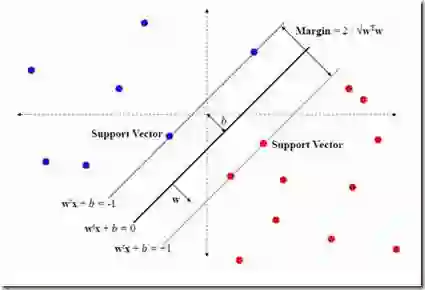
We present our Brain-Computer Interface (BCI) System, developed for the BCI discipline of Cybathlon 2020 competition. In the BCI discipline, subjects with tetraplegia are required to control a computer game with mental commands. The absolute of the Fast-Fourier Transformation amplitude was calculated as a feature (FFTabs) from one-second-long electroencephalographic (EEG) signals. To extract the final features, we introduced two methods, namely the Feature Average, where the average of the FFTabs for a specific frequency band was calculated, and the Feature Range, which was based on generating multiple Feature Averages for non-overlapping 2 Hz wide frequency bins. The resulting features were fed to a Support Vector Machine classifier. The algorithms were tested on the PhysioNet database and our dataset, which contains 16 offline experiments recorded with 2 tetraplegic subjects. 27 gameplay trials (out of 59) with our tetraplegic subjects reached the 240-second qualification time limit. The Feature Average of canonical frequency bands (alpha, beta, gamma, and theta) were compared with our suggested range30 and range40 methods. On the PhysioNet dataset, the range40 method combined with an ensemble SVM classifier significantly reached the highest accuracy level (0.4607), with a 4-class classification, and outperformed the state-of-the-art EEGNet.


翻译:我们介绍了为Cybathlon 2020竞赛的脑机接口(BCI)项目开发的脑机接口系统。在该项目中,四肢瘫痪患者需通过意念指令操控计算机游戏。我们从一秒长度的脑电图(EEG)信号中提取快速傅里叶变换幅度的绝对值作为特征(FFTabs)。为获取最终特征,我们引入了两种方法:特征均值法(计算特定频段FFTabs的平均值)与特征区间法(基于对无重叠的2赫兹宽频段生成多个特征均值)。所得特征被输入支持向量机分类器。该算法在PhysioNet数据库及我们包含2名四肢瘫痪患者16次离线实验的数据集上进行了测试。在总共59次游戏试验中,有27次成功达到240秒的资格赛时限。我们将典型频段(α、β、γ、θ)的特征均值与建议的range30及range40方法进行了对比。在PhysioNet数据集上,range40方法结合集成SVM分类器在四分类任务中取得了最高准确率(0.4607),显著优于当前最先进的EEGNet模型。


0
下载
关闭预览

相关内容

专知会员服务
47+阅读 · 2020年10月31日
强化学习最新教程,17页pdf
专知会员服务
182+阅读 · 2019年10月11日
[综述]深度学习下的场景文本检测与识别
专知会员服务
78+阅读 · 2019年10月10日
【SIGGRAPH2019】TensorFlow 2.0深度学习计算机图形学应用
专知会员服务
41+阅读 · 2019年10月9日
征稿 | CFP:Special Issue of NLP and KG(JCR Q2,IF2.67)
开放知识图谱
1+阅读 · 2022年4月4日
Hierarchically Structured Meta-learning
CreateAMind
27+阅读 · 2019年5月22日
Transferring Knowledge across Learning Processes
CreateAMind
29+阅读 · 2019年5月18日
强化学习的Unsupervised Meta-Learning
CreateAMind
18+阅读 · 2019年1月7日
A Technical Overview of AI & ML in 2018 & Trends for 2019
待字闺中
18+阅读 · 2018年12月24日
LibRec 精选:推荐系统的论文与源码
LibRec智能推荐
14+阅读 · 2018年11月29日
vae 相关论文 表示学习 1
CreateAMind
12+阅读 · 2018年9月6日
LibRec 精选:推荐的可解释性[综述]
LibRec智能推荐
10+阅读 · 2018年5月4日
国家自然科学基金
0+阅读 · 2015年12月31日
国家自然科学基金
0+阅读 · 2015年12月31日
国家自然科学基金
0+阅读 · 2013年12月31日
国家自然科学基金
1+阅读 · 2013年12月31日
国家自然科学基金
0+阅读 · 2012年12月31日
国家自然科学基金
0+阅读 · 2011年12月31日
国家自然科学基金
0+阅读 · 2009年12月31日
Arxiv
0+阅读 · 2023年3月24日
Arxiv
37+阅读 · 2021年8月2日
VIP会员
最新内容
深入Project Maven:为何人工智能在战场上依然失灵
锻造未来士兵:外骨骼、基因工程与赛博格
专知会员服务
6+阅读 · 7月19日
《无人机蜂群通信技术研究》50页
专知会员服务
7+阅读 · 7月19日
战力倍增器:自主武器系统与乌克兰及加沙冲突
人工智能赋能战场情报:提速决策进程
专知会员服务
5+阅读 · 7月17日
《拥抱新兴技术:面向未来军官的教育革新》
专知会员服务
8+阅读 · 7月17日
相关资讯
征稿 | CFP:Special Issue of NLP and KG(JCR Q2,IF2.67)
开放知识图谱
1+阅读 · 2022年4月4日
Hierarchically Structured Meta-learning
CreateAMind
27+阅读 · 2019年5月22日
Transferring Knowledge across Learning Processes
CreateAMind
29+阅读 · 2019年5月18日
强化学习的Unsupervised Meta-Learning
CreateAMind
18+阅读 · 2019年1月7日
A Technical Overview of AI & ML in 2018 & Trends for 2019
待字闺中
18+阅读 · 2018年12月24日
LibRec 精选:推荐系统的论文与源码
LibRec智能推荐
14+阅读 · 2018年11月29日
vae 相关论文 表示学习 1
CreateAMind
12+阅读 · 2018年9月6日
LibRec 精选:推荐的可解释性[综述]
LibRec智能推荐
10+阅读 · 2018年5月4日
相关基金
国家自然科学基金
0+阅读 · 2015年12月31日
国家自然科学基金
0+阅读 · 2015年12月31日
国家自然科学基金
0+阅读 · 2013年12月31日
国家自然科学基金
1+阅读 · 2013年12月31日
国家自然科学基金
0+阅读 · 2012年12月31日
国家自然科学基金
0+阅读 · 2011年12月31日
国家自然科学基金
0+阅读 · 2009年12月31日
Top
微信扫码咨询专知VIP会员