

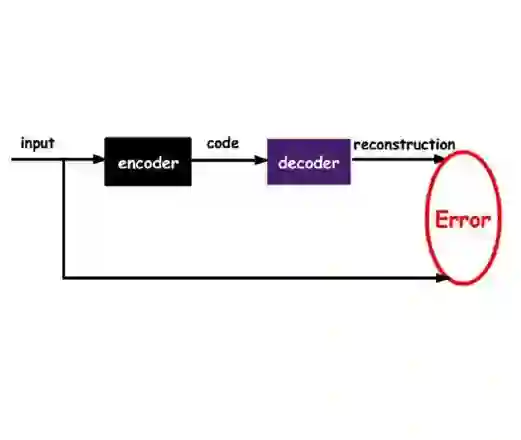
Hiding the wireless communication by transmitter Alice to intended receiver Bob from a capable and attentive adversary Willie has been widely studied under the moniker "covert communications". However, when such covert communication is done in the presence of allowable system communications, there has been little study of both hiding the signal and preserving the performance of those allowable communications. Here, by treating Alice, Bob, and Willie as a generator, decoder, and discriminator neural network, we perform joint training in an adversarial setting to yield a covert communication scheme that can be added to any normal autoencoder. The method does not depend on the characteristics of the cover signal or the type of channel and it is developed for both single-user and multi-user systems. Numerical results indicate that we are able to establish a reliable undetectable channel between Alice and Bob, regardless of the cover signal or type of fading, and that the signal causes almost no disturbance to the ongoing normal operation of the system.
翻译:通过发送方Alice向预期接收方Bob隐藏无线通信,使其无法被能力强大且注意力集中的对手Willie检测,这一方向在“隐蔽通信”的名义下已被广泛研究。然而,当此类隐蔽通信在系统允许通信存在的场景下进行时,关于同时隐藏信号并保持这些允许通信性能的研究却很少。本文将Alice、Bob和Willie分别视为生成器、解码器和判别器神经网络,在对抗性环境下进行联合训练,从而生成一种可附加到任何标准自编码器上的隐蔽通信方案。该方法不依赖于掩盖信号的特征或信道类型,并针对单用户和多用户系统进行了开发。数值结果表明,无论掩盖信号或衰落类型如何,我们都能够在Alice与Bob之间建立一条可靠且不可检测的信道,且该信号几乎不会对系统的持续正常运行造成干扰。




相关内容



 微信扫码咨询专知VIP会员