

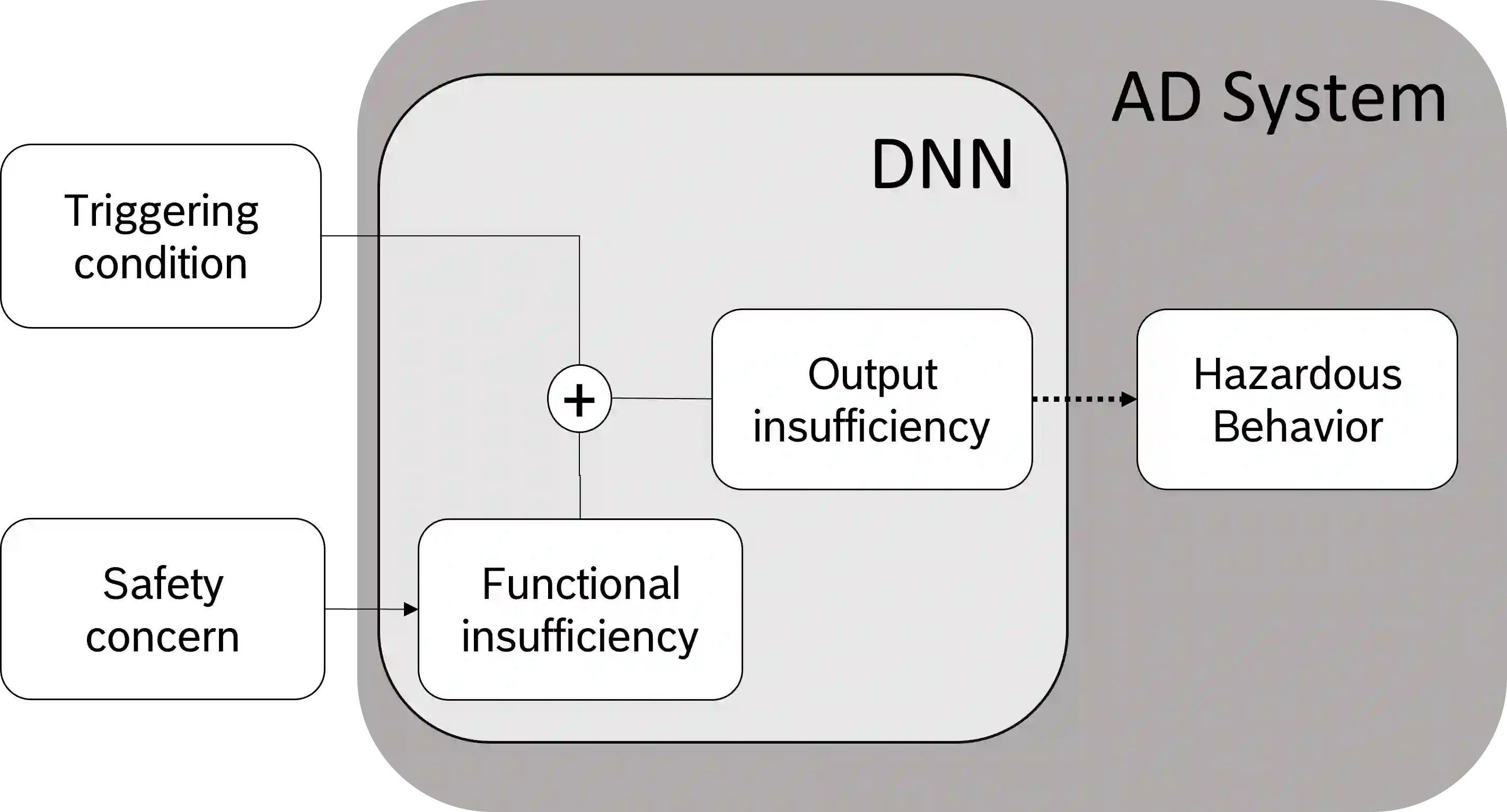
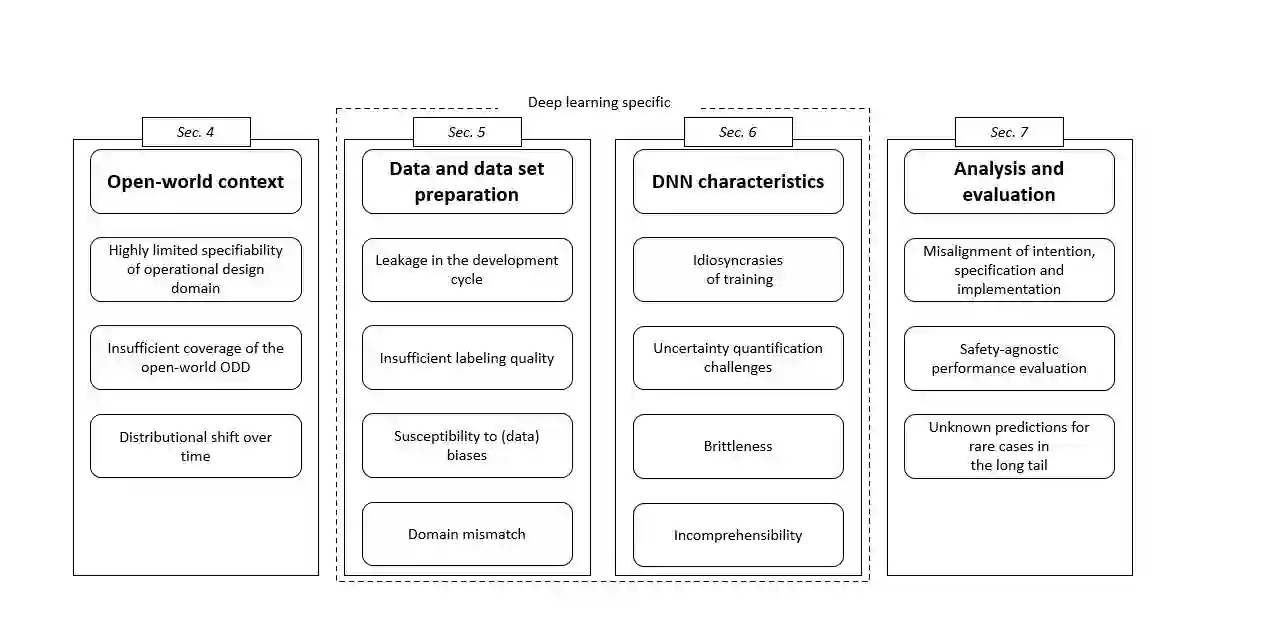
Recent advances in the field of deep learning and impressive performance of deep neural networks (DNNs) for perception have resulted in an increased demand for their use in automated driving (AD) systems. The safety of such systems is of utmost importance and thus requires to consider the unique properties of DNNs. In order to achieve safety of AD systems with DNN-based perception components in a systematic and comprehensive approach, so-called safety concerns have been introduced as a suitable structuring element. On the one hand, the concept of safety concerns is -- by design -- well aligned to existing standards relevant for safety of AD systems such as ISO 21448 (SOTIF). On the other hand, it has already inspired several academic publications and upcoming standards on AI safety such as ISO PAS 8800. While the concept of safety concerns has been previously introduced, this paper extends and refines it, leveraging feedback from various domain and safety experts in the field. In particular, this paper introduces an additional categorization for a better understanding as well as enabling cross-functional teams to jointly address the concerns.
翻译:近年来,深度学习领域的最新进展以及深度神经网络在感知任务中的卓越表现,导致其在自动驾驶系统中的需求日益增长。这类系统的安全性至关重要,因此必须考虑深度神经网络的独特特性。为了以系统化和全面的方法实现基于深度神经网络感知组件的自动驾驶系统安全,所谓的安全隐患作为一种合适的结构化要素被引入。一方面,安全隐患的概念在设计上很好地契合了与自动驾驶系统安全相关的现有标准,如ISO 21448(预期功能安全)。另一方面,它已启发了多篇学术出版物及即将出台的AI安全标准(如ISO PAS 8800)。尽管安全隐患的概念此前已被提出,但本文通过利用该领域多位领域及安全专家的反馈,对其进行了扩展和完善。具体而言,本文引入了一种额外的分类方法,以促进更深入的理解,并使跨职能团队能够协同应对这些隐患。




相关内容




 微信扫码咨询专知VIP会员