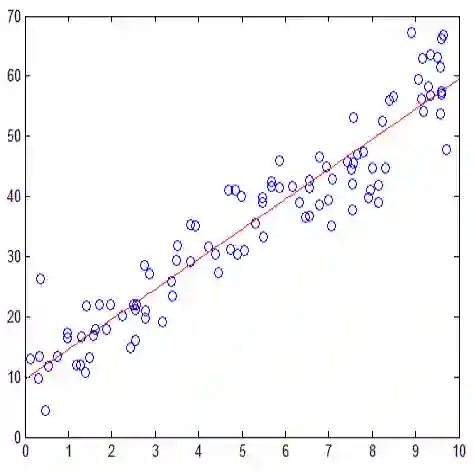
Double descent is a surprising phenomenon in machine learning, in which as the number of model parameters grows relative to the number of data, test error drops as models grow ever larger into the highly overparameterized (data undersampled) regime. This drop in test error flies against classical learning theory on overfitting and has arguably underpinned the success of large models in machine learning. This non-monotonic behavior of test loss depends on the number of data, the dimensionality of the data and the number of model parameters. Here, we briefly describe double descent, then provide an explanation of why double descent occurs in an informal and approachable manner, requiring only familiarity with linear algebra and introductory probability. We provide visual intuition using polynomial regression, then mathematically analyze double descent with ordinary linear regression and identify three interpretable factors that, when simultaneously all present, together create double descent. We demonstrate that double descent occurs on real data when using ordinary linear regression, then demonstrate that double descent does not occur when any of the three factors are ablated. We use this understanding to shed light on recent observations in nonlinear models concerning superposition and double descent. Code is publicly available.


翻译:双重下降是机器学习中一个令人惊讶的现象,即当模型参数数量相对于数据量增长时,测试误差会随着模型规模进一步扩大至高度过参数化(数据欠采样)区域而下降。这种测试误差的下降与经典学习理论中的过拟合相悖,并被认为是大型模型在机器学习中成功的基础。测试损失的非单调行为取决于数据量、数据维度以及模型参数数量。本文首先简要描述双重下降,随后以非正式且易于理解的方式解释双重下降的发生原因——仅需读者具备线性代数和初等概率论基础。我们通过多项式回归提供直观的可视化解释,接着利用普通线性回归对双重下降进行数学分析,并识别出三个可解释的因素——当这三个因素同时存在时,共同导致双重下降。我们证明,在使用普通线性回归处理真实数据时会出现双重下降,而当消融这三个因素中的任意一个时,双重下降便不再发生。基于这一理解,我们阐释了近年来在非线性模型中观察到的关于叠加与双重下降的现象。代码已公开。


0
下载
关闭预览

相关内容

【干货书】深度学习数学:理解神经网络,347页pdf
专知会员服务
267+阅读 · 2022年7月3日
不可错过!《机器学习100讲》课程,UBC Mark Schmidt讲授
专知会员服务
76+阅读 · 2022年6月28日
【2022新书】高效深度学习,Efficient Deep Learning Book
专知会员服务
128+阅读 · 2022年4月21日
剑桥大学《数据科学: 原理与实践》课程,附PPT下载
专知会员服务
54+阅读 · 2021年1月20日
专知会员服务
46+阅读 · 2020年10月31日
NeurlPS2022推荐系统论文集锦
机器学习与推荐算法
1+阅读 · 2022年9月26日
Uber是怎么改造A/B测试实践的
InfoQ
0+阅读 · 2022年9月9日
深度自进化聚类:Deep Self-Evolution Clustering
我爱读PAMI
15+阅读 · 2019年4月13日
【论文】深度学习的数学解释
机器学习研究会
10+阅读 · 2017年12月15日
【论文】变分推断(Variational inference)的总结
机器学习研究会
39+阅读 · 2017年11月16日
可解释的CNN
CreateAMind
18+阅读 · 2017年10月5日
【推荐】深度学习目标检测全面综述
机器学习研究会
21+阅读 · 2017年9月13日
【推荐】用Tensorflow理解LSTM
机器学习研究会
36+阅读 · 2017年9月11日
国家自然科学基金
1+阅读 · 2015年12月31日
国家自然科学基金
0+阅读 · 2015年12月31日
国家自然科学基金
0+阅读 · 2014年12月31日
国家自然科学基金
1+阅读 · 2013年12月31日
国家自然科学基金
0+阅读 · 2013年12月31日
国家自然科学基金
1+阅读 · 2012年12月31日
国家自然科学基金
0+阅读 · 2012年12月31日
国家自然科学基金
0+阅读 · 2012年12月31日
Arxiv
0+阅读 · 2023年5月12日
Arxiv
12+阅读 · 2021年3月25日
Deep Anomaly Detection with Outlier Exposure
Arxiv
17+阅读 · 2018年12月21日
VIP会员
最新内容
综述 | OPSD:大语言模型的在线策略自蒸馏
专知会员服务
3+阅读 · 6月1日
帕兰蒂尔Maven:军事人工智能的新纪元
专知会员服务
8+阅读 · 6月1日
超越网格:作战环境对炮兵的影响
专知会员服务
3+阅读 · 5月31日
BES:让语言模型通过双向进化搜索自我改进
专知会员服务
6+阅读 · 5月30日
以色列-美国-伊朗战争中的无人机:关键要点
专知会员服务
7+阅读 · 5月30日
相关VIP内容
【干货书】深度学习数学:理解神经网络,347页pdf
专知会员服务
267+阅读 · 2022年7月3日
不可错过!《机器学习100讲》课程,UBC Mark Schmidt讲授
专知会员服务
76+阅读 · 2022年6月28日
【2022新书】高效深度学习,Efficient Deep Learning Book
专知会员服务
128+阅读 · 2022年4月21日
剑桥大学《数据科学: 原理与实践》课程,附PPT下载
专知会员服务
54+阅读 · 2021年1月20日
专知会员服务
46+阅读 · 2020年10月31日
相关资讯
NeurlPS2022推荐系统论文集锦
机器学习与推荐算法
1+阅读 · 2022年9月26日
Uber是怎么改造A/B测试实践的
InfoQ
0+阅读 · 2022年9月9日
深度自进化聚类:Deep Self-Evolution Clustering
我爱读PAMI
15+阅读 · 2019年4月13日
【论文】深度学习的数学解释
机器学习研究会
10+阅读 · 2017年12月15日
【论文】变分推断(Variational inference)的总结
机器学习研究会
39+阅读 · 2017年11月16日
可解释的CNN
CreateAMind
18+阅读 · 2017年10月5日
【推荐】深度学习目标检测全面综述
机器学习研究会
21+阅读 · 2017年9月13日
【推荐】用Tensorflow理解LSTM
机器学习研究会
36+阅读 · 2017年9月11日
相关基金
国家自然科学基金
1+阅读 · 2015年12月31日
国家自然科学基金
0+阅读 · 2015年12月31日
国家自然科学基金
0+阅读 · 2014年12月31日
国家自然科学基金
1+阅读 · 2013年12月31日
国家自然科学基金
0+阅读 · 2013年12月31日
国家自然科学基金
1+阅读 · 2012年12月31日
国家自然科学基金
0+阅读 · 2012年12月31日
国家自然科学基金
0+阅读 · 2012年12月31日
Top
微信扫码咨询专知VIP会员