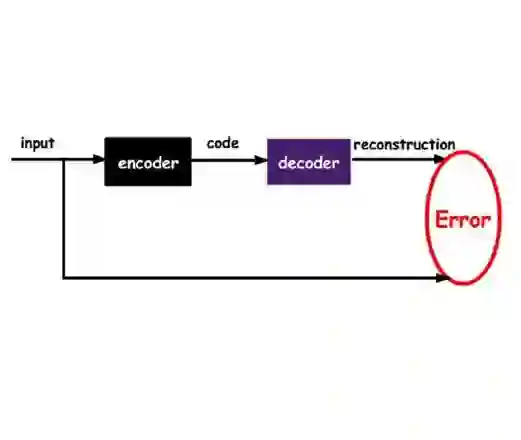
Anomaly detection at the edge requires the deployment of models that achieve competitive performance, while minimizing computational cost and memory footprint. In this article, we investigate the suitability of the Mahalanobis Distance of Reservoir States (MDRS), an unsupervised time-series anomaly detection method, for resource-constrained devices and propose two optimizations to reduce its computational requirements. Specifically, we replace random reservoir connectivity (MDRS-Rand) with a circular shift (MDRS-Circ) and show that the anomaly score for an entire time series can be computed from the final reservoir state alone. Furthermore, we show that exploiting the reservoir's temporal memory enables more efficient input preprocessing, further reducing computational cost. We evaluate the MDRS variants on the MLPerf Tiny anomaly detection benchmark against the reference autoencoder and other anomaly detection methods, and deploy their inference kernels on a NUCLEO-F401RE microcontroller to assess latency, estimate energy consumption, and measure memory footprint. Among the evaluated methods, only MDRS and the autoencoder meet the benchmark's performance target, with MDRS requiring fewer operations and smaller models. With optimized preprocessing, MDRS achieves an ROC AUC of 0.869, a model size of 24 KB, an estimated energy consumption of 24 uJ per inference, and a latency of 0.32 ms, corresponding to a 75.9x speedup over the autoencoder with standard preprocessing.


翻译:暂无翻译

0
下载
关闭预览

相关内容

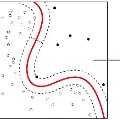
在数据挖掘中,异常检测(英语:anomaly detection)对不符合预期模式或数据集中其他项目的项目、事件或观测值的识别。通常异常项目会转变成银行欺诈、结构缺陷、医疗问题、文本错误等类型的问题。异常也被称为离群值、新奇、噪声、偏差和例外。 特别是在检测滥用与网络入侵时,有趣性对象往往不是罕见对象,但却是超出预料的突发活动。这种模式不遵循通常统计定义中把异常点看作是罕见对象,于是许多异常检测方法(特别是无监督的方法)将对此类数据失效,除非进行了合适的聚集。相反,聚类分析算法可能可以检测出这些模式形成的微聚类。 有三大类异常检测方法。[1] 在假设数据集中大多数实例都是正常的前提下,无监督异常检测方法能通过寻找与其他数据最不匹配的实例来检测出未标记测试数据的异常。监督式异常检测方法需要一个已经被标记“正常”与“异常”的数据集,并涉及到训练分类器(与许多其他的统计分类问题的关键区别是异常检测的内在不均衡性)。半监督式异常检测方法根据一个给定的正常训练数据集创建一个表示正常行为的模型,然后检测由学习模型生成的测试实例的可能性。
《边缘计算关键技术分析及美军作战实践应用》
国防领域边缘计算:将智能推向行动前沿
专知会员服务
29+阅读 · 2025年4月6日
Stabilizing Transformers for Reinforcement Learning
专知会员服务
61+阅读 · 2019年10月17日
《“边缘计算+”技术白皮书》,82页pdf
专知
11+阅读 · 2022年8月28日
Hierarchically Structured Meta-learning
CreateAMind
27+阅读 · 2019年5月22日
Unsupervised Learning via Meta-Learning
CreateAMind
44+阅读 · 2019年1月3日
A Technical Overview of AI & ML in 2018 & Trends for 2019
待字闺中
18+阅读 · 2018年12月24日
Focal Loss for Dense Object Detection
统计学习与视觉计算组
12+阅读 · 2018年3月15日
动手写机器学习算法:异常检测 Anomaly Detection
七月在线实验室
11+阅读 · 2017年12月8日
边缘计算:万物互联时代新型计算模型
计算机研究与发展
15+阅读 · 2017年5月19日
国家自然科学基金
1+阅读 · 2015年12月31日
国家自然科学基金
3+阅读 · 2015年12月31日
国家自然科学基金
1+阅读 · 2014年12月31日
国家自然科学基金
0+阅读 · 2014年12月31日
国家自然科学基金
0+阅读 · 2014年12月31日
国家自然科学基金
1+阅读 · 2014年12月31日
国家自然科学基金
1+阅读 · 2014年12月31日
国家自然科学基金
0+阅读 · 2014年12月31日
国家自然科学基金
2+阅读 · 2014年12月31日
国家自然科学基金
18+阅读 · 2014年12月31日
VIP会员
最新内容
人工智能在军事教育中的应用:若干视角与经验
“星链”减速与不断适应的乌克兰
专知会员服务
2+阅读 · 11月6日
美国中期选举之后:帕兰提尔面临不确定性?
专知会员服务
3+阅读 · 11月6日
《面向国防领域的大语言模型基准测试与适配》
专知会员服务
17+阅读 · 10月28日
世界模型入门:从序贯决策到通用智能体
专知会员服务
19+阅读 · 10月24日
相关VIP内容
《边缘计算关键技术分析及美军作战实践应用》
国防领域边缘计算:将智能推向行动前沿
专知会员服务
29+阅读 · 2025年4月6日
Stabilizing Transformers for Reinforcement Learning
专知会员服务
61+阅读 · 2019年10月17日
相关资讯
《“边缘计算+”技术白皮书》,82页pdf
专知
11+阅读 · 2022年8月28日
Hierarchically Structured Meta-learning
CreateAMind
27+阅读 · 2019年5月22日
Unsupervised Learning via Meta-Learning
CreateAMind
44+阅读 · 2019年1月3日
A Technical Overview of AI & ML in 2018 & Trends for 2019
待字闺中
18+阅读 · 2018年12月24日
Focal Loss for Dense Object Detection
统计学习与视觉计算组
12+阅读 · 2018年3月15日
动手写机器学习算法:异常检测 Anomaly Detection
七月在线实验室
11+阅读 · 2017年12月8日
边缘计算:万物互联时代新型计算模型
计算机研究与发展
15+阅读 · 2017年5月19日
相关基金
国家自然科学基金
1+阅读 · 2015年12月31日
国家自然科学基金
3+阅读 · 2015年12月31日
国家自然科学基金
1+阅读 · 2014年12月31日
国家自然科学基金
0+阅读 · 2014年12月31日
国家自然科学基金
0+阅读 · 2014年12月31日
国家自然科学基金
1+阅读 · 2014年12月31日
国家自然科学基金
1+阅读 · 2014年12月31日
国家自然科学基金
0+阅读 · 2014年12月31日
国家自然科学基金
2+阅读 · 2014年12月31日
国家自然科学基金
18+阅读 · 2014年12月31日
Top
微信扫码咨询专知VIP会员