

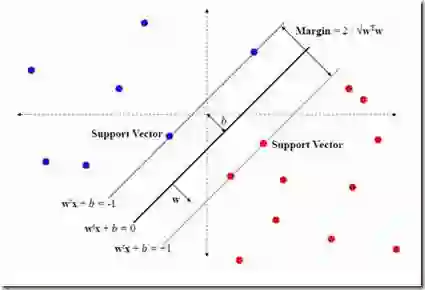
A "dark cloud" hangs over numerical optimization theory for decades, namely, whether an optimization algorithm $O(\log(n))$ iteration complexity exists. "Yes", this paper answers, with a new optimization algorithm and strict theory proof. It starts with box-constrained quadratic programming (Box-QP), and many practical optimization problems fall into Box-QP. General smooth quadratic programming (QP), nonsmooth Lasso, and support vector machine (or regression) can be reformulated as Box-QP via duality theory. It is the first time to present an $O(\log(n))$ iteration complexity QP algorithm, in particular, which behaves like a "direct" method: the required number of iterations is deterministic with exact value $\left\lceil\log\left(\frac{3.125n}{\epsilon}\right)/\log(1.5625)\right\rceil$. This significant breakthrough enables us to transition from the $O(\sqrt{n})$ to the $O(\log(n))$ optimization algorithm, whose amazing scalability is particularly relevant in today's era of big data and artificial intelligence.
翻译:数十年来,数值优化理论中一直笼罩着一层“乌云”,即是否存在迭代复杂度为 $O(\log(n))$ 的优化算法。“是的”,本文通过提出一种新的优化算法并给出严格的理论证明来回答该问题。该算法从箱型约束二次规划(Box-QP)入手,而许多实际优化问题可归结为Box-QP形式。一般光滑二次规划(QP)、非光滑Lasso以及支持向量机(或回归)均可通过对偶理论转化为Box-QP。本文首次给出一种迭代复杂度为 $O(\log(n))$ 的QP算法,尤为特别的是,该算法行为类似“直接法”:所需迭代次数是确定性的,其精确值为 $\left\lceil\log\left(\frac{3.125n}{\epsilon}\right)/\log(1.5625)\right\rceil$。这一重大突破使我们能够从 $O(\sqrt{n})$ 优化算法迈向 $O(\log(n))$ 优化算法,其惊人的可扩展性在当今大数据与人工智能时代具有特殊意义。




相关内容

 微信扫码咨询专知VIP会员