

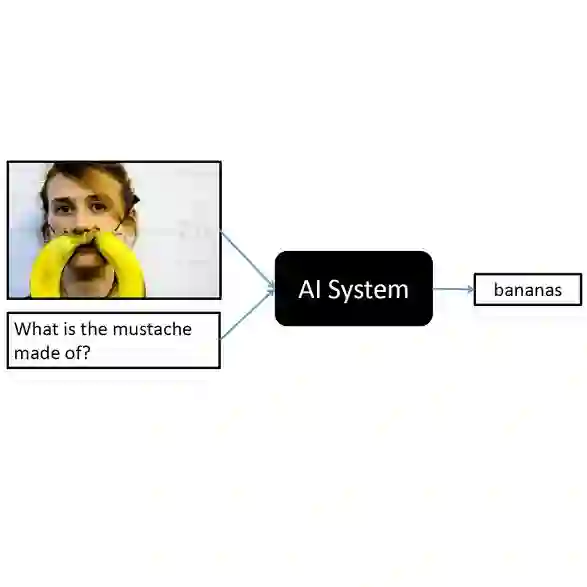
In recent years, artificial intelligence has played an important role in medicine and disease diagnosis, with many applications to be mentioned, one of which is Medical Visual Question Answering (MedVQA). By combining computer vision and natural language processing, MedVQA systems can assist experts in extracting relevant information from medical image based on a given question and providing precise diagnostic answers. The ImageCLEFmed-MEDVQA-GI-2023 challenge carried out visual question answering task in the gastrointestinal domain, which includes gastroscopy and colonoscopy images. Our team approached Task 1 of the challenge by proposing a multimodal learning method with image enhancement to improve the VQA performance on gastrointestinal images. The multimodal architecture is set up with BERT encoder and different pre-trained vision models based on convolutional neural network (CNN) and Transformer architecture for features extraction from question and endoscopy image. The result of this study highlights the dominance of Transformer-based vision models over the CNNs and demonstrates the effectiveness of the image enhancement process, with six out of the eight vision models achieving better F1-Score. Our best method, which takes advantages of BERT+BEiT fusion and image enhancement, achieves up to 87.25% accuracy and 91.85% F1-Score on the development test set, while also producing good result on the private test set with accuracy of 82.01%.
翻译:近年来,人工智能在医学和疾病诊断中发挥了重要作用,许多应用值得关注,其中一项便是医学视觉问答(MedVQA)。通过结合计算机视觉和自然语言处理,MedVQA系统能够辅助专家根据给定问题从医学图像中提取相关信息,并给出精准的诊断答案。ImageCLEFmed-MEDVQA-GI-2023挑战赛在胃肠道领域开展了视觉问答任务,涵盖胃镜和结肠镜图像。我们的团队通过提出一种结合图像增强的多模态学习方法,提升了胃肠道图像上的VQA性能,以此应对挑战赛的任务1。该多模态架构采用BERT编码器以及基于卷积神经网络(CNN)和Transformer架构的不同预训练视觉模型,用于从问题和内镜图像中提取特征。本研究结果突显了基于Transformer的视觉模型相对于CNN的优越性,并展示了图像增强过程的有效性——在八个视觉模型中,有六个获得了更高的F1分数。我们的最佳方法利用了BERT+BEiT融合与图像增强的优势,在开发测试集上达到了87.25%的准确率和91.85%的F1分数,同时在私有测试集上也取得了良好结果,准确率为82.01%。




相关内容



 微信扫码咨询专知VIP会员