

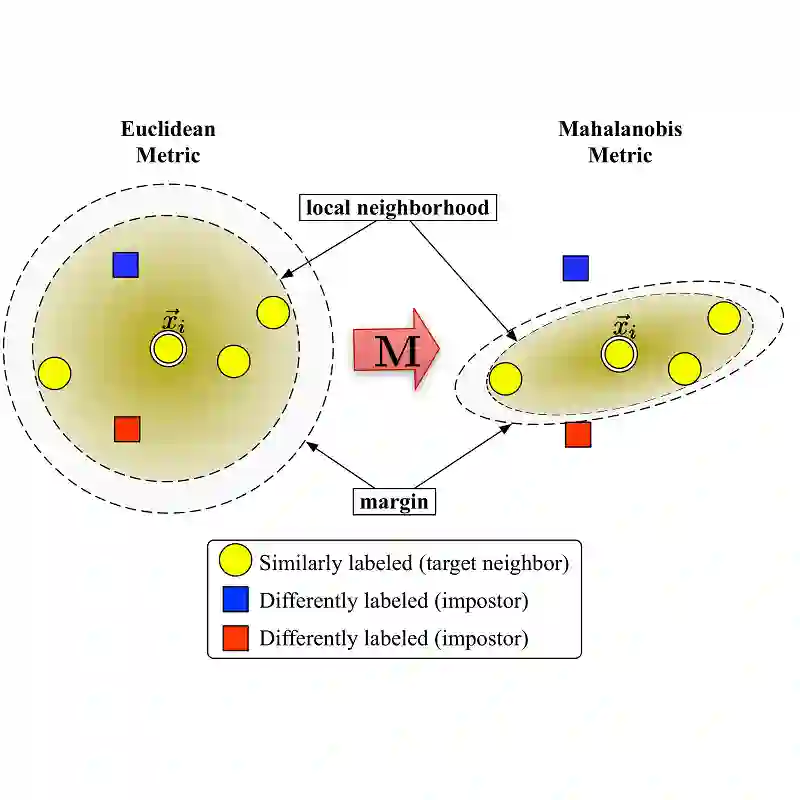
Riemannian metric learning is an emerging field in machine learning, unlocking new ways to encode complex data structures beyond traditional distance metric learning. While classical approaches rely on global distances in Euclidean space, they often fall short in capturing intrinsic data geometry. Enter Riemannian metric learning: a powerful generalization that leverages differential geometry to model the data according to their underlying Riemannian manifold. This approach has demonstrated remarkable success across diverse domains, from causal inference and optimal transport to generative modeling and representation learning. In this review, we bridge the gap between classical metric learning and Riemannian geometry, providing a structured and accessible overview of key methods, applications, and recent advances. We argue that Riemannian metric learning is not merely a technical refinement but a fundamental shift in how we think about data representations. Thus, this review should serve as a valuable resource for researchers and practitioners interested in exploring Riemannian metric learning and convince them that it is closer to them than they might imagine-both in theory and in practice.
翻译:黎曼度量学习是机器学习中的一个新兴领域,它开辟了超越传统距离度量学习的复杂数据结构编码新途径。经典方法依赖于欧几里得空间中的全局距离,但往往难以捕捉数据的内在几何结构。黎曼度量学习则提供了一种强大的泛化框架:它利用微分几何,根据数据底层的黎曼流形对其进行建模。该方法已在因果推断、最优传输、生成建模和表示学习等多个领域展现出显著成效。本综述旨在弥合经典度量学习与黎曼几何之间的鸿沟,系统而清晰地梳理关键方法、应用场景与最新进展。我们认为,黎曼度量学习不仅是一种技术改进,更代表了我们对数据表示认知的根本性转变。因此,本综述有望为有意探索黎曼度量学习的研究者与实践者提供有价值的参考,并证明其在理论与实践层面都比想象中更贴近实际需求。




相关内容




 微信扫码咨询专知VIP会员