

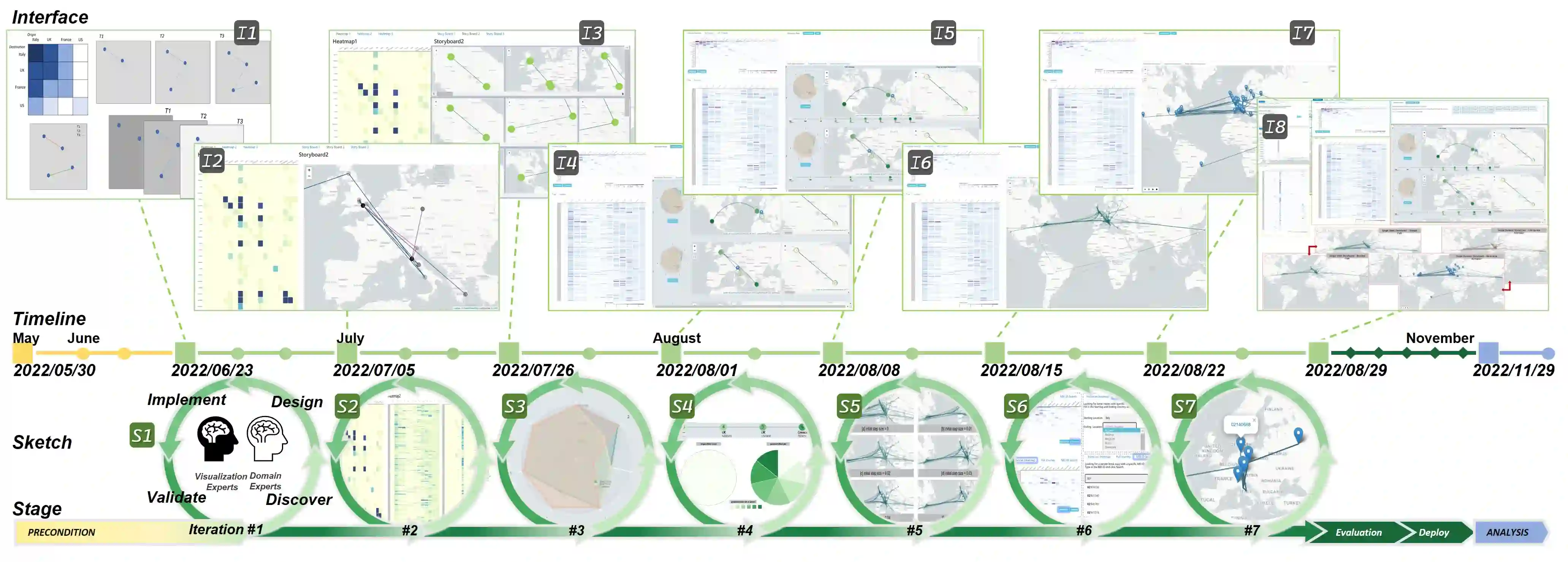
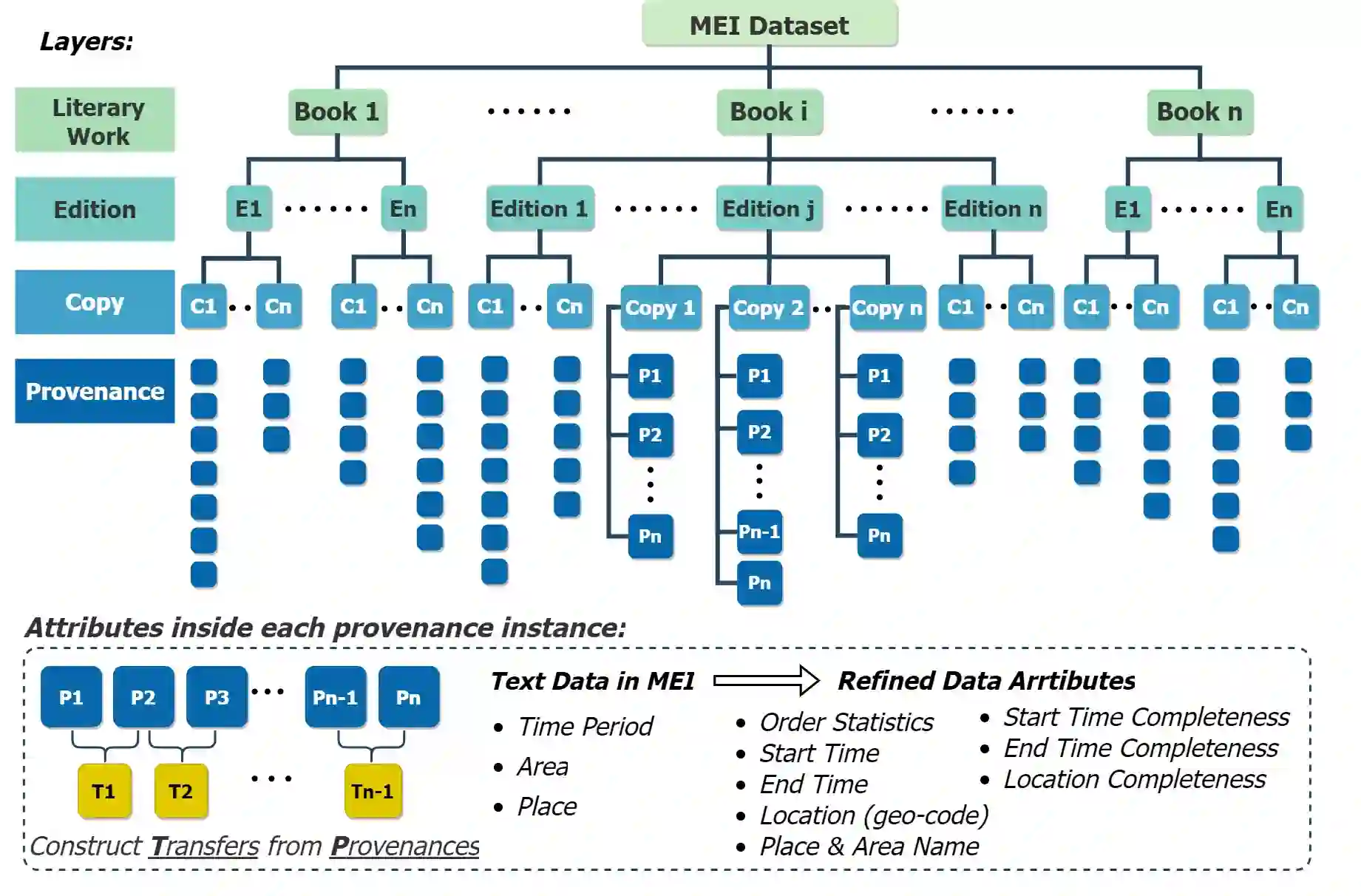
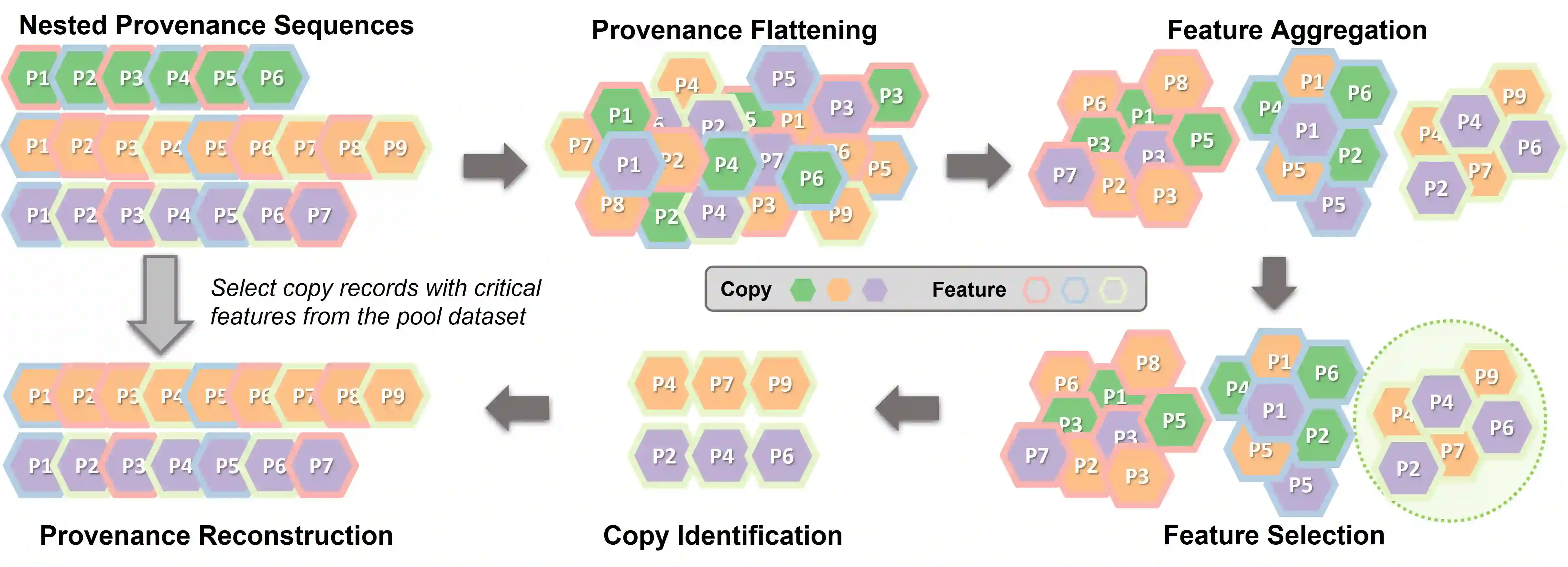
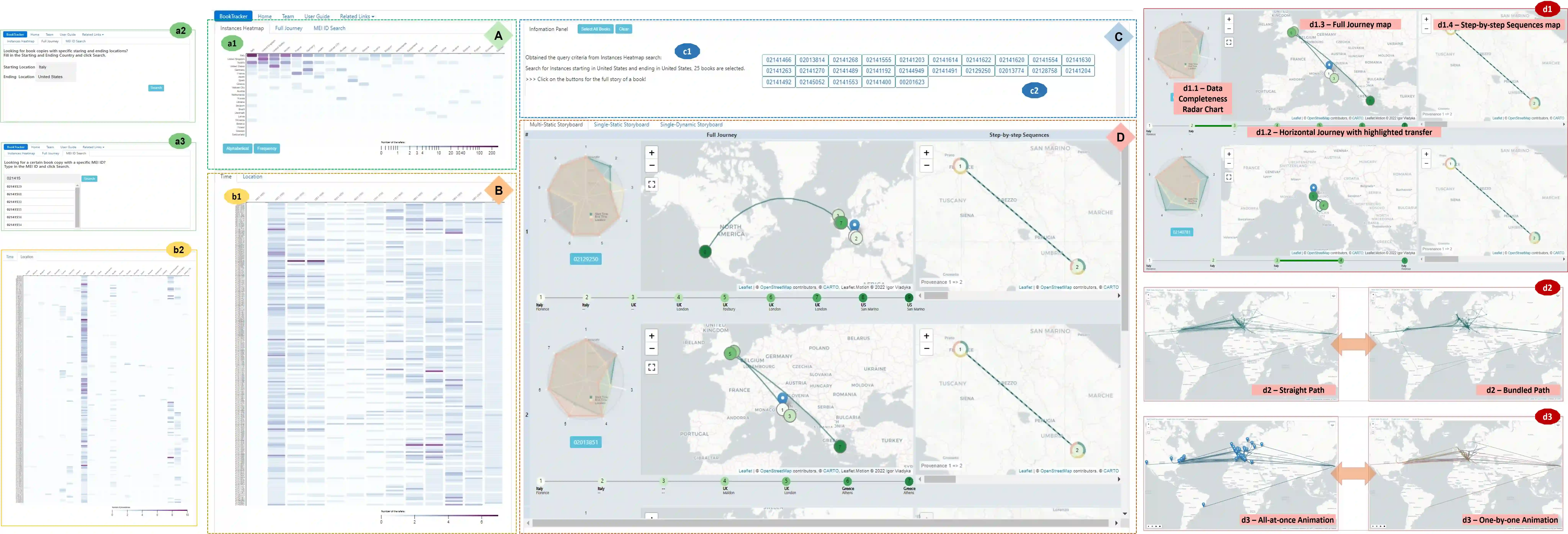
The circulation of historical books has always been an area of interest for historians. However, the data used to represent the journey of a book across different places and times can be difficult for domain experts to digest due to buried geographical and chronological features within text-based presentations. This situation provides an opportunity for collaboration between visualization researchers and historians. This paper describes a design study where a variant of the Nine-Stage Framework was employed to develop a Visual Analytics (VA) tool called DanteExploreVis. This tool was designed to aid domain experts in exploring, explaining, and presenting book trade data from multiple perspectives. We discuss the design choices made and how each panel in the interface meets the domain requirements. We also present the results of a qualitative evaluation conducted with domain experts. The main contributions of this paper include: 1) the development of a VA tool to support domain experts in exploring, explaining, and presenting book trade data; 2) a comprehensive documentation of the iterative design, development, and evaluation process following the variant Nine-Stage Framework; 3) a summary of the insights gained and lessons learned from this design study in the context of the humanities field; and 4) reflections on how our approach could be applied in a more generalizable way.
翻译:历史图书的流通一直是历史学家关注的领域。然而,用于表征书籍在不同时空流动轨迹的数据,因文本呈现中埋藏的地域与时间特征,常令领域专家难以理解。这种现状为可视化研究者与历史学家提供了合作契机。本文描述了一项设计研究,采用九阶段框架的变体,开发了一款名为DanteExploreVis的可视分析工具。该工具旨在辅助领域专家从多维度探索、阐释及呈现图书贸易数据。我们详述了设计决策过程,以及界面中各面板如何满足领域需求,并展示了与领域专家共同开展的质性评估结果。本文主要贡献包括:1) 开发了支持领域专家探索、解释和呈现图书贸易数据的可视分析工具;2) 完整记录了遵循九阶段框架变体进行的迭代设计、开发与评估过程;3) 总结了在此人文领域设计研究中获得的洞见与经验教训;4) 就如何将本方法进行更泛化应用提出了反思。





相关内容




 微信扫码咨询专知VIP会员