

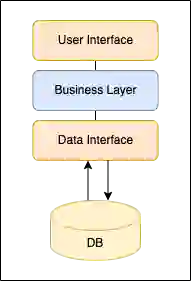
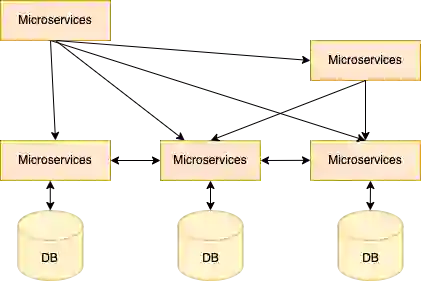
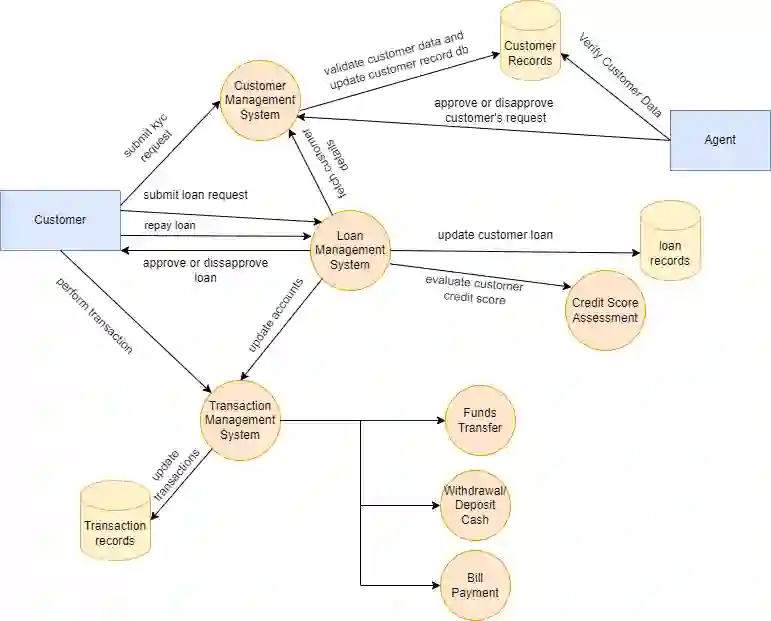
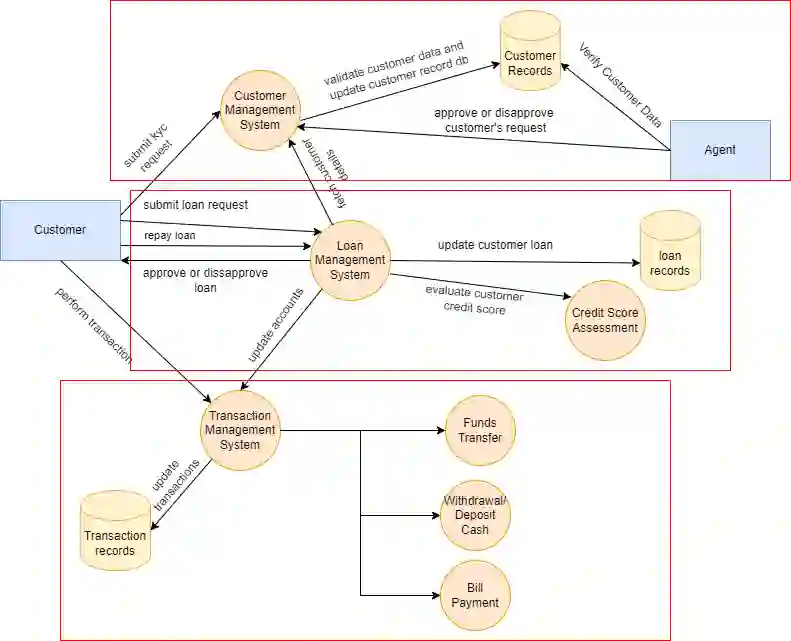
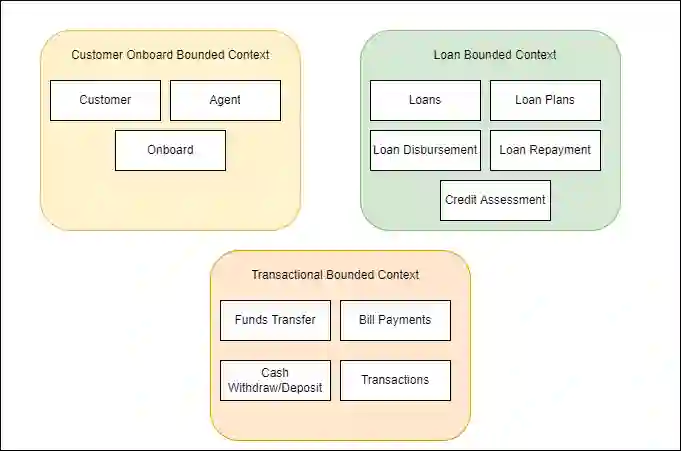
The aim of this paper to provide the solution microservices architecture as a popular alternative to monolithic architecture. It discusses the advantages of microservices and the challenges that organizations face when transitioning from a monolithic system. It presents a case study of a financial application and proposed techniques for identifying microservices on monolithic systems using domain-driven development concepts. In recent years, microservices architecture has emerged as a new architectural style in the software development industry. As legacy monolithic software becomes too large to manage, many large corporations are considering converting their traditional monolithic systems into small-scale, self-contained microservices. However, migrating from monolithic to microservices architecture is a difficult and challenging task. It presents a comparison of the two architectural styles and discusses the difficulties that led companies to switch to microservices. The study's findings suggest that the proposed technique can improve work performance and establish clear models, but it may not be useful for systems with lower levels of complexity. This research paper has practical implications for software architects and developers who are considering migrating from monolithic to microservices architecture.
翻译:本文旨在提供微服务架构作为单体架构的流行替代方案。文中讨论了微服务的优势,以及组织在从单体系统迁移过程中面临的挑战。通过金融应用案例研究,提出了基于领域驱动开发概念识别单体系统中微服务的技术方法。近年来,微服务架构已成为软件开发行业的一种新兴架构风格。随着传统单体软件规模过大难以管理,许多大型企业正考虑将其传统单体系统转化为小型、自包含的微服务。然而,从单体架构向微服务架构迁移是一项艰巨且充满挑战的任务。本文对两种架构风格进行了比较,并探讨了促使企业转向微服务的困难。研究结果表明,所提出的技术能够提升工作效率并建立清晰的模型,但对复杂度较低的系统可能并不适用。本研究对于考虑从单体架构迁移至微服务架构的软件架构师和开发者具有实际参考价值。




相关内容



 微信扫码咨询专知VIP会员