

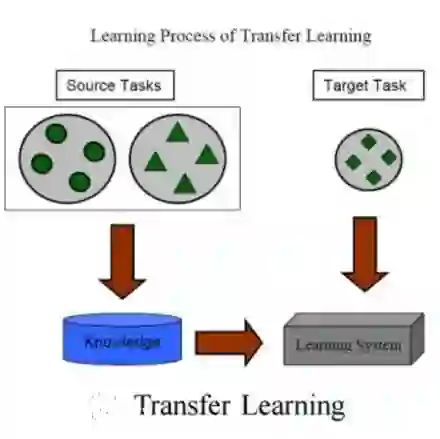
Over the past decade, domain adaptation has become a widely studied branch of transfer learning that aims to improve performance on target domains by leveraging knowledge from the source domain. Conventional domain adaptation methods often assume access to both source and target domain data simultaneously, which may not be feasible in real-world scenarios due to privacy and confidentiality concerns. As a result, the research of Source-Free Domain Adaptation (SFDA) has drawn growing attention in recent years, which only utilizes the source-trained model and unlabeled target data to adapt to the target domain. Despite the rapid explosion of SFDA work, yet there has no timely and comprehensive survey in the field. To fill this gap, we provide a comprehensive survey of recent advances in SFDA and organize them into a unified categorization scheme based on the framework of transfer learning. Instead of presenting each approach independently, we modularize several components of each method to more clearly illustrate their relationships and mechanics in light of the composite properties of each method. Furthermore, we compare the results of more than 30 representative SFDA methods on three popular classification benchmarks, namely Office-31, Office-home, and VisDA, to explore the effectiveness of various technical routes and the combination effects among them. Additionally, we briefly introduce the applications of SFDA and related fields. Drawing from our analysis of the challenges facing SFDA, we offer some insights into future research directions and potential settings.
翻译:在过去十年中,域适应已成为迁移学习中研究广泛的分支,旨在通过利用源域知识提升目标域性能。传统域适应方法通常假设同时访问源域和目标域数据,然而由于隐私与保密性限制,这一假设在实际场景中可能难以实现。为此,源域无关域适应(Source-Free Domain Adaptation, SFDA)研究近年来日益受到关注,该方法仅利用源域预训练模型和无标签目标域数据完成目标域适应。尽管SFDA相关研究迅速增长,但该领域仍缺乏及时且全面的综述。为填补这一空白,我们系统梳理了SFDA领域的最新进展,并基于迁移学习框架构建了统一的分类体系。不同于独立介绍各方法,我们将每种方法的组件进行模块化拆解,以更清晰地阐明其关联机制及复合特性。此外,我们比较了30余种代表性SFDA方法在Office-31、Office-home和VisDA三个主流分类基准上的性能,探究不同技术路线及其组合效果的有效性。同时,我们简要介绍了SFDA的应用场景与相关领域。基于对SFDA面临挑战的分析,我们提出了未来研究方向与潜在场景的见解。




相关内容



 微信扫码咨询专知VIP会员