

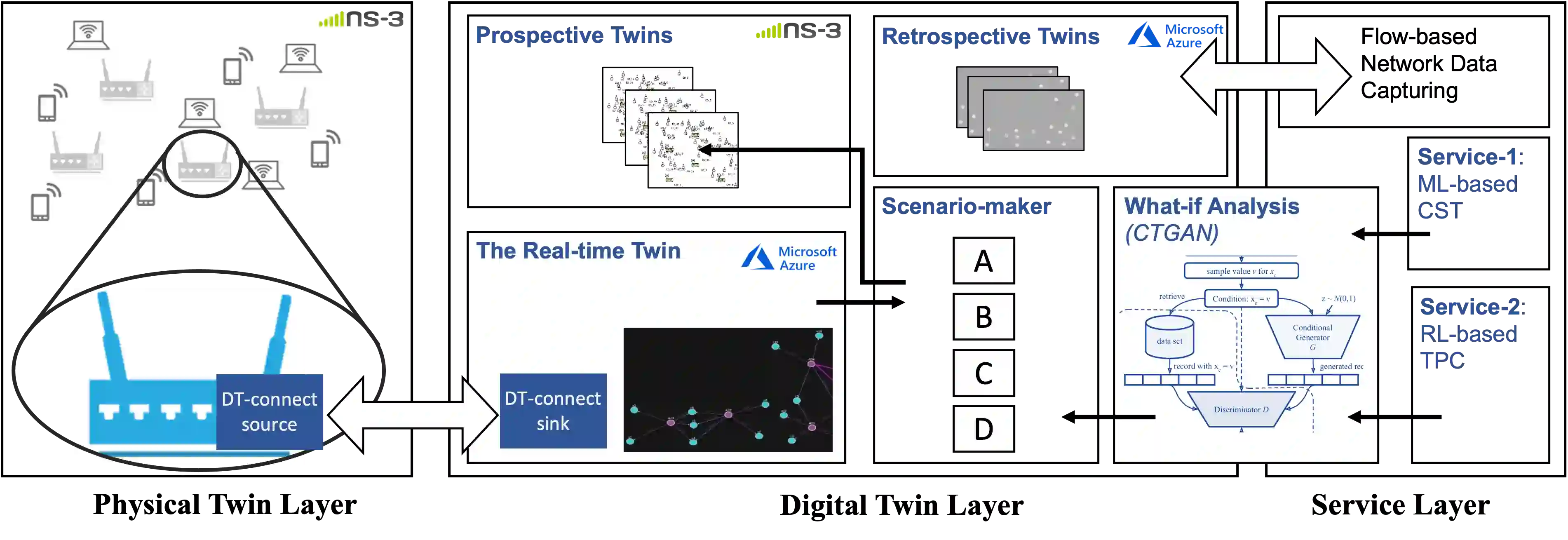
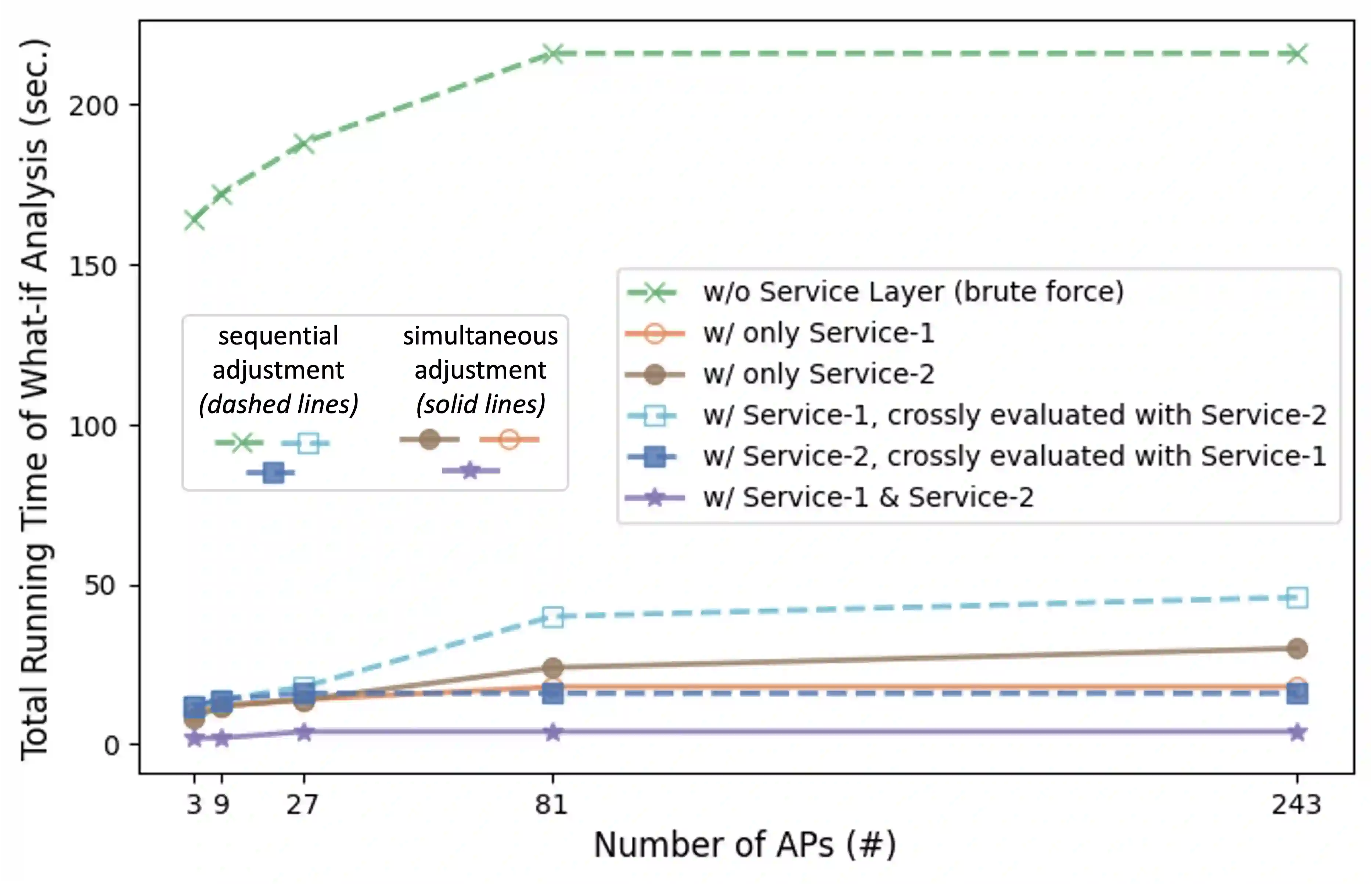
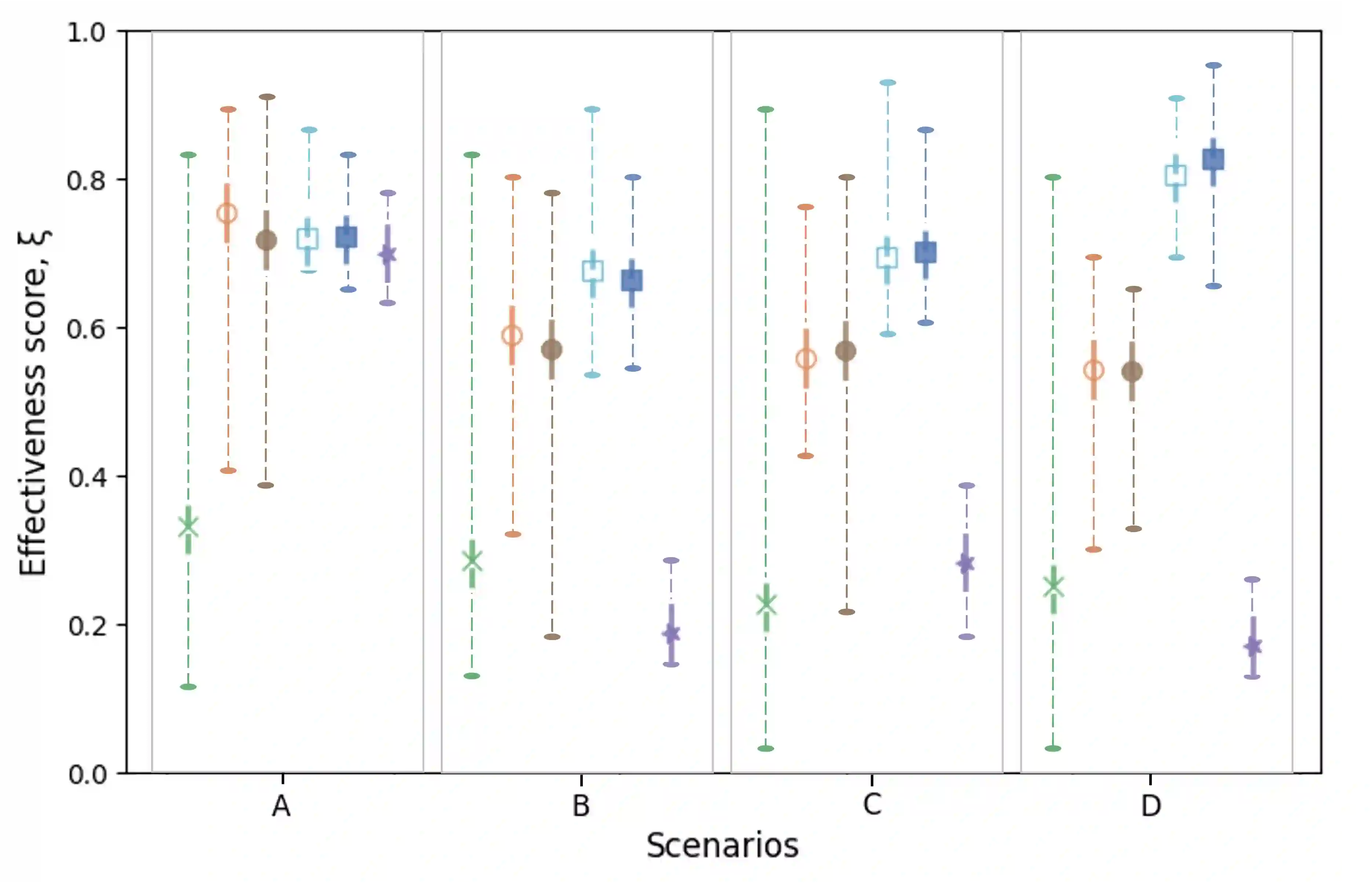
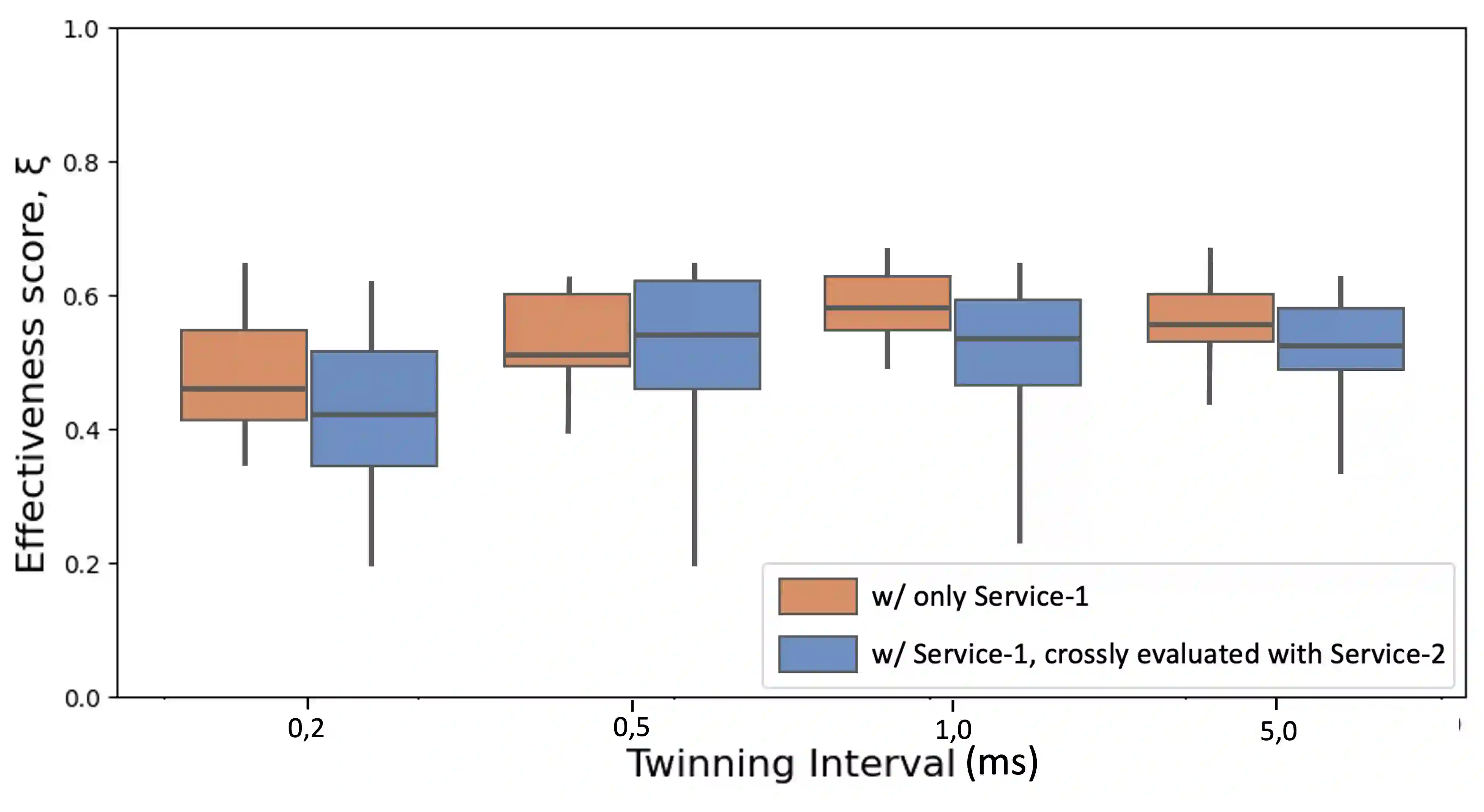
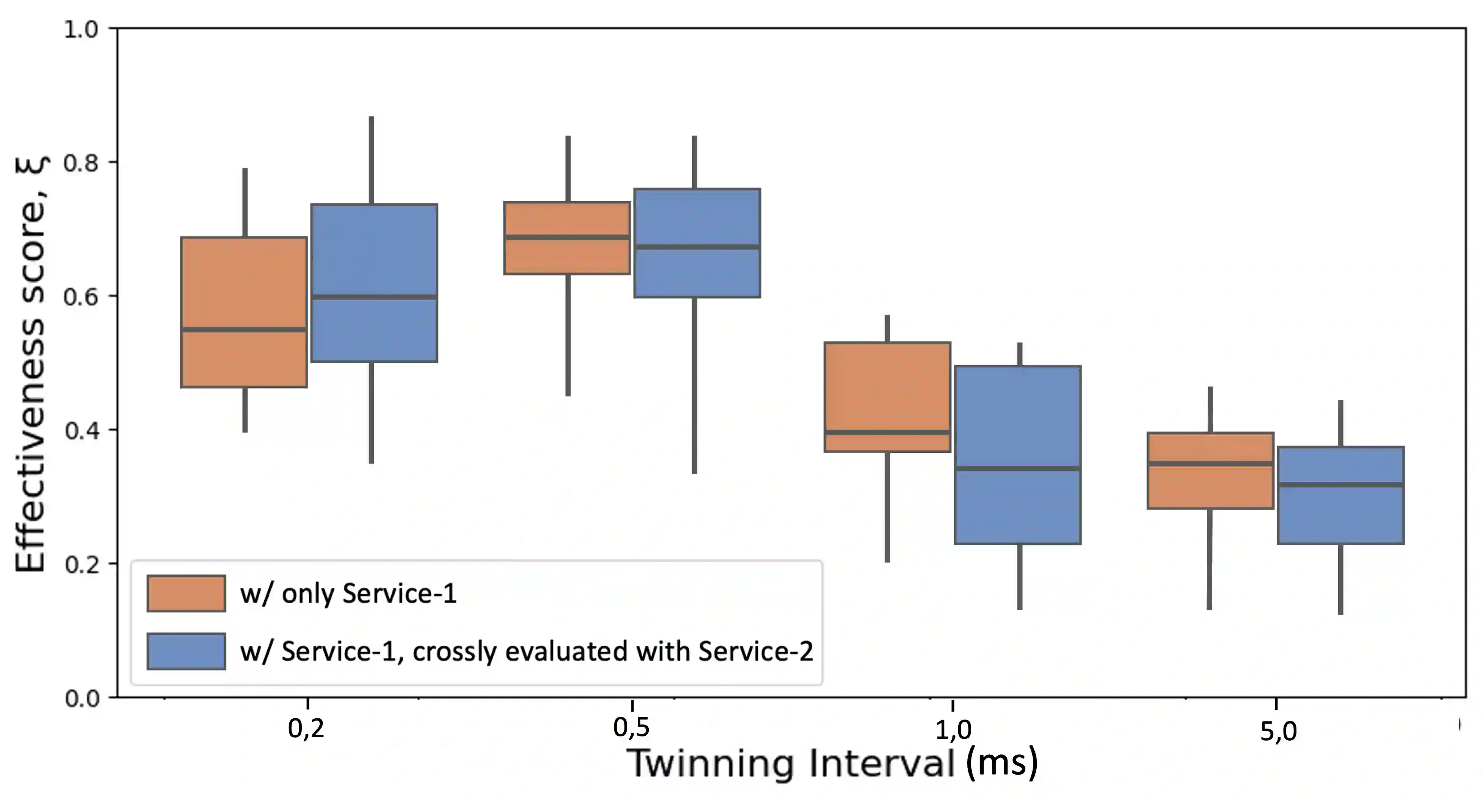
This study explores implementing a digital twin network (DTN) for efficient 6G wireless network management, aligning with the fault, configuration, accounting, performance, and security (FCAPS) model. The DTN architecture comprises the Physical Twin Layer, implemented using NS-3, and the Service Layer, featuring machine learning and reinforcement learning for optimizing carrier sensitivity threshold and transmit power control in wireless networks. We introduce a robust "What-if Analysis" module, utilizing conditional tabular generative adversarial network (CTGAN) for synthetic data generation to mimic various network scenarios. These scenarios assess four network performance metrics: throughput, latency, packet loss, and coverage. Our findings demonstrate the efficiency of the proposed what-if analysis framework in managing complex network conditions, highlighting the importance of the scenario-maker step and the impact of twinning intervals on network performance.
翻译:本研究探索了实现数字孪生网络(DTN)以高效管理6G无线网络的方案,该方案与故障、配置、计费、性能和安全(FCAPS)模型相一致。DTN架构包含使用NS-3实现的物理孪生层,以及服务层——该层采用机器学习和强化学习来优化无线网络中的载波灵敏度阈值和发射功率控制。我们引入了稳健的"假设分析"模块,利用条件表格生成对抗网络(CTGAN)生成合成数据以模拟各种网络场景。这些场景评估了四项网络性能指标:吞吐量、延迟、丢包率和覆盖范围。我们的研究结果证明了所提出的假设分析框架在管理复杂网络条件方面的有效性,突显了场景生成步骤的重要性以及孪生间隔对网络性能的影响。




相关内容




 微信扫码咨询专知VIP会员