

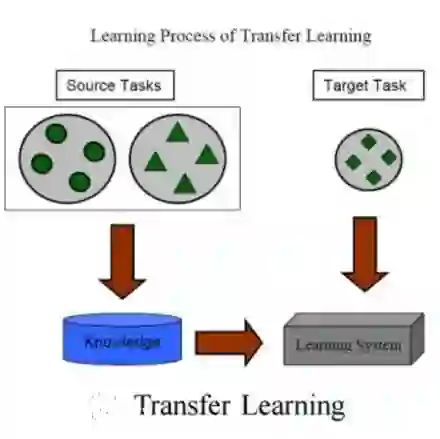
Automatic speech recognition (ASR) has recently become an important challenge when using deep learning (DL). It requires large-scale training datasets and high computational and storage resources. Moreover, DL techniques and machine learning (ML) approaches in general, hypothesize that training and testing data come from the same domain, with the same input feature space and data distribution characteristics. This assumption, however, is not applicable in some real-world artificial intelligence (AI) applications. Moreover, there are situations where gathering real data is challenging, expensive, or rarely occurring, which can not meet the data requirements of DL models. deep transfer learning (DTL) has been introduced to overcome these issues, which helps develop high-performing models using real datasets that are small or slightly different but related to the training data. This paper presents a comprehensive survey of DTL-based ASR frameworks to shed light on the latest developments and helps academics and professionals understand current challenges. Specifically, after presenting the DTL background, a well-designed taxonomy is adopted to inform the state-of-the-art. A critical analysis is then conducted to identify the limitations and advantages of each framework. Moving on, a comparative study is introduced to highlight the current challenges before deriving opportunities for future research.
翻译:自动语音识别(ASR)近年来已成为深度学习(DL)应用中的重要挑战,其需要大规模训练数据集以及高昂的计算与存储资源。此外,深度学习技术及机器学习(ML)方法通常假设训练数据与测试数据来自同一领域,具有相同的输入特征空间与数据分布特性。然而,这一假设在某些真实世界的人工智能(AI)应用中并不成立。同时,存在真实数据采集困难、成本高昂或罕见发生的情况,无法满足深度学习模型的数据需求。深度迁移学习(DTL)应运而生以解决上述问题,通过利用与训练数据相关但规模较小或略有差异的真实数据集,帮助构建高性能模型。本文对基于DTL的ASR框架进行了全面综述,旨在阐明最新进展,帮助学者与专业人员理解当前挑战。具体而言,在介绍DTL背景后,采用精心设计的分类体系梳理现有技术现状。随后进行批判性分析,识别各框架的局限性与优势。继而通过比较研究突显当前挑战,并据此推导未来研究方向。




相关内容



 微信扫码咨询专知VIP会员