

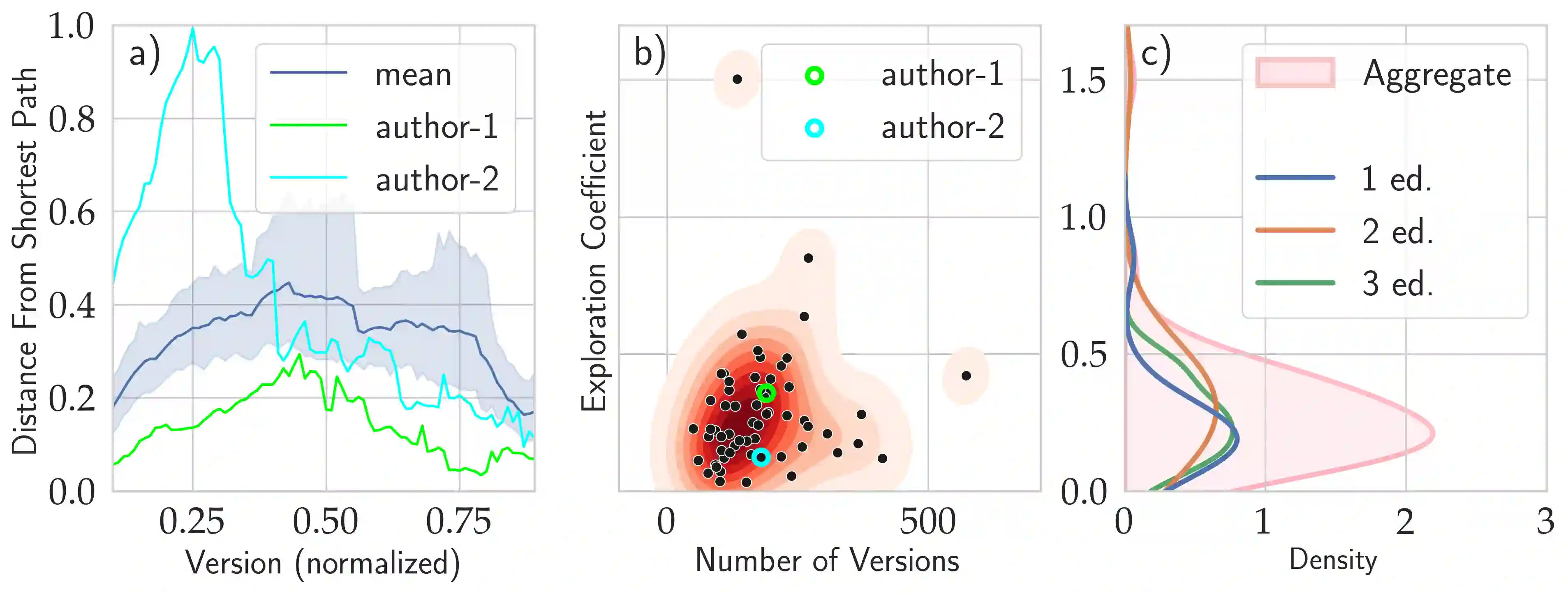
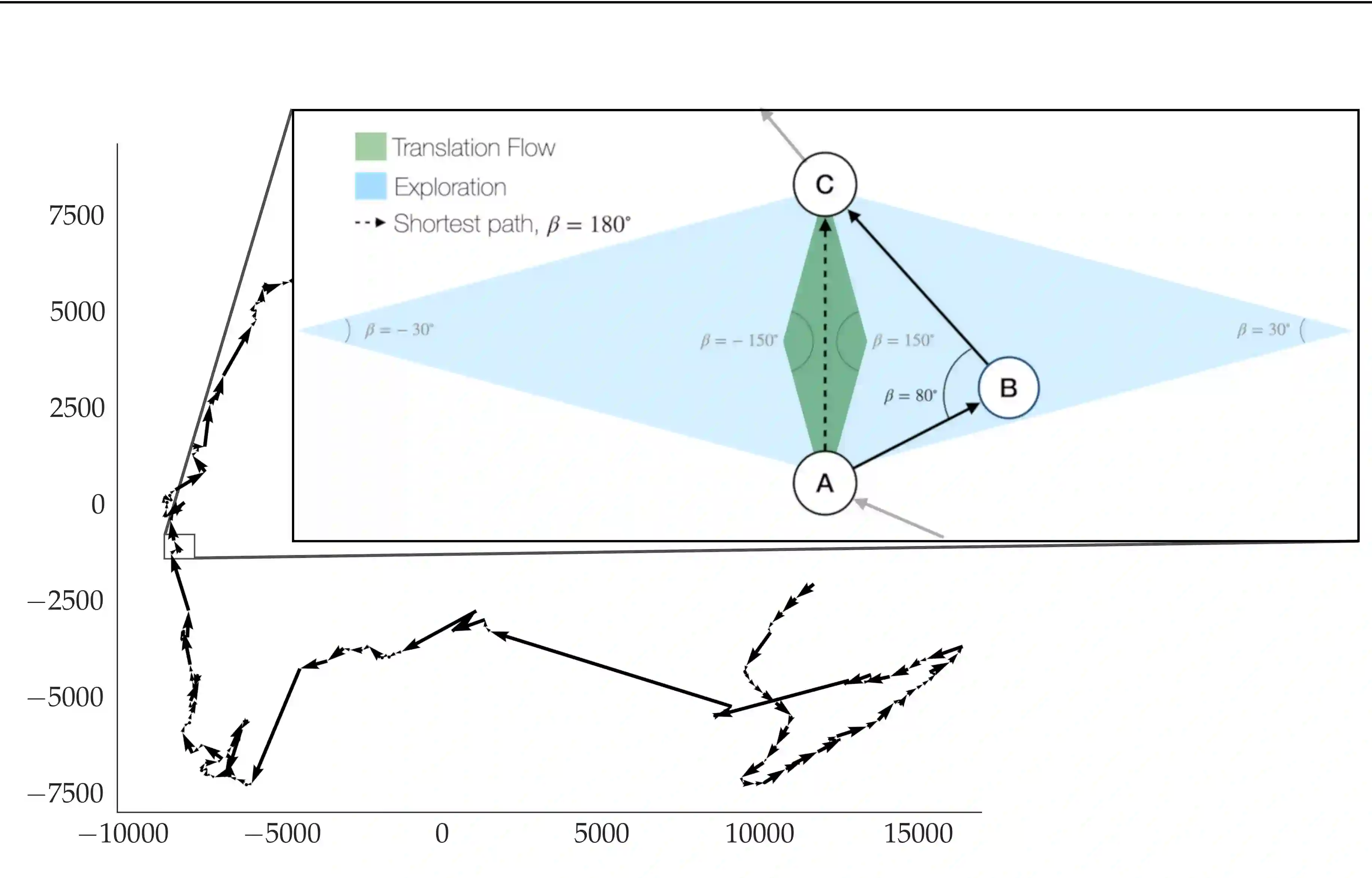
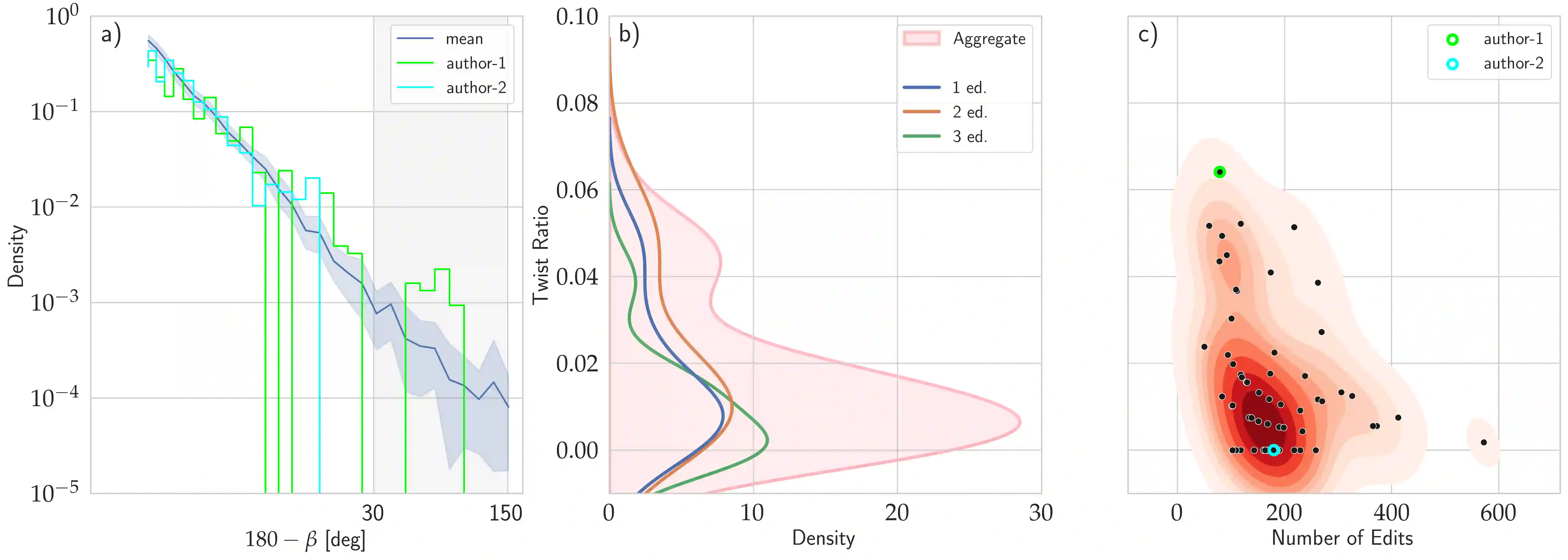
Writing is a complex process at the center of much of modern human activity. Despite it appears to be a linear process, writing conceals many highly non-linear processes. Previous research has focused on three phases of writing: planning, translation and transcription, and revision. While research has shown these are non-linear, they are often treated linearly when measured. Here, we introduce measures to detect and quantify subcycles of planning (exploration) and translation (exploitation) during the writing process. We apply these to a novel dataset that recorded the creation of a text in all its phases, from early attempts to the finishing touches on a final version. This dataset comes from a series of writing workshops in which, through innovative versioning software, we were able to record all the steps in the construction of a text. More than 60 junior researchers in science wrote a scientific essay intended for a general readership. We recorded each essay as a writing cloud, defined as a complex topological structure capturing the history of the essay itself. Through this unique dataset of writing clouds, we expose a representation of the writing process that quantifies its complexity and the writer's efforts throughout the draft and through time. Interestingly, this representation highlights the phases of "translation flow", where authors improve existing ideas, and exploration, where creative deviations appear as the writer returns to the planning phase. These turning points between translation and exploration become rarer as the writing process progresses and the author approaches the final version. Our results and the new measures introduced have the potential to foster the discussion about the non-linear nature of writing and support the development of tools that can support more creative and impactful writing processes.
翻译:写作是现代人类活动核心的复杂过程。尽管写作表面上呈现线性进程,实则隐藏着许多高度非线性的过程。先前研究聚焦于写作的三个阶段:计划、翻译与转录、修订。尽管研究表明这些阶段具有非线性特征,但在具体测量时往往被线性处理。本文引入测量方法,用于检测和量化写作过程中计划(探索)与翻译(开发)的次级循环。我们将这些方法应用于一个新数据集,该数据集完整记录了文本从早期尝试到终稿润色的全过程。这些数据来自一系列写作工作坊,通过创新的版本管理软件,我们得以记录文本建构的所有步骤。超过60位青年科研人员撰写面向普通读者的科学随笔。我们将每篇随笔记录为"写作云",定义为捕捉该文本生成历史的复杂拓扑结构。通过这一独特的写作云数据集,我们揭示了写作过程的表征方式,量化了其复杂性以及作者在整个草稿阶段和时间进程中的努力程度。有趣的是,这种表征凸显了"翻译流"阶段(作者改进既有想法)与探索阶段(当作者重新进入计划阶段时出现创造性偏离)的交替。随着写作进程推进且作者接近终稿,这些翻译与探索之间的转折点变得更加稀少。我们的研究结果和引入的新测量方法有望促进关于写作非线性本质的讨论,并支持开发能促进更具创造力和影响力的写作过程的工具。





相关内容




 微信扫码咨询专知VIP会员