

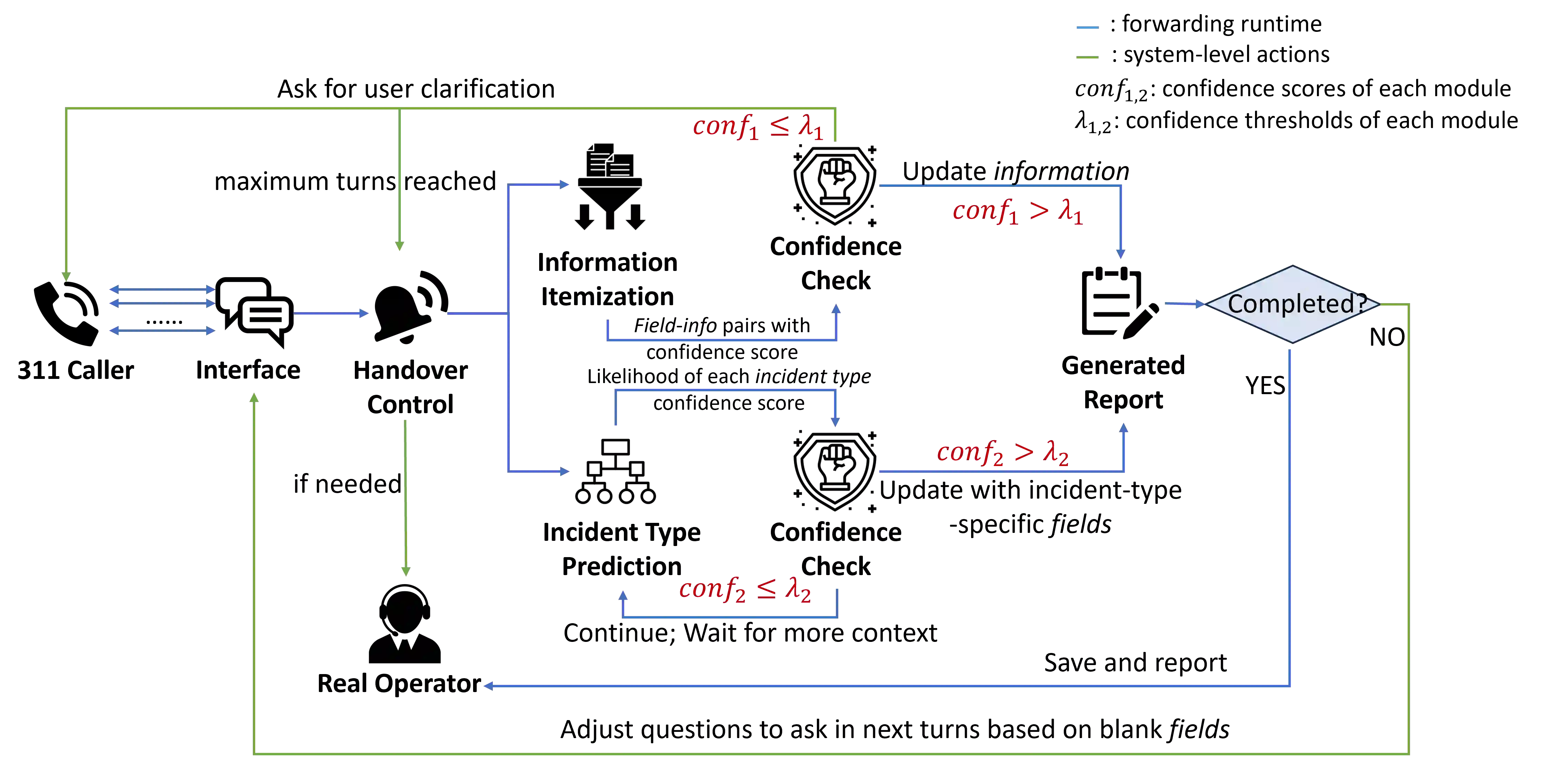
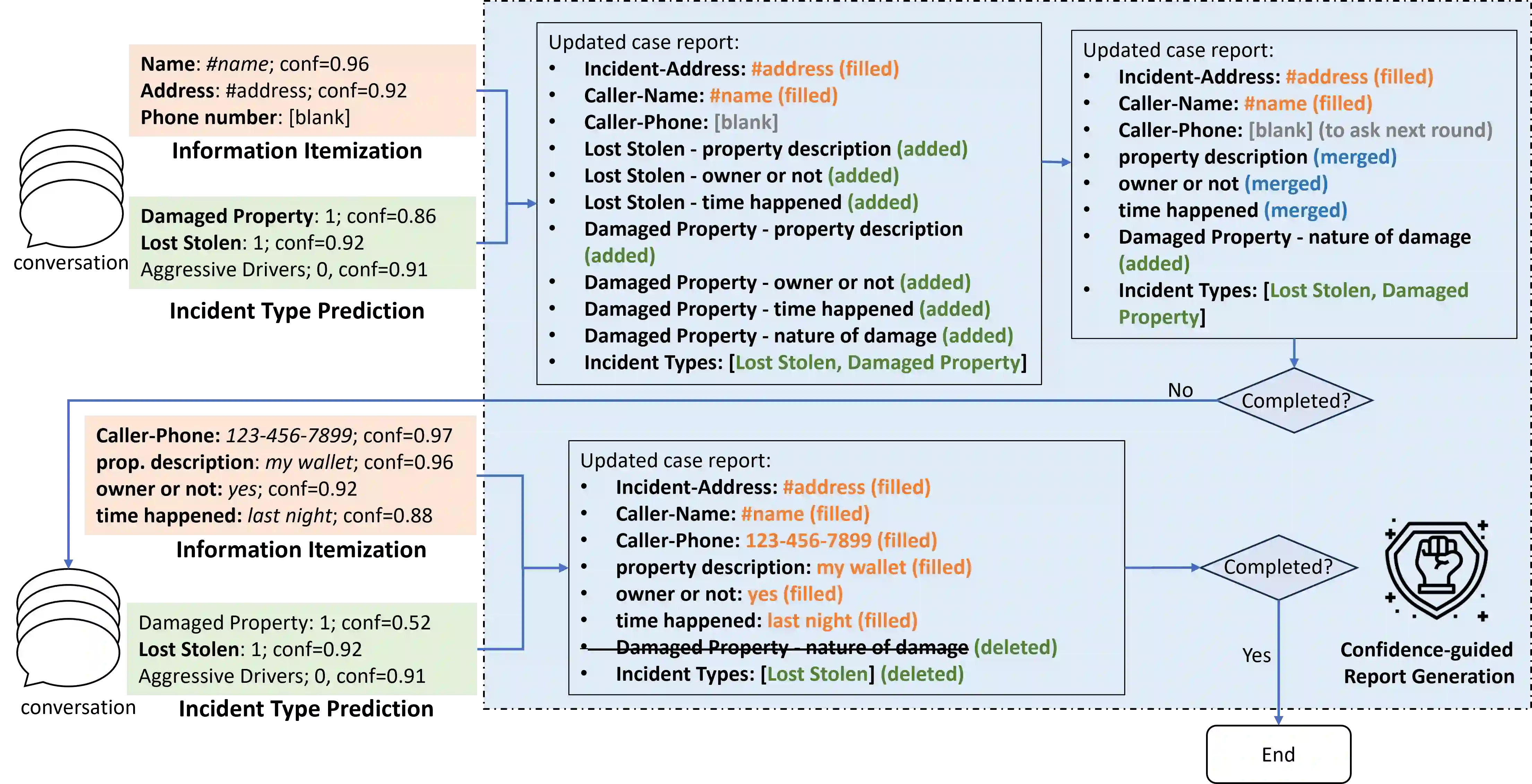
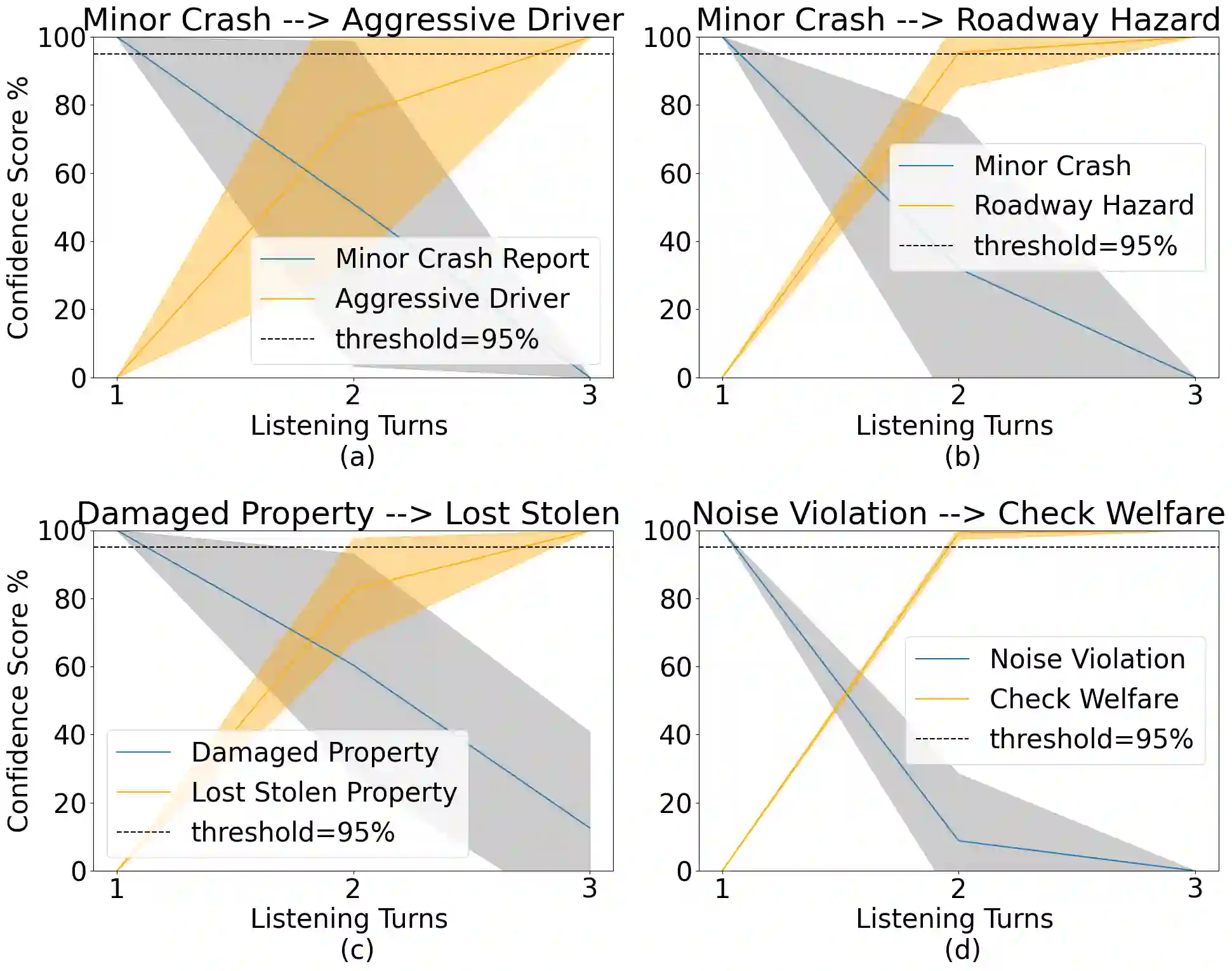
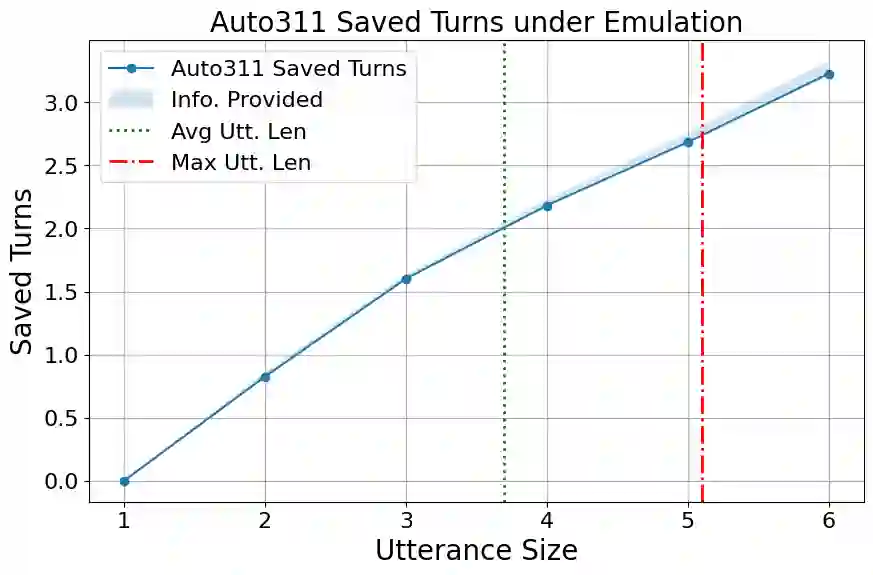
Emergency and non-emergency response systems are essential services provided by local governments and critical to protecting lives, the environment, and property. The effective handling of (non-)emergency calls is critical for public safety and well-being. By reducing the burden through non-emergency callers, residents in critical need of assistance through 911 will receive a fast and effective response. Collaborating with the Department of Emergency Communications (DEC) in Nashville, we analyzed 11,796 non-emergency call recordings and developed Auto311, the first automated system to handle 311 non-emergency calls, which (1) effectively and dynamically predicts ongoing non-emergency incident types to generate tailored case reports during the call; (2) itemizes essential information from dialogue contexts to complete the generated reports; and (3) strategically structures system-caller dialogues with optimized confidence. We used real-world data to evaluate the system's effectiveness and deployability. The experimental results indicate that the system effectively predicts incident type with an average F-1 score of 92.54%. Moreover, the system successfully itemizes critical information from relevant contexts to complete reports, evincing a 0.93 average consistency score compared to the ground truth. Additionally, emulations demonstrate that the system effectively decreases conversation turns as the utterance size gets more extensive and categorizes the ongoing call with 94.49% mean accuracy.
翻译:摘要:应急与非应急响应系统是地方政府提供的基本服务,对保护生命、环境和财产安全至关重要。有效处理(非)紧急电话是维护公共安全与社会福祉的关键。通过分流非紧急来电者减轻系统负担,急需通过911求助的居民将获得快速有效的响应。我们与纳什维尔市应急通信部(DEC)合作,分析了11,796段非紧急电话录音,开发出首个用于处理311非紧急电话的自动化系统Auto311。该系统通过以下方式实现功能:(1)在通话过程中动态预测非紧急事件类型,生成定制化案件报告;(2)从对话语境中提取关键信息以完善生成的报告;(3)基于优化置信度策略构建系统与来电者之间的结构化对话。我们采用真实世界数据评估系统的有效性及部署可行性。实验结果表明,系统对事件类型的预测平均F1分数达92.54%。此外,系统能从相关语境中成功提取关键信息以完成报告,与基准真实值相比平均一致性得分为0.93。模拟测试进一步证实,随着语段规模增大,系统能有效减少对话轮次,并实现94.49%的实时来电分类准确率。





相关内容





 微信扫码咨询专知VIP会员