

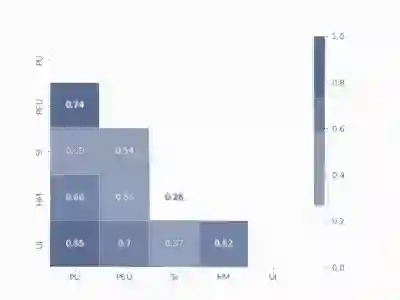
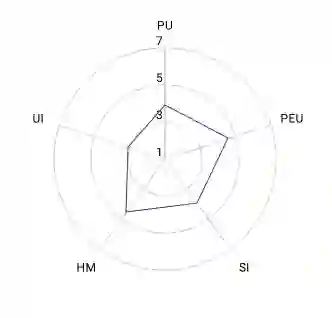
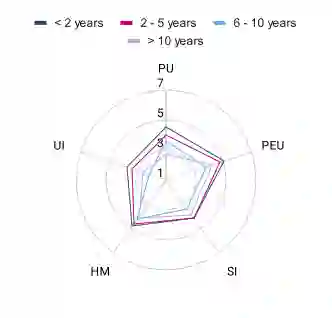
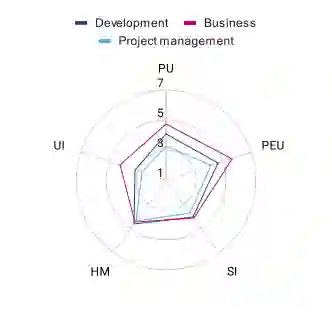
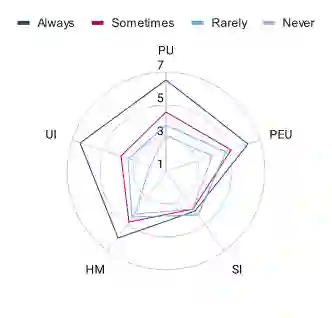
In the past years, AI has seen many advances in the field of NLP. This has led to the emergence of LLMs, such as the now famous GPT-3.5, which revolutionise the way humans can access or generate content. Current studies on LLM-based generative tools are mainly interested in the performance of such tools in generating relevant content (code, text or image). However, ethical concerns related to the design and use of generative tools seem to be growing, impacting the public acceptability for specific tasks. This paper presents a questionnaire survey to identify the intention to use generative tools by employees of an IT company in the context of their work. This survey is based on empirical models measuring intention to use (TAM by Davis, 1989, and UTAUT2 by Venkatesh and al., 2008). Our results indicate a rather average acceptability of generative tools, although the more useful the tool is perceived to be, the higher the intention to use seems to be. Furthermore, our analyses suggest that the frequency of use of generative tools is likely to be a key factor in understanding how employees perceive these tools in the context of their work. Following on from this work, we plan to investigate the nature of the requests that may be made to these tools by specific audiences.
翻译:过去几年,人工智能在自然语言处理领域取得了诸多进展,催生了诸如现今著名的GPT-3.5等大语言模型,这些模型彻底改变了人类获取或生成内容的方式。当前针对基于大语言模型的生成工具的研究主要关注其在生成相关内容(代码、文本或图像)方面的性能。然而,与生成工具设计和应用相关的伦理问题似乎日益凸显,影响了公众对特定任务的接受度。本文通过问卷调查,旨在识别某IT公司员工在工作场景中使用生成工具的意愿。该调查基于测量使用意愿的实证模型(Davis提出的TAM模型,1989年;Venkatesh等人提出的UTAUT2模型,2008年)。结果表明,尽管工具感知有用性越高,使用意愿似乎越强,但生成工具的整体接受度仅为中等水平。此外,分析表明生成工具的使用频率可能是理解员工如何在工作场景中感知这些工具的关键因素。基于此项工作,我们计划进一步研究特定受众可能向这些工具提出的请求性质。




相关内容


 微信扫码咨询专知VIP会员