

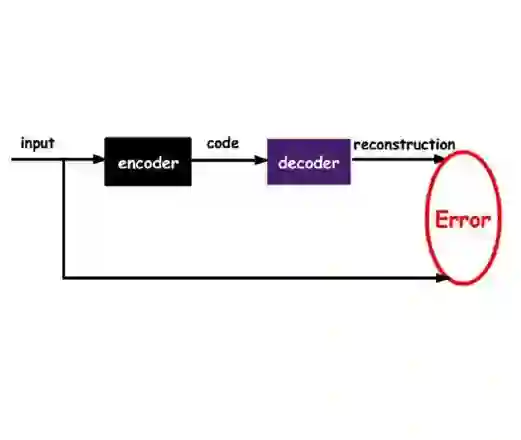
Manufacturing industries require efficient and voluminous production of high-quality finished goods. In the context of Industry 4.0, visual anomaly detection poses an optimistic solution for automatically controlling product quality with high precision. Automation based on computer vision poses a promising solution to prevent bottlenecks at the product quality checkpoint. We considered recent advancements in machine learning to improve visual defect localization, but challenges persist in obtaining a balanced feature set and database of the wide variety of defects occurring in the production line. This paper proposes a defect localizing autoencoder with unsupervised class selection by clustering with k-means the features extracted from a pre-trained VGG-16 network. The selected classes of defects are augmented with natural wild textures to simulate artificial defects. The study demonstrates the effectiveness of the defect localizing autoencoder with unsupervised class selection for improving defect detection in manufacturing industries. The proposed methodology shows promising results with precise and accurate localization of quality defects on melamine-faced boards for the furniture industry. Incorporating artificial defects into the training data shows significant potential for practical implementation in real-world quality control scenarios.
翻译:制造业需要高效、大量地生产高质量成品。在工业4.0背景下,视觉异常检测为自动、高精度控制产品质量提供了乐观的解决方案。基于计算机视觉的自动化技术有望防止产品质量检验环节出现瓶颈。我们考虑了近期机器学习进展以改进视觉缺陷定位,但在获取生产线上多样化缺陷的平衡特征集与数据库方面仍面临挑战。本文提出一种缺陷定位自编码器,通过k-means聚类从预训练的VGG-16网络中提取特征进行无监督类选择。选定的缺陷类别通过自然野生纹理进行增强以模拟人工缺陷。研究证明了该缺陷定位自编码器结合无监督类选择在提升制造业缺陷检测效果方面的有效性。所提出方法在家具行业三聚氰胺饰面板的质量缺陷定位中展现出精准且准确的成果。将人工缺陷融入训练数据对实际质量控制场景的实践应用具有显著潜力。




相关内容


 微信扫码咨询专知VIP会员