

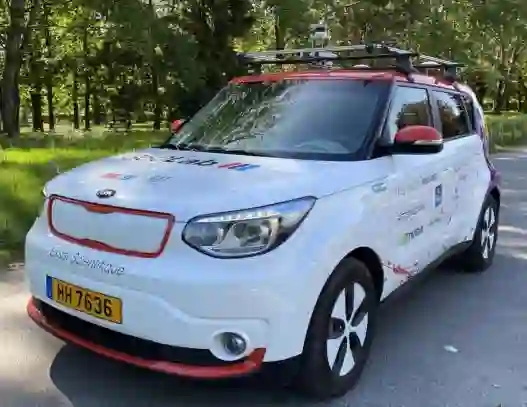
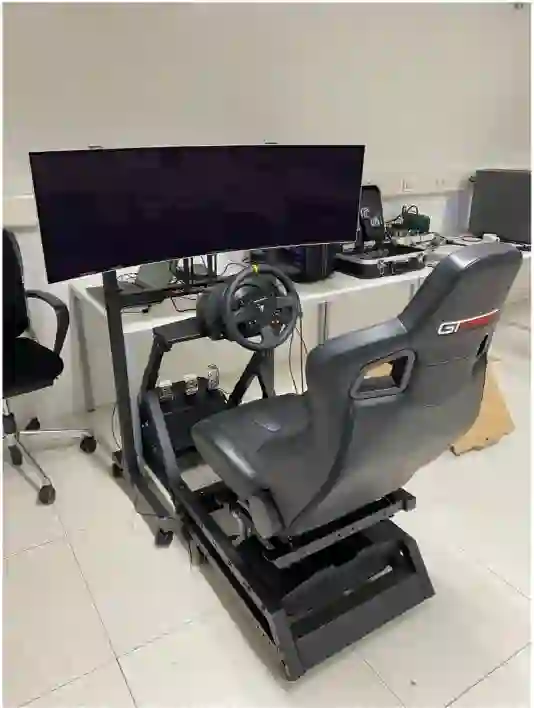
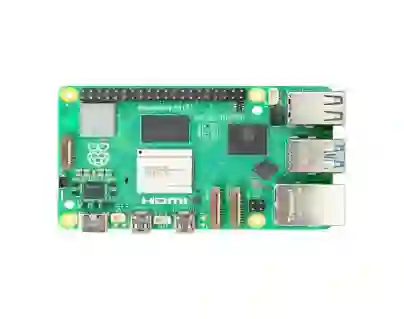
Connected and Autonomous Vehicles (CAVs) continue to evolve rapidly, and system latency remains one of their most critical performance parameters, particularly when vehicles are operated remotely. Existing latency-assessment methodologies focus predominantly on Glass-to-Glass (G2G) latency, defined as the delay between an event occurring in the operational environment, its capture by a camera, and its subsequent display to the remote operator. However, G2G latency accounts for only one component of the total delay experienced by the driver. The complementary component, Motion-to-Motion (M2M) latency, represents the delay between the initiation of a control input by the remote driver and the corresponding physical actuation by the vehicle. Together, M2M and G2G constitute the overall End-to-End (E2E) latency. This paper introduces a measurement framework capable of quantifying M2M, G2G, and E2E latencies using gyroscopes, a phototransistor, and two GPS-synchronized Raspberry Pi 5 units. The system employs low-pass filtering and threshold-based detection to identify steering-wheel motion on both the remote operator and vehicle sides. An interrupt is generated when the phototransistor detects the activation of an LED positioned within the camera's Field Of View (FOV). Initial measurements obtained from our teleoperated prototype vehicle over commercial 4G and 5G networks indicate an average E2E latency of approximately 500 ms (measurement precision +/- 4 ms). The M2M latency contributes up to 60% of this value.
翻译:网联自动驾驶车辆(CAVs)正持续快速发展,系统延迟仍是其最关键的运行参数之一,尤其在车辆远程操控场景中。现有的延迟评估方法主要聚焦于"玻璃到玻璃"延迟,即操作环境中事件发生、被摄像头捕获并最终显示给远程操作员之间的时间差。然而,G2G延迟仅构成驾驶员感知总延迟的一个组成部分。与之互补的"动作到动作"延迟,表征远程驾驶员发出控制指令到车辆执行相应物理动作之间的时间差。M2M与G2G延迟共同构成完整的端到端延迟。本文提出一种测量框架,通过陀螺仪、光电晶体管和两台GPS同步的Raspberry Pi 5单元,实现对M2M、G2G及E2E延迟的量化。该系统采用低通滤波与阈值检测技术,在远程操作端与车辆端同步识别方向盘运动。当光电晶体管检测到摄像头视场内的LED激活信号时,将触发中断响应。基于商用4G/5G网络对远程操控原型车辆的初步测量表明,平均E2E延迟约为500毫秒(测量精度±4毫秒),其中M2M延迟占比最高可达60%。





相关内容



 微信扫码咨询专知VIP会员