

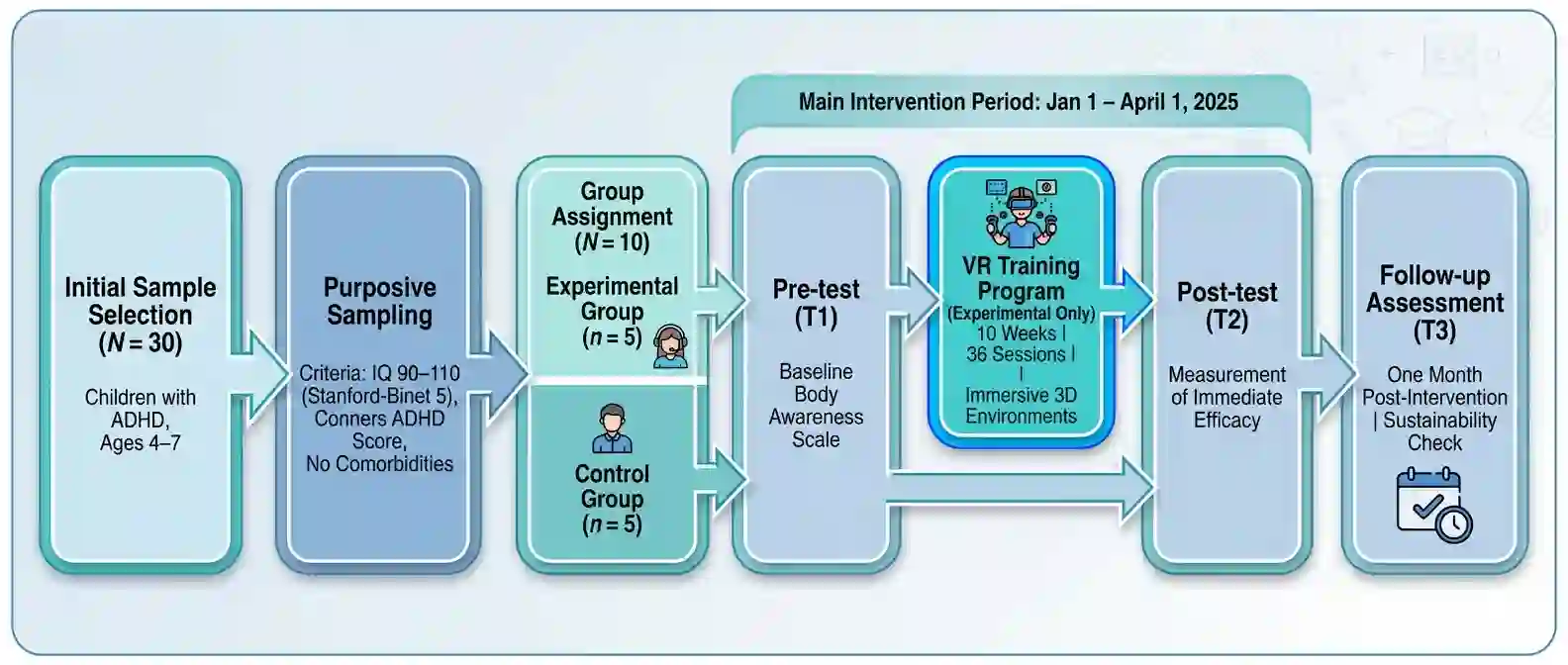
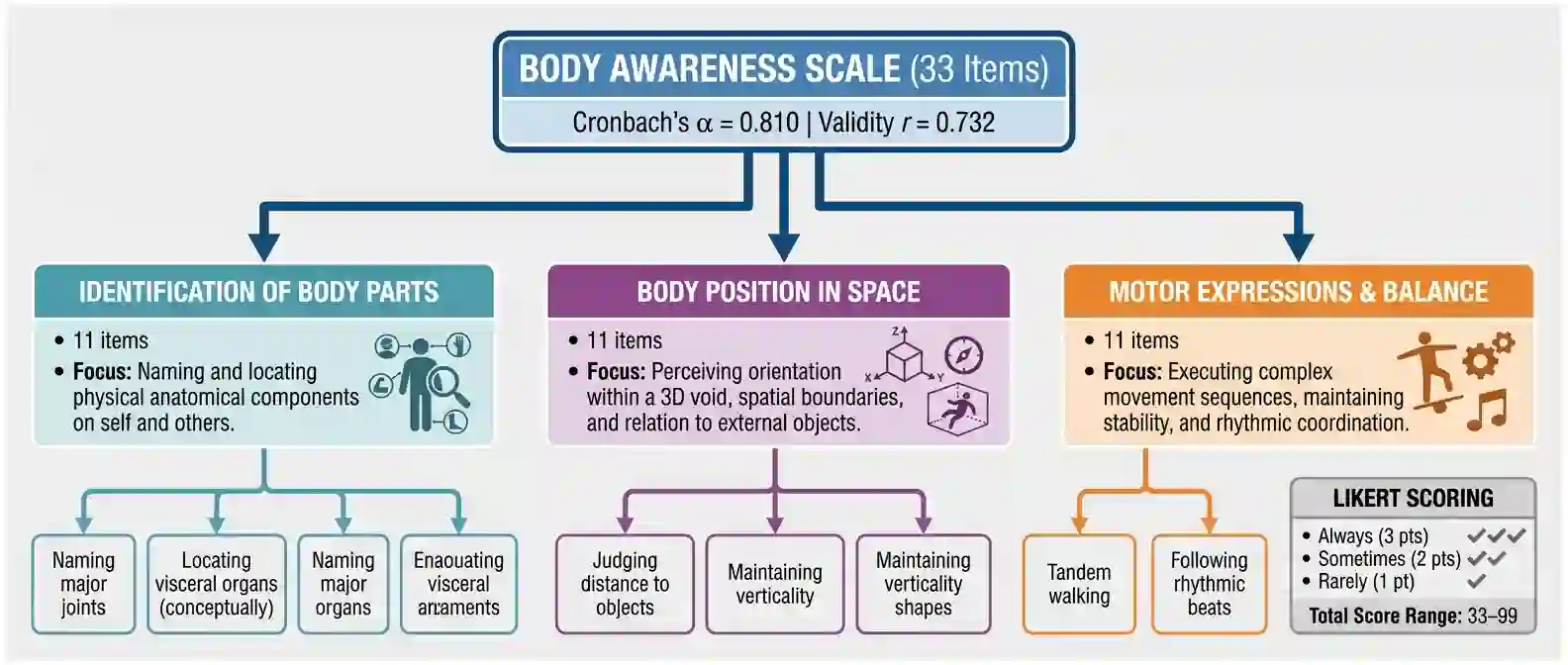
This study investigates the effectiveness of a Virtual Reality (VR)-based training program in improving body awareness among children with Attention Deficit Hyperactivity Disorder (ADHD). Utilizing a quasi-experimental design, the research sample consisted of 10 children aged 4 to 7 years, with IQ scores ranging from 90 to 110. Participants were divided into an experimental group and a control group, with the experimental group receiving a structured VR intervention over three months, totaling 36 sessions. Assessment tools included the Stanford-Binet Intelligence Scale (5th Edition), the Conners Test for ADHD, and a researcher-prepared Body Awareness Scale. The results indicated statistically significant differences between pre-test and post-test scores for the experimental group, demonstrating the program's efficacy in enhancing spatial awareness, body part identification, and motor expressions. Furthermore, follow-up assessments conducted one month after the intervention revealed no significant differences from the post-test results, confirming the sustainability and continuity of the program's effects over time. The findings suggest that immersive VR environments provide a safe, engaging, and effective therapeutic medium for addressing psychomotor deficits in early childhood ADHD.
翻译:本研究探讨了基于虚拟现实(VR)的训练计划在改善注意力缺陷多动障碍(ADHD)儿童身体意识方面的有效性。研究采用准实验设计,样本包括10名年龄在4至7岁之间、智商分数在90至110之间的儿童。参与者被分为实验组和对照组,实验组接受了为期三个月、总计36次的结构化VR干预。评估工具包括斯坦福-比奈智力量表(第五版)、Conners ADHD测试以及研究者自编的身体意识量表。结果显示,实验组的前测与后测分数之间存在统计学上的显著差异,表明该计划在提升空间意识、身体部位识别和运动表达方面具有显著效果。此外,干预结束一个月后进行的随访评估显示,其结果与后测结果无显著差异,证实了该计划效果的持续性和稳定性。研究结果表明,沉浸式VR环境为应对儿童早期ADHD的心理运动缺陷提供了一种安全、引人入胜且有效的治疗媒介。




相关内容



 微信扫码咨询专知VIP会员