Confining dark sectors with pseudo-conformal dynamics can produce Soft Unclustered Energy Patterns, or SUEPs, at the Large Hadron Collider: the production of dark quarks in proton-proton collisions leading to a dark shower and the high-multiplicity production of dark hadrons. The final experimental signature is spherically-symmetric energy deposits by an anomalously large number of soft Standard Model particles with a transverse energy of a few hundred MeV. The dominant background for the SUEP search, if it gets produced via gluon-gluon fusion, is multi-jet QCD events. We have developed a deep learning-based Anomaly Detection technique to reject QCD jets and identify any anomalous signature, including SUEP, in real-time in the High-Level Trigger system of the Compact Muon Solenoid experiment at the Large Hadron Collider. A deep convolutional neural autoencoder network has been trained using QCD events by taking transverse energy deposits in the inner tracker, electromagnetic calorimeter, and hadron calorimeter sub-detectors as 3-channel image data. To tackle the biggest challenge of the task, due to the sparse nature of the data: only ~0.5% of the total ~300 k image pixels have non-zero values, a non-standard loss function, the inverse of the so-called Dice Loss, has been exploited. The trained autoencoder with learned spatial features of QCD jets can detect 40% of the SUEP events, with a QCD event mistagging rate as low as 2%. The model inference time has been measured using the Intel CoreTM i5-9600KF processor and found to be ~20 ms, which perfectly satisfies the High-Level Trigger system's latency of O(100) ms. Given the virtue of the unsupervised learning of the autoencoders, the trained model can be applied to any new physics model that predicts an experimental signature anomalous to QCD jets.


翻译:具有伪共形动力学的禁闭暗扇区可在大型强子对撞机中产生软无簇射能量模式(SUEP):质子-质子碰撞中产生的暗夸克引发暗簇射,进而产生高多重性暗强子。最终实验特征表现为横动量数百MeV的异常大量软标准模型粒子所沉积的球对称能量分布。若SUEP通过胶子-胶子融合产生,其主要本底为多喷注QCD事件。我们开发了基于深度学习的异常检测技术,可在大型强子对撞机紧凑μ子螺线管实验的高阶触发系统中实时识别包括SUEP在内的任何异常特征。通过将内径迹探测器、电磁量能器和强子量能器子探测器的横向能量沉积作为三通道图像数据,利用QCD事件训练了深度卷积神经自编码器网络。针对数据稀疏性带来的最大挑战——约30万图像像素中仅~0.5%具有非零值,我们采用非标准损失函数——所谓的Dice损失的逆函数。该自编码器通过习得QCD喷注的空间特征,能够以2%的QCD事件误标率检测40%的SUEP事件。基于Intel Core i5-9600KF处理器测得模型推理时间约20毫秒,完美满足高阶触发系统百毫秒量级的延迟要求。得益于自编码器的无监督学习特性,该训练模型可适用于任何预测异常于QCD喷注实验特征的新物理模型。


0
下载
关闭预览

相关内容

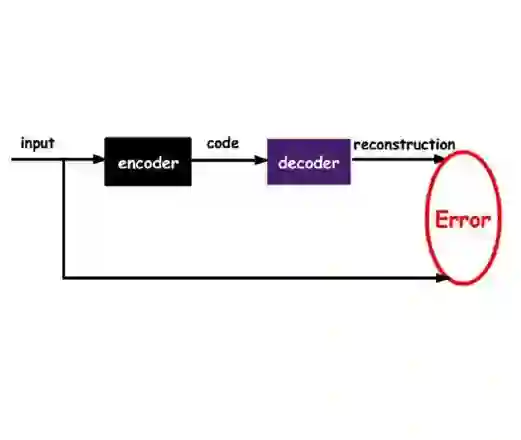
自动编码器是一种人工神经网络,用于以无监督的方式学习有效的数据编码。自动编码器的目的是通过训练网络忽略信号“噪声”来学习一组数据的表示(编码),通常用于降维。与简化方面一起,学习了重构方面,在此,自动编码器尝试从简化编码中生成尽可能接近其原始输入的表示形式,从而得到其名称。基本模型存在几种变体,其目的是迫使学习的输入表示形式具有有用的属性。自动编码器可有效地解决许多应用问题,从面部识别到获取单词的语义。
Linux导论,Introduction to Linux,96页ppt
专知会员服务
82+阅读 · 2020年7月26日
FlowQA: Grasping Flow in History for Conversational Machine Comprehension
专知会员服务
34+阅读 · 2019年10月18日
Stabilizing Transformers for Reinforcement Learning
专知会员服务
60+阅读 · 2019年10月17日
《DeepGCNs: Making GCNs Go as Deep as CNNs》
专知会员服务
32+阅读 · 2019年10月17日
Keras François Chollet 《Deep Learning with Python 》, 386页pdf
专知会员服务
164+阅读 · 2019年10月12日
Hierarchically Structured Meta-learning
CreateAMind
27+阅读 · 2019年5月22日
Transferring Knowledge across Learning Processes
CreateAMind
29+阅读 · 2019年5月18日
强化学习的Unsupervised Meta-Learning
CreateAMind
18+阅读 · 2019年1月7日
Unsupervised Learning via Meta-Learning
CreateAMind
44+阅读 · 2019年1月3日
A Technical Overview of AI & ML in 2018 & Trends for 2019
待字闺中
18+阅读 · 2018年12月24日
STRCF for Visual Object Tracking
统计学习与视觉计算组
15+阅读 · 2018年5月29日
Focal Loss for Dense Object Detection
统计学习与视觉计算组
12+阅读 · 2018年3月15日
可解释的CNN
CreateAMind
18+阅读 · 2017年10月5日
IJCAI | Cascade Dynamics Modeling with Attention-based RNN
KingsGarden
13+阅读 · 2017年7月16日
From Softmax to Sparsemax-ICML16(1)
KingsGarden
74+阅读 · 2016年11月26日
国家自然科学基金
13+阅读 · 2017年12月31日
国家自然科学基金
2+阅读 · 2015年12月31日
国家自然科学基金
3+阅读 · 2015年12月31日
国家自然科学基金
0+阅读 · 2015年12月31日
国家自然科学基金
0+阅读 · 2015年12月31日
国家自然科学基金
2+阅读 · 2015年12月31日
国家自然科学基金
0+阅读 · 2014年12月31日
国家自然科学基金
0+阅读 · 2014年12月31日
国家自然科学基金
0+阅读 · 2014年12月31日
国家自然科学基金
2+阅读 · 2014年12月31日
Arxiv
0+阅读 · 2023年8月16日
Arxiv
25+阅读 · 2023年6月23日
Arxiv
76+阅读 · 2022年3月26日
Principal Neighbourhood Aggregation for Graph Nets
Arxiv
17+阅读 · 2020年6月7日
Directions for Explainable Knowledge-Enabled Systems
Arxiv
26+阅读 · 2020年3月17日
Arxiv
11+阅读 · 2019年6月19日
Arxiv
11+阅读 · 2018年4月8日
VIP会员
最新内容
ICML 2026 | SARDI:扩散语言模型的自增强检索
专知会员服务
0+阅读 · 6月6日
《国防领域安全采用大语言模型的战略蓝图》
专知会员服务
2+阅读 · 6月6日
ICML 2026 | 演化选择的因果建模
专知会员服务
4+阅读 · 6月5日
综述|学习式3D表征最新进展与趋势
专知会员服务
4+阅读 · 6月5日
人工智能重塑威慑:算法优势的兴起
专知会员服务
7+阅读 · 6月5日
AgentOps综述:智能体系统运维框架
专知会员服务
16+阅读 · 6月4日
《美陆军最新条令:兵力防护》
专知会员服务
13+阅读 · 6月4日
相关资讯
Hierarchically Structured Meta-learning
CreateAMind
27+阅读 · 2019年5月22日
Transferring Knowledge across Learning Processes
CreateAMind
29+阅读 · 2019年5月18日
强化学习的Unsupervised Meta-Learning
CreateAMind
18+阅读 · 2019年1月7日
Unsupervised Learning via Meta-Learning
CreateAMind
44+阅读 · 2019年1月3日
A Technical Overview of AI & ML in 2018 & Trends for 2019
待字闺中
18+阅读 · 2018年12月24日
STRCF for Visual Object Tracking
统计学习与视觉计算组
15+阅读 · 2018年5月29日
Focal Loss for Dense Object Detection
统计学习与视觉计算组
12+阅读 · 2018年3月15日
可解释的CNN
CreateAMind
18+阅读 · 2017年10月5日
IJCAI | Cascade Dynamics Modeling with Attention-based RNN
KingsGarden
13+阅读 · 2017年7月16日
From Softmax to Sparsemax-ICML16(1)
KingsGarden
74+阅读 · 2016年11月26日
相关论文
Arxiv
0+阅读 · 2023年8月16日
Arxiv
25+阅读 · 2023年6月23日
Arxiv
76+阅读 · 2022年3月26日
Principal Neighbourhood Aggregation for Graph Nets
Arxiv
17+阅读 · 2020年6月7日
Directions for Explainable Knowledge-Enabled Systems
Arxiv
26+阅读 · 2020年3月17日
Arxiv
11+阅读 · 2019年6月19日
Arxiv
11+阅读 · 2018年4月8日
相关基金
国家自然科学基金
13+阅读 · 2017年12月31日
国家自然科学基金
2+阅读 · 2015年12月31日
国家自然科学基金
3+阅读 · 2015年12月31日
国家自然科学基金
0+阅读 · 2015年12月31日
国家自然科学基金
0+阅读 · 2015年12月31日
国家自然科学基金
2+阅读 · 2015年12月31日
国家自然科学基金
0+阅读 · 2014年12月31日
国家自然科学基金
0+阅读 · 2014年12月31日
国家自然科学基金
0+阅读 · 2014年12月31日
国家自然科学基金
2+阅读 · 2014年12月31日
Top
微信扫码咨询专知VIP会员