

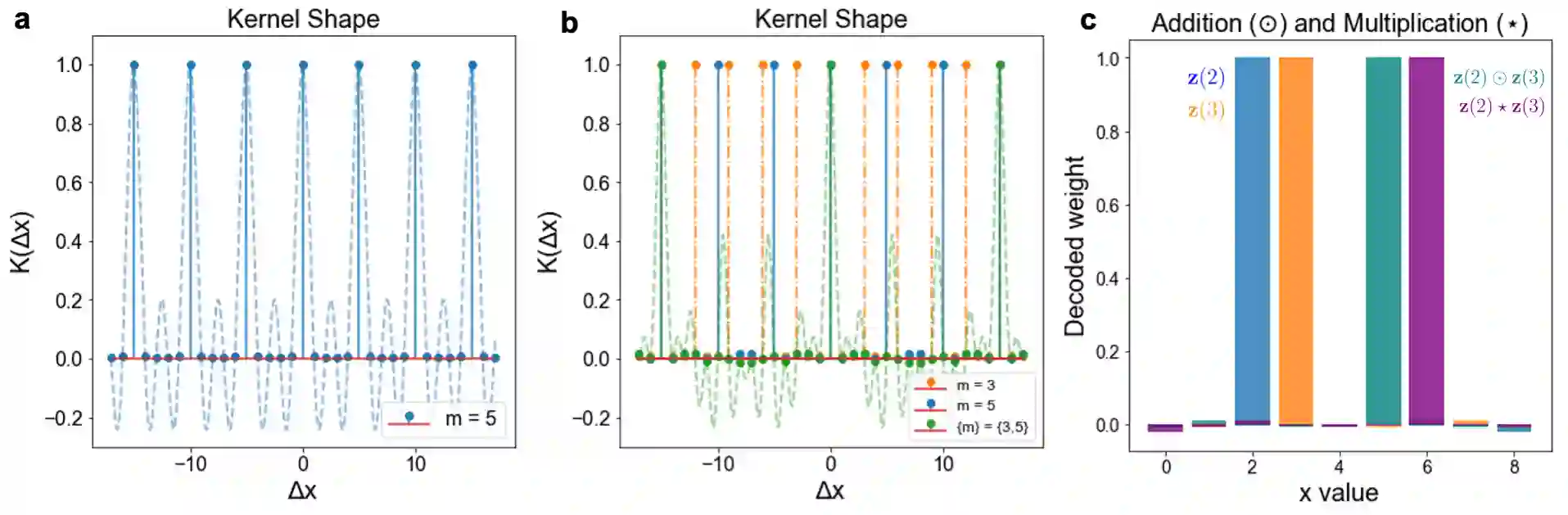
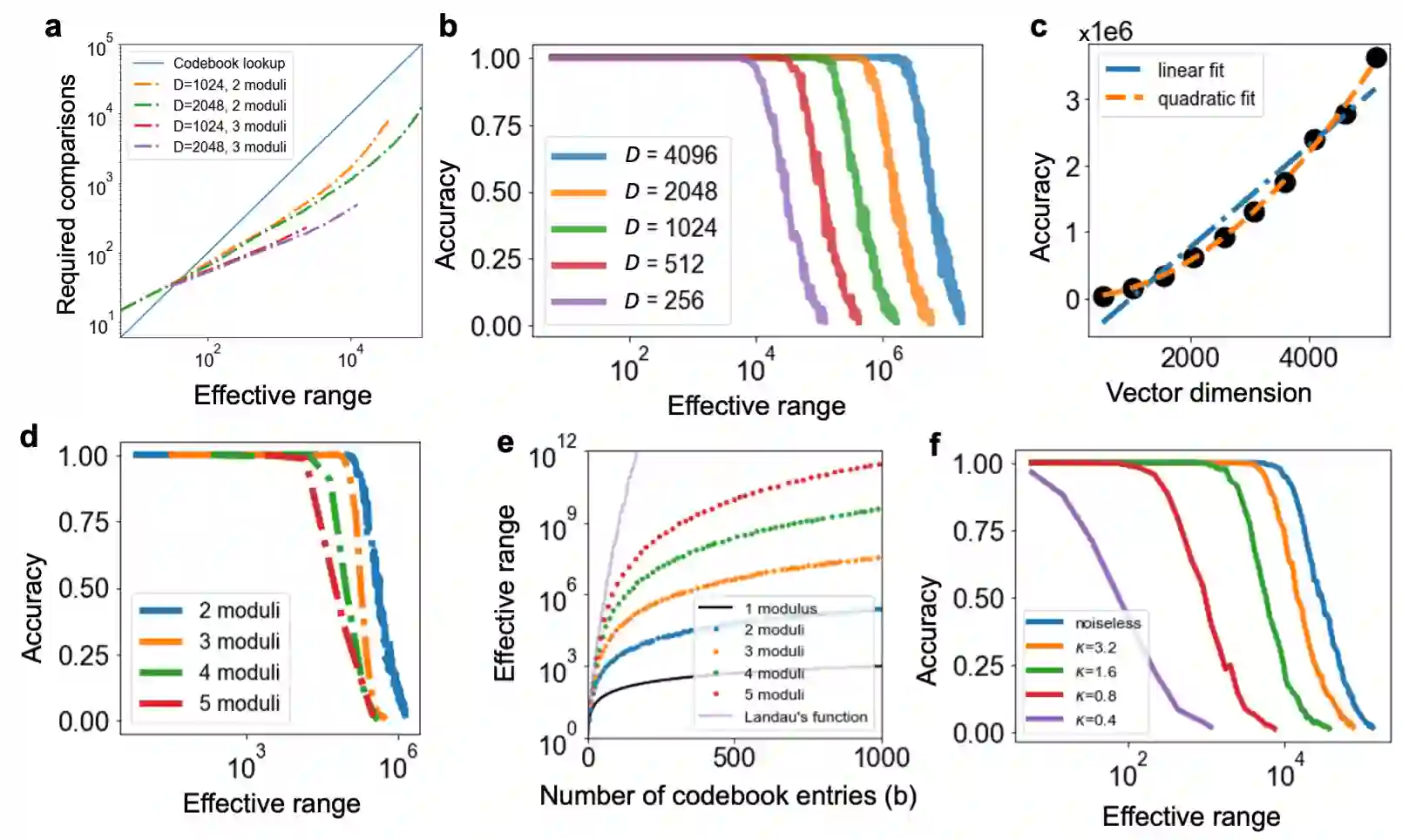
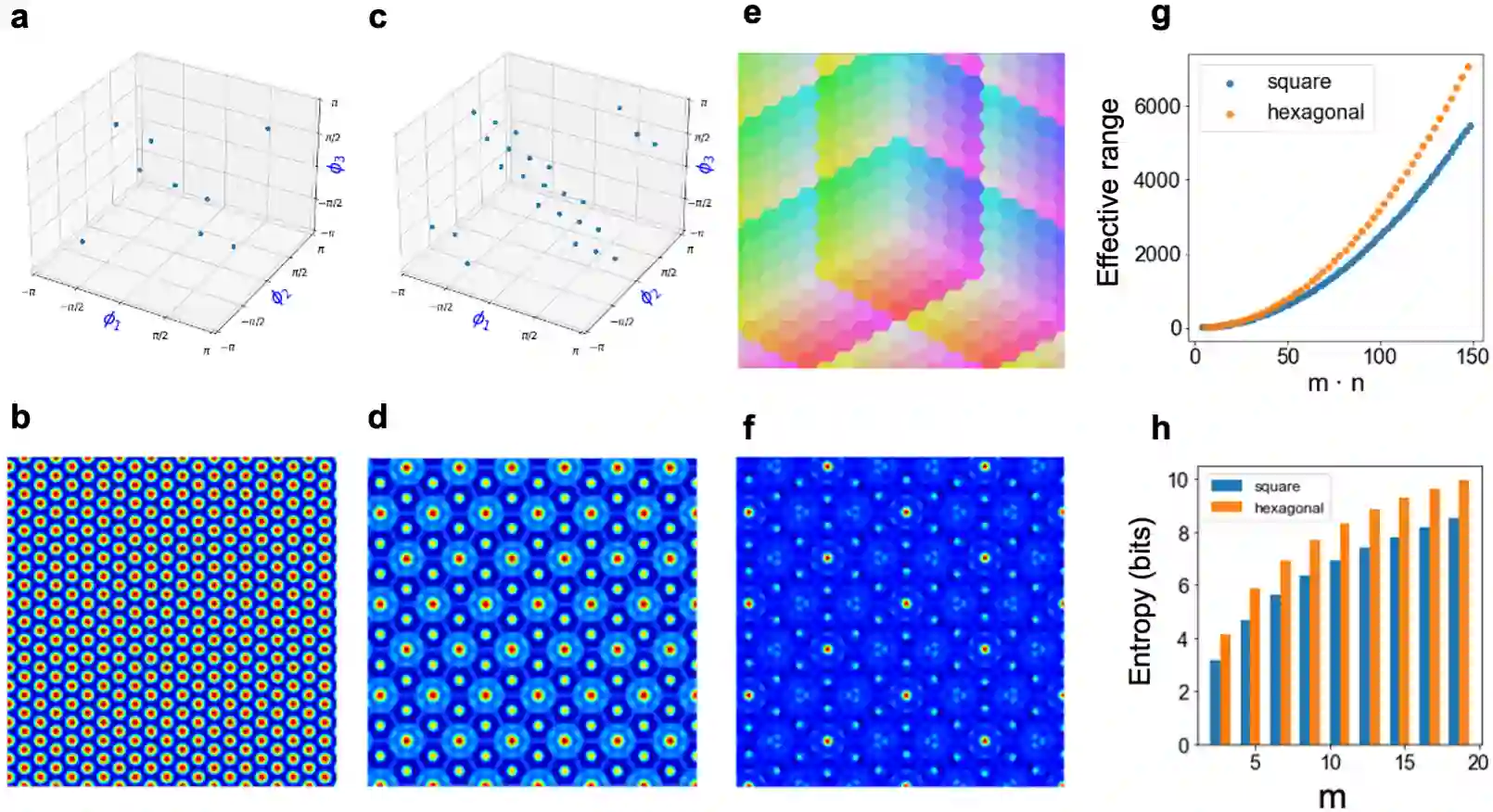
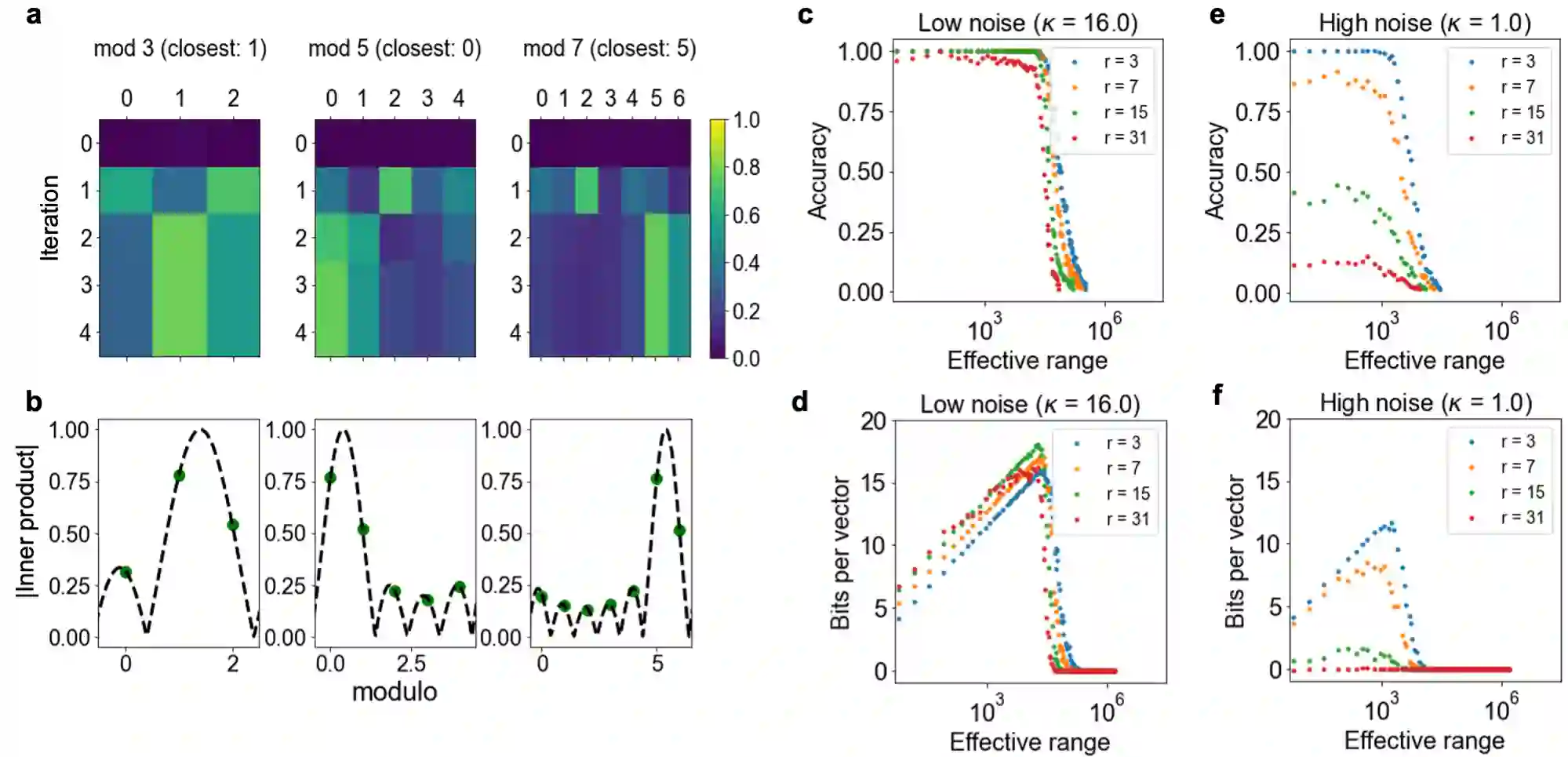
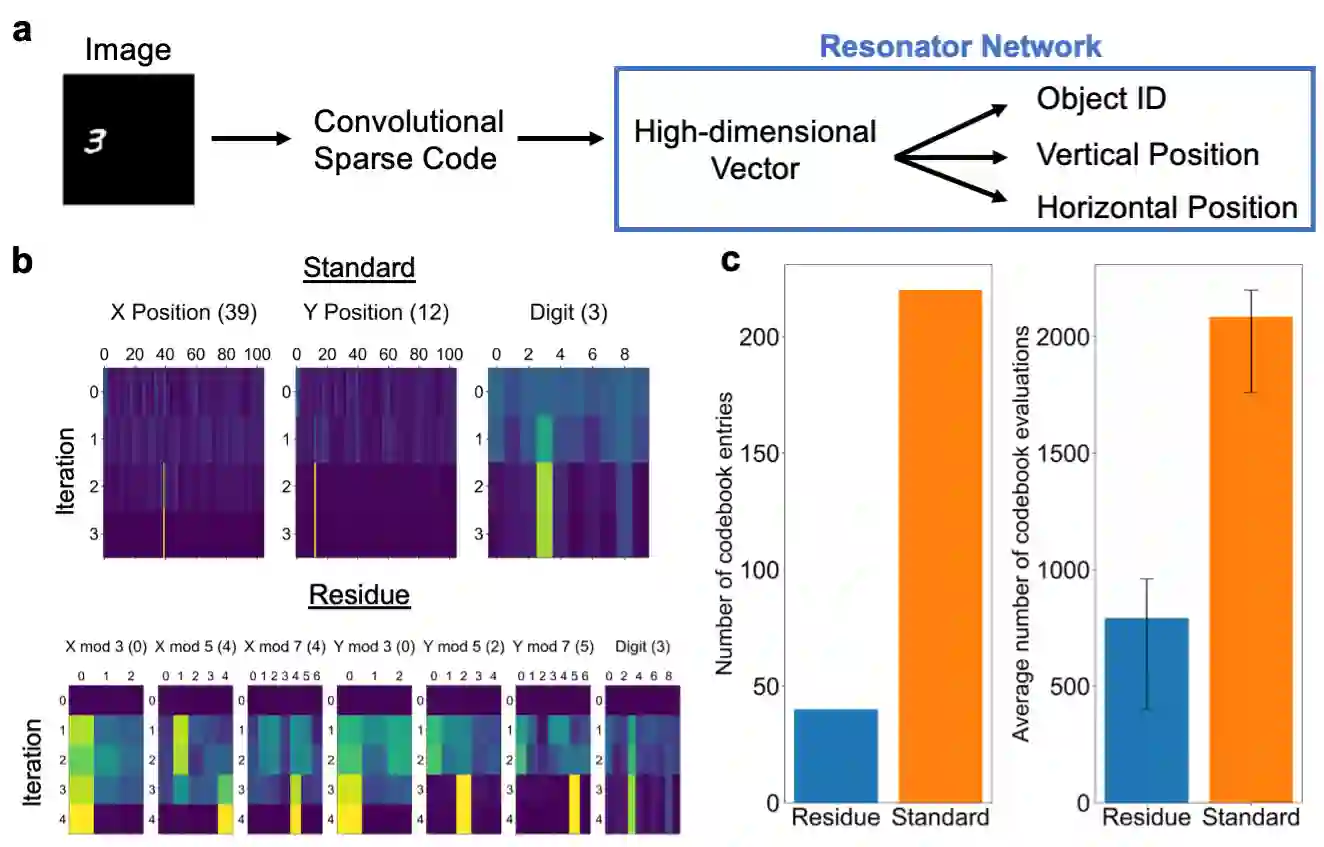
We introduce Residue Hyperdimensional Computing, a computing framework that unifies residue number systems with an algebra defined over random, high-dimensional vectors. We show how residue numbers can be represented as high-dimensional vectors in a manner that allows algebraic operations to be performed with component-wise, parallelizable operations on the vector elements. The resulting framework, when combined with an efficient method for factorizing high-dimensional vectors, can represent and operate on numerical values over a large dynamic range using vastly fewer resources than previous methods, and it exhibits impressive robustness to noise. We demonstrate the potential for this framework to solve computationally difficult problems in visual perception and combinatorial optimization, showing improvement over baseline methods. More broadly, the framework provides a possible account for the computational operations of grid cells in the brain, and it suggests new machine learning architectures for representing and manipulating numerical data.
翻译:我们提出余数超维计算框架,该框架将余数系统与基于随机高维向量的代数相统一。我们展示了如何将余数表示为高维向量,使得代数运算能够通过对向量元素进行逐分量、可并行的操作来完成。这一框架与高效的高维向量分解方法相结合,能够以远超先前方法的资源效率,表示并操作大动态范围内的数值,同时展现出卓越的抗噪鲁棒性。我们论证了该框架在解决视觉感知与组合优化中的计算难题方面的潜力,相较于基线方法展现出性能提升。从更广泛的视角看,该框架为大脑网格细胞的计算机制提供了可能的解释,并提出了用于表示与操作数值数据的新型机器学习架构。




相关内容



 微信扫码咨询专知VIP会员