

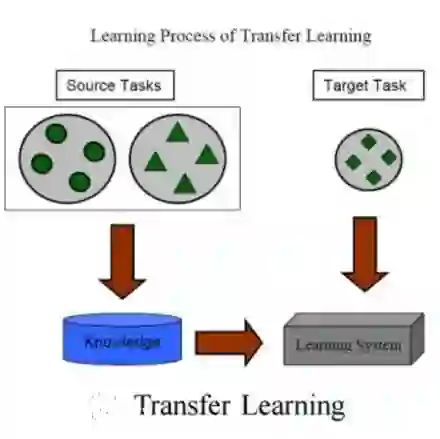
Structural condition identification based on monitoring data is important for automatic civil infrastructure asset management. Nevertheless, the monitoring data is almost always insufficient, because the real-time monitoring data of a structure only reflects a limited number of structural conditions, while the number of possible structural conditions is infinite. With insufficient monitoring data, the identification performance may significantly degrade. This study aims to tackle this challenge by proposing a deep transfer learning (TL) approach for structural condition identification. It effectively integrates physics-based and data-driven methods, by generating various training data based on the calibrated finite element (FE) model, pretraining a deep learning (DL) network, and transferring its embedded knowledge to the real monitoring/testing domain. Its performance is demonstrated in a challenging case, vibration-based condition identification of steel frame structures with bolted connection damage. The results show that even though the training data are from a different domain and with different types of labels, intrinsic physics can be learned through the pretraining process, and the TL results can be clearly improved, with the identification accuracy increasing from 81.8% to 89.1%. The comparative studies show that SHMnet with three convolutional layers stands out as the pretraining DL architecture, with 21.8% and 25.5% higher identification accuracy values over the other two networks, VGGnet-16 and ResNet-18. The findings of this study advance the potential application of the proposed approach towards expert-level condition identification based on limited real-world training data.
翻译:基于监测数据的结构状态识别对于土木基础设施的自动化管理至关重要。然而,监测数据几乎总是不足的,因为结构的实时监测数据仅反映有限的结构状态,而可能的结构状态却是无限的。在监测数据不足的情况下,识别性能可能会显著下降。本研究旨在通过提出一种用于结构状态识别的深度迁移学习方法来解决这一挑战。该方法有效融合了基于物理模型和基于数据驱动的方法,通过基于标定有限元模型生成多样化的训练数据、预训练深度学习网络,并将其嵌入的知识迁移到实际监测/测试领域。该方法在一个具有挑战性的案例中得到验证:针对螺栓连接损伤的钢框架结构的振动状态识别。结果表明,即使训练数据来自不同领域且标签类型不同,通过预训练过程仍可学习到内在物理规律,迁移学习结果可得到明显提升,识别准确率从81.8%提高到89.1%。对比研究表明,包含三个卷积层的SHMnet作为预训练深度学习架构表现最佳,其识别准确率分别比另外两个网络VGGnet-16和ResNet-18高出21.8%和25.5%。本研究的发现推进了所提方法在基于有限实测训练数据实现专家级状态识别方面的潜在应用。




相关内容



 微信扫码咨询专知VIP会员