

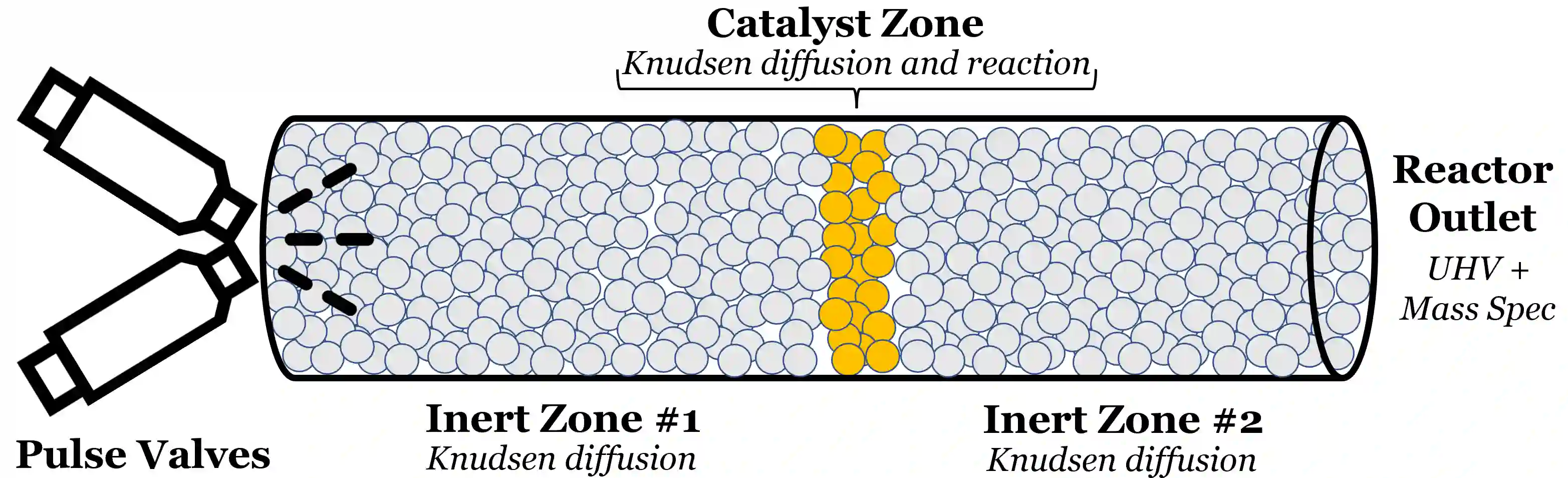
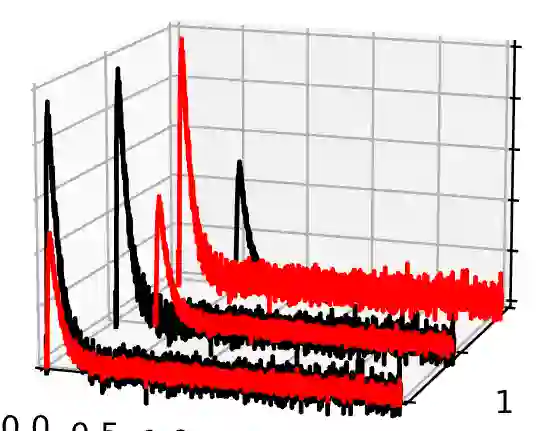
Temporal analysis of products (TAP) reactors enable experiments that probe numerous kinetic processes within a single set of experimental data through variations in pulse intensity, delay, or temperature. Selecting additional TAP experiments often involves arbitrary selection of reaction conditions or the use of chemical intuition. To make experiment selection in TAP more robust, we explore the efficacy of model-based design of experiments (MBDoE) for precision in TAP reactor kinetic modeling. We successfully applied this approach to a case study of synthetic oxidative propane dehydrogenation (OPDH) that involves pulses of propane and oxygen. We found that experiments identified as optimal through the MBDoE for precision generally reduce parameter uncertainties to a higher degree than alternative experiments. The performance of MBDoE for model divergence was also explored for OPDH, with the relevant active sites (catalyst structure) being unknown. An experiment that maximized the divergence between the three proposed mechanisms was identified and led to clear mechanism discrimination. However, re-optimization of kinetic parameters eliminated the ability to discriminate. The findings yield insight into the prospects and limitations of MBDoE for TAP and transient kinetic experiments.
翻译:产品时间分析(TAP)反应器能够通过脉冲强度、延迟或温度的变化,在单组实验数据中探测多种动力学过程。选择额外的TAP实验通常涉及反应条件的任意选择或化学直觉的运用。为提高TAP实验选择的稳健性,我们探索了基于模型的实验设计(MBDoE)在TAP反应器动力学建模中的精确性应用。我们将该方法成功应用于合成氧化丙烷脱氢(OPDH)的案例研究,其中涉及丙烷和氧气的脉冲。研究发现,通过MBDoE确定为最优的实验通常能比替代实验更高程度地降低参数不确定性。本研究还探讨了MBDoE在模型区分方面的性能,在相关活性位点(催化剂结构)未知的条件下应用于OPDH。我们确定了能最大化三种拟议机制之间差异的实验,并实现了清晰的机制区分。然而,动力学参数的重新优化消除了区分能力。这些发现揭示了MBDoE在TAP及瞬态动力学实验中的前景与局限性。





相关内容




 微信扫码咨询专知VIP会员