

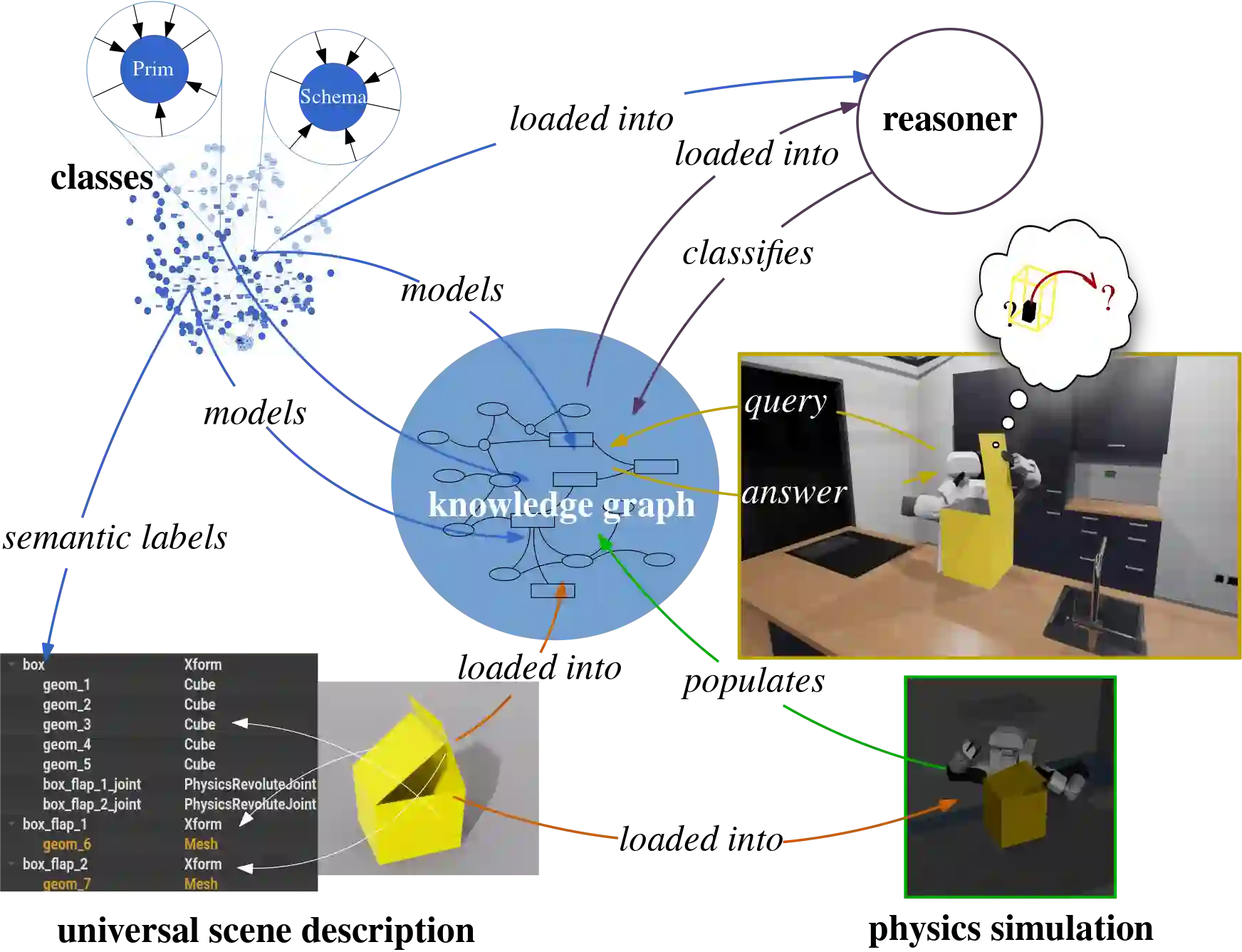
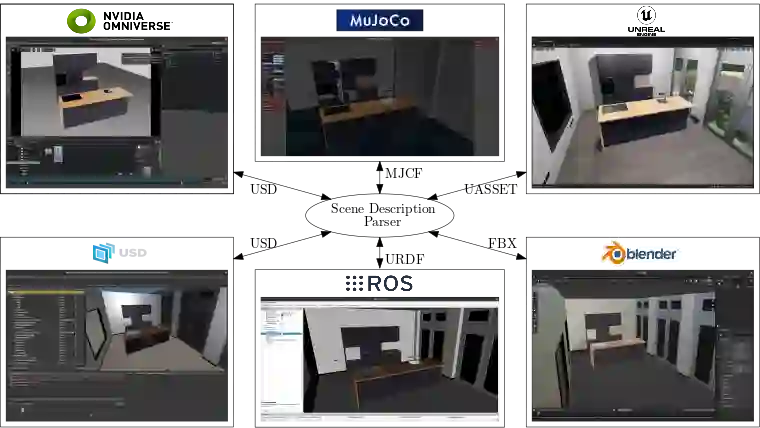
Robots performing human-scale manipulation tasks require an extensive amount of knowledge about their surroundings in order to perform their actions competently and human-like. In this work, we investigate the use of virtual reality technology as an implementation for robot environment modeling, and present a technique for translating scene graphs into knowledge bases. To this end, we take advantage of the Universal Scene Description (USD) format which is an emerging standard for the authoring, visualization and simulation of complex environments. We investigate the conversion of USD-based environment models into Knowledge Graph (KG) representations that facilitate semantic querying and integration with additional knowledge sources.
翻译:执行人类尺度操作任务的机器人需要对其周围环境有广泛的知识,才能胜任并类人地执行动作。在本研究中,我们探讨了将虚拟现实技术作为机器人环境建模实现手段的可行性,并提出了一种将场景图转化为知识库的技术。为此,我们利用了通用场景描述(USD)格式,该格式是用于复杂环境创作、可视化和仿真的新兴标准。我们研究了将基于USD的环境模型转化为知识图谱(KG)表示的方法,这种表示有助于语义查询及与额外知识源的集成。




相关内容




 微信扫码咨询专知VIP会员