

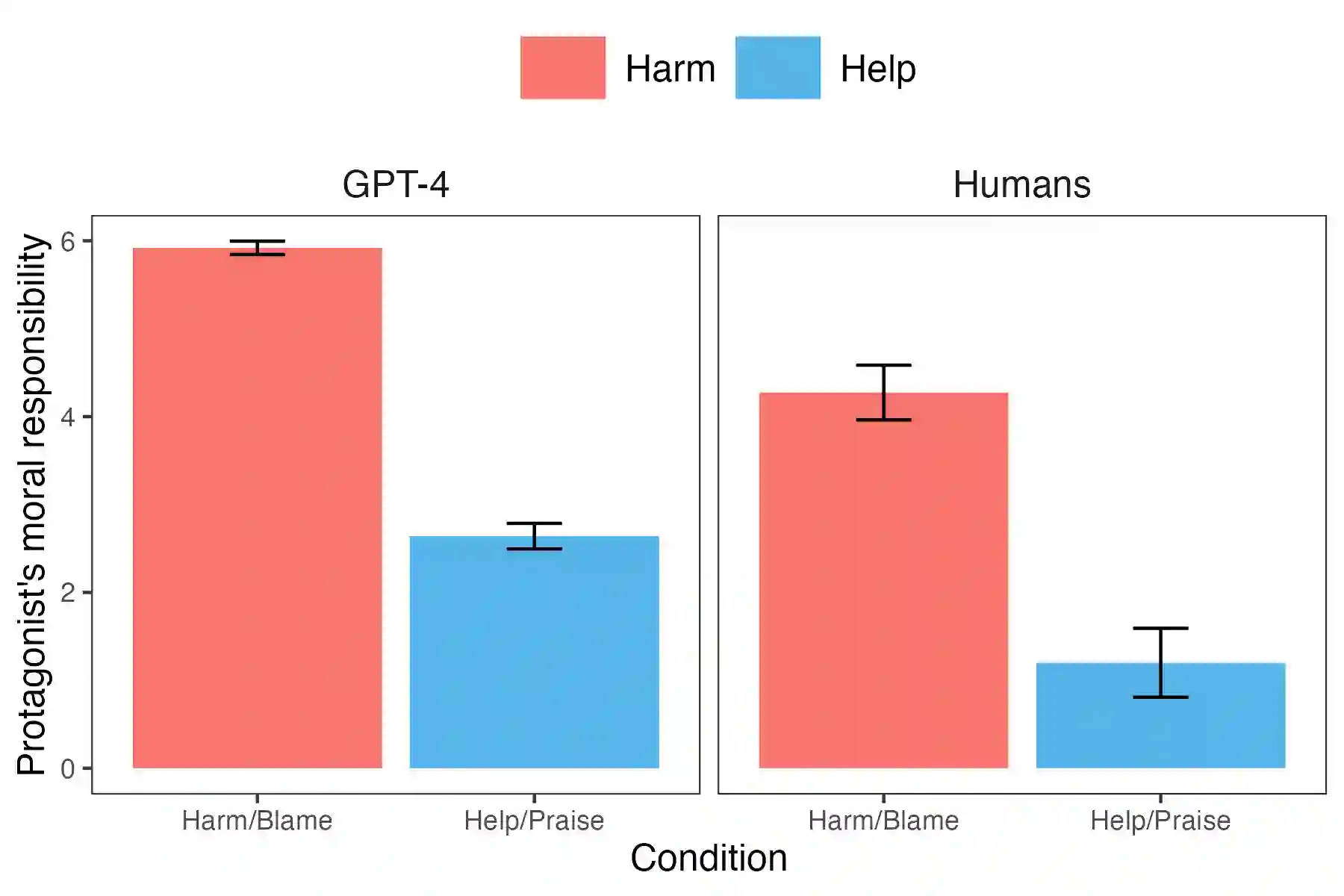
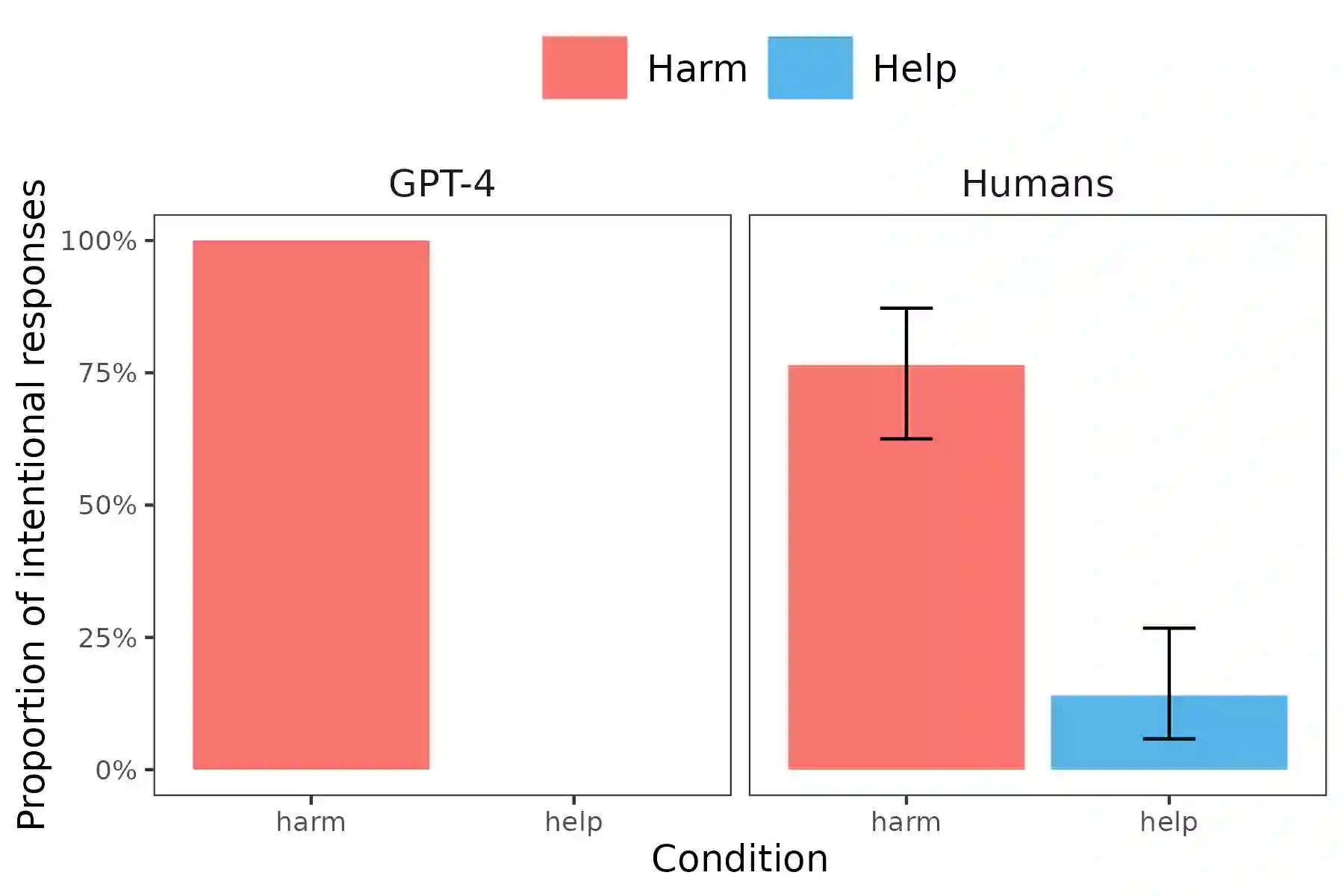
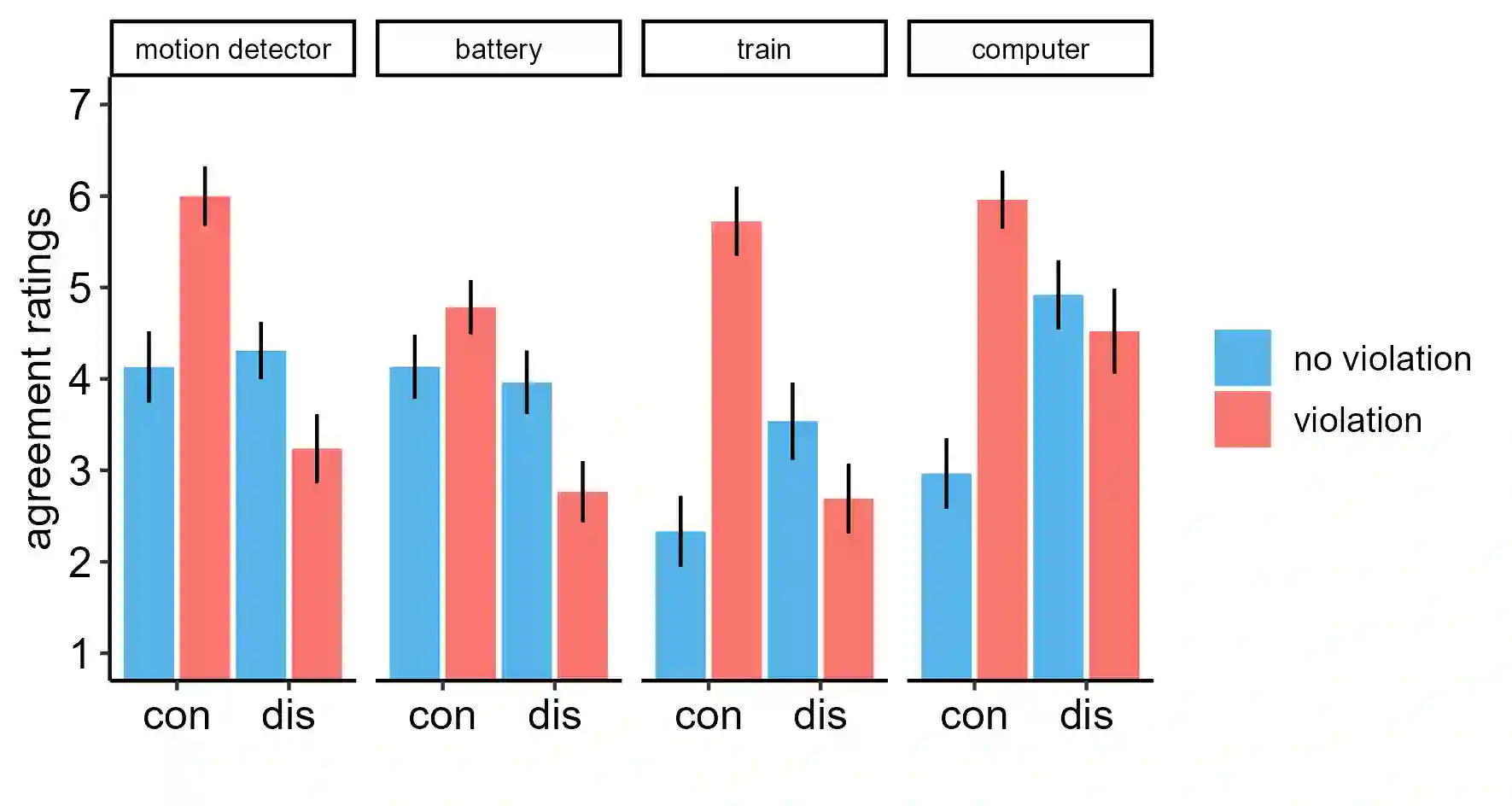
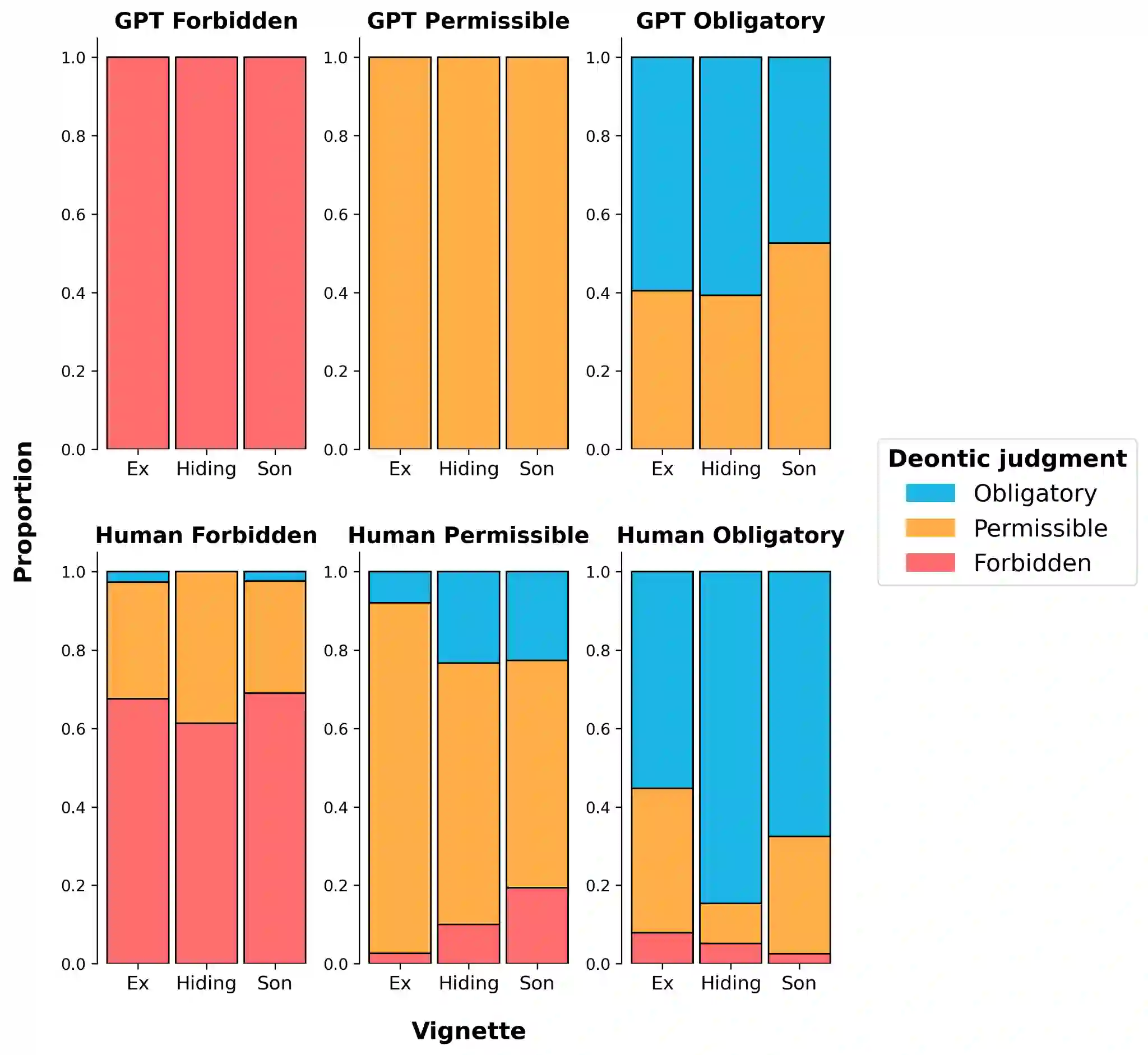
Large language models have been used as the foundation of highly sophisticated artificial intelligences, capable of delivering human-like responses to probes about legal and moral issues. However, these models are unreliable guides to their own inner workings, and even the engineering teams behind their creation are unable to explain exactly how they came to develop all of the capabilities they currently have. The emerging field of machine psychology seeks to gain insight into the processes and concepts that these models possess. In this paper, we employ the methods of psychology to probe into GPT-4's moral and legal reasoning. More specifically, we investigate the similarities and differences between GPT-4 and humans when it comes to intentionality ascriptions, judgments about causation, the morality of deception, moral foundations, the impact of moral luck on legal judgments, the concept of consent, and rule violation judgments. We find high correlations between human and AI responses, but also several significant systematic differences between them. We conclude with a discussion of the philosophical implications of our findings.
翻译:大型语言模型已成为高度复杂人工智能的基础,能够就法律与道德问题提供类人回应。然而,这些模型无法可靠地揭示其内部运作机制,就连其创造团队也无法确切解释它们如何发展出当前拥有的所有能力。新兴的机器心理学领域致力于探究这些模型所蕴含的过程与概念。本文运用心理学方法深入剖析GPT-4的道德与法律推理。具体而言,我们考察了GPT-4与人类在意图归因、因果判断、欺骗的道德性、道德基础、道德运气对法律判决的影响、同意概念及违规判断方面的异同。研究发现人类与AI回应之间存在高度相关性,但也存在若干显著的系统性差异。最后,我们探讨了研究发现所引发的哲学启示。





相关内容




 微信扫码咨询专知VIP会员