

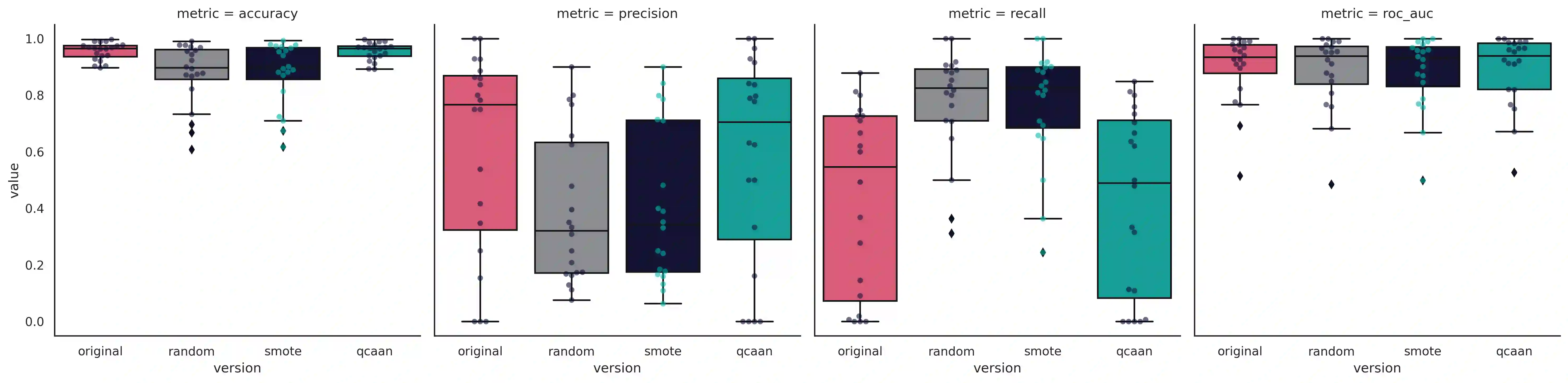
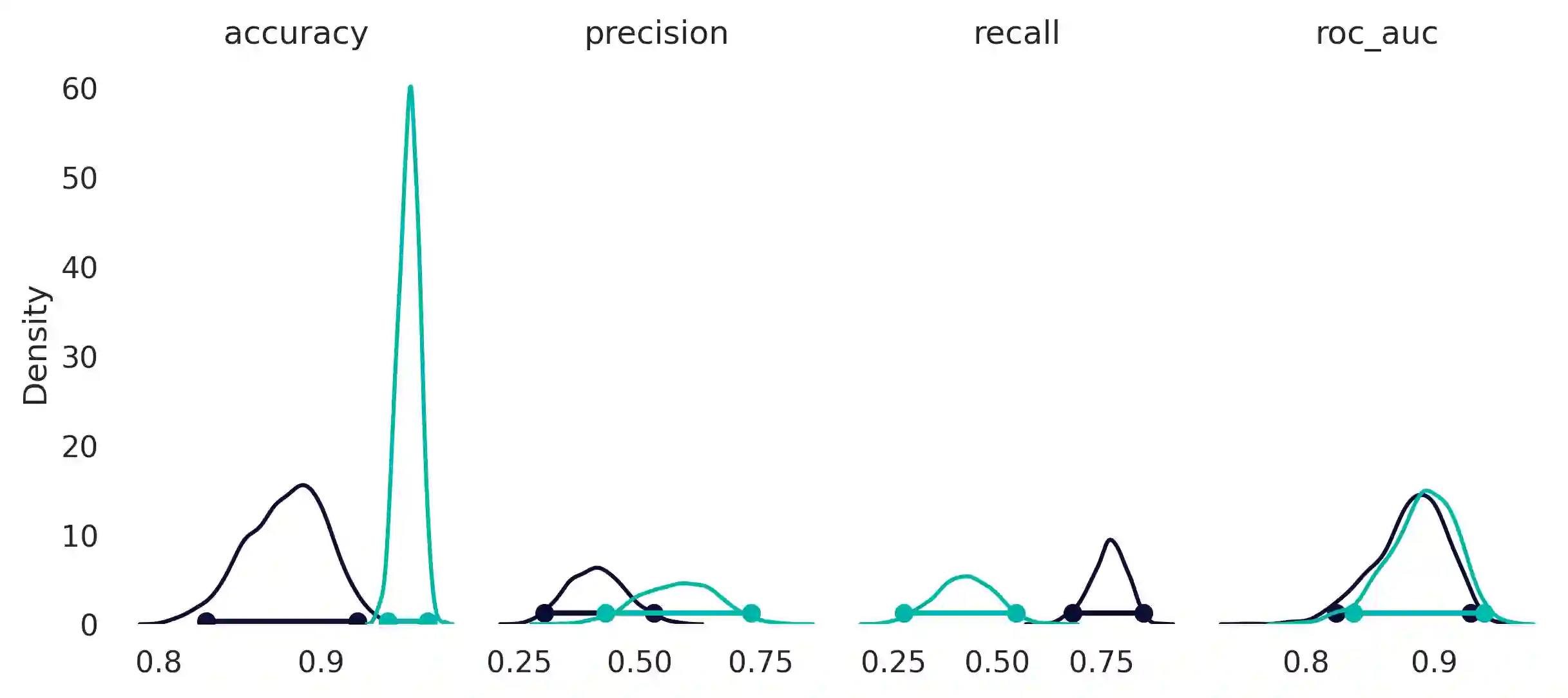
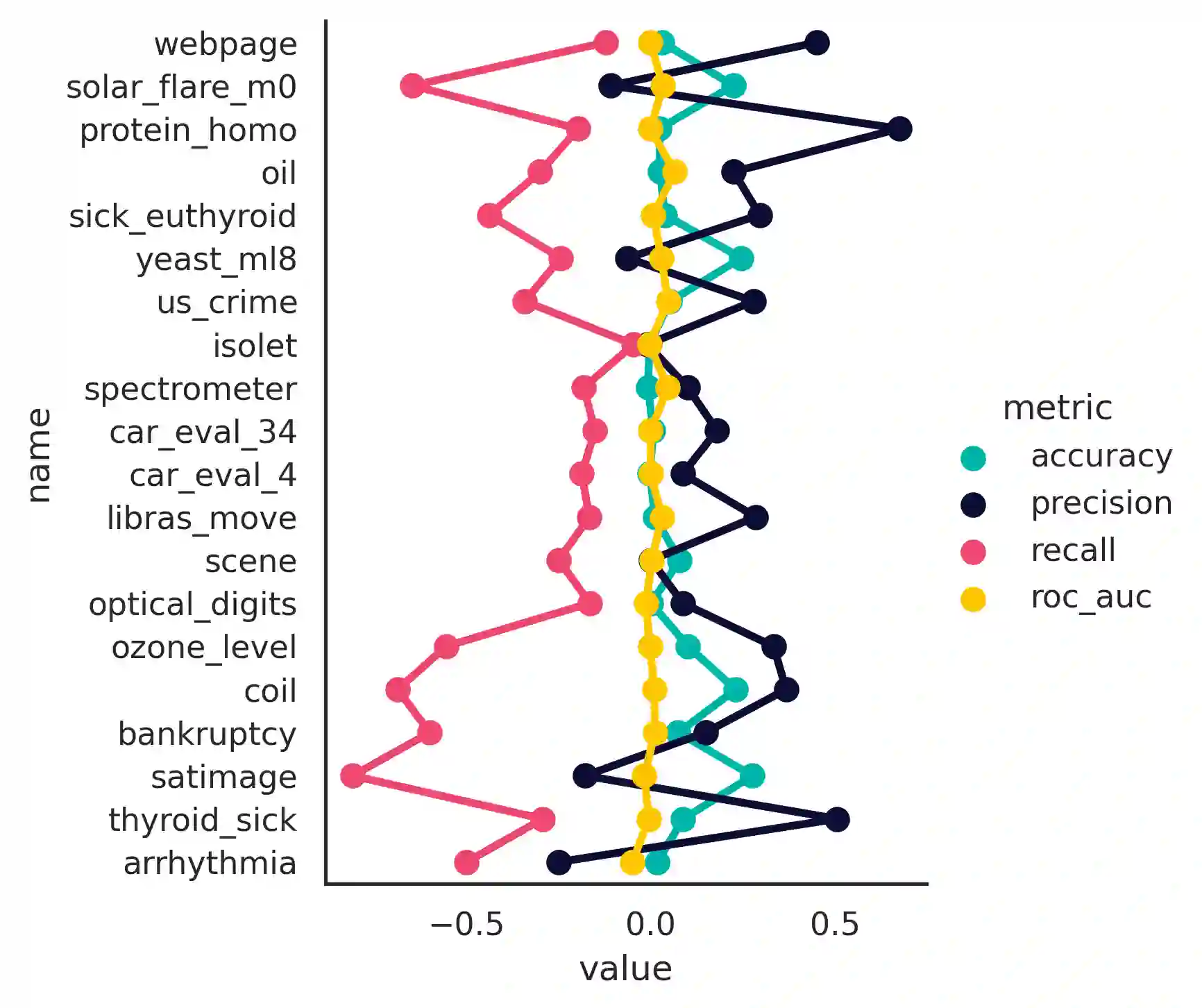
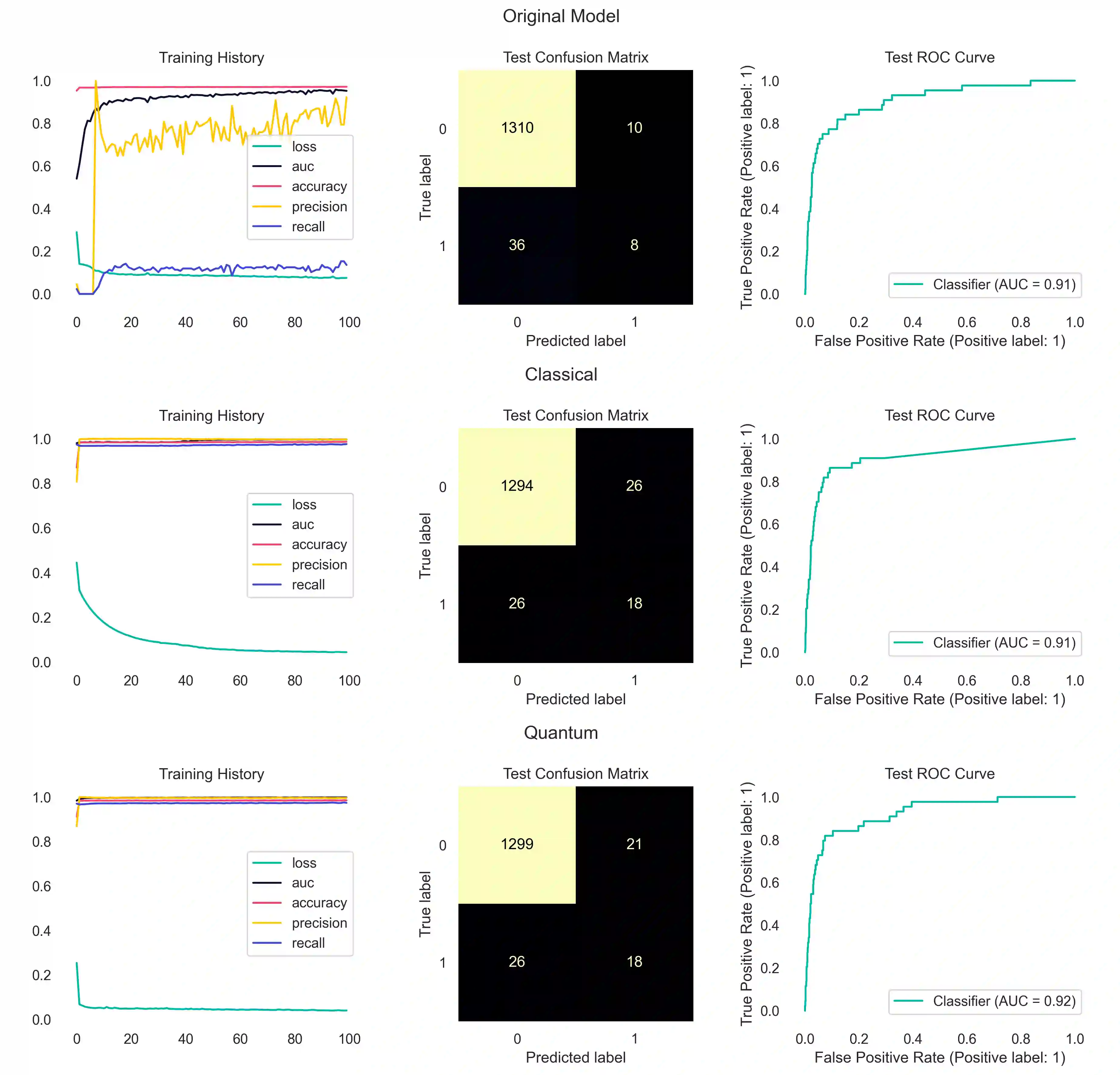
A limited set of tools exist for assessing whether the behavior of quantum machine learning models diverges from conventional models, outside of abstract or theoretical settings. We present a systematic application of explainable artificial intelligence techniques to analyze synthetic data generated from a hybrid quantum-classical neural network adapted from twenty different real-world data sets, including solar flares, cardiac arrhythmia, and speech data. Each of these data sets exhibits varying degrees of complexity and class imbalance. We benchmark the quantum-generated data relative to state-of-the-art methods for mitigating class imbalance for associated classification tasks. We leverage this approach to elucidate the qualities of a problem that make it more or less likely to be amenable to a hybrid quantum-classical generative model.
翻译:目前,在抽象或理论环境之外,评估量子机器学习模型行为是否偏离传统模型的工具十分有限。我们系统性地应用可解释人工智能技术,分析了由混合量子-经典神经网络生成的合成数据,这些数据源自二十个不同的真实世界数据集,包括太阳耀斑、心律失常和语音数据。这些数据集均展现出不同程度的复杂性和类别不平衡。我们将量子生成数据与缓解分类任务中类别不平衡的先进方法进行基准比较。利用这一方法,我们阐明了问题的哪些特性使其更可能或更不适用于混合量子-经典生成模型。




相关内容





 微信扫码咨询专知VIP会员