

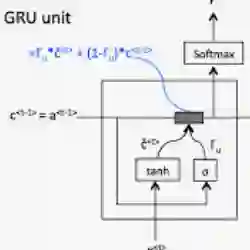
Modern cloud platforms generate high-dimensional, noisy telemetry from thousands of microservices. Unlike classical anomaly detection benchmarks, cloud anomalies are short-lived, irregular, and largely non-periodic, making timely detection challenging. We present an empirical benchmark of deep learning models for anomaly detection using a real-world IBM Cloud Console dataset. We evaluate GRU, Transformer, TimesNet, and Autoformer architectures using the Numenta Anomaly Benchmark (NAB), a timing-aware metric that accounts for early detection and false alarms. TimesNet achieves the highest NAB scores due to strong early-detection sensitivity. Transformer models also detect anomalies early but incur higher false-positive rates. An improved GRU autoencoder, incorporating robust scoring and persistence rules, achieves competitive performance with a more stable false-alarm profile. Overall, the modest performance differences suggest that real cloud anomalies are dominated by short-term deviations rather than persistent periodic structure, emphasizing the importance of timing-aware evaluation and robust post-processing.
翻译:暂无翻译




相关内容



 微信扫码咨询专知VIP会员