

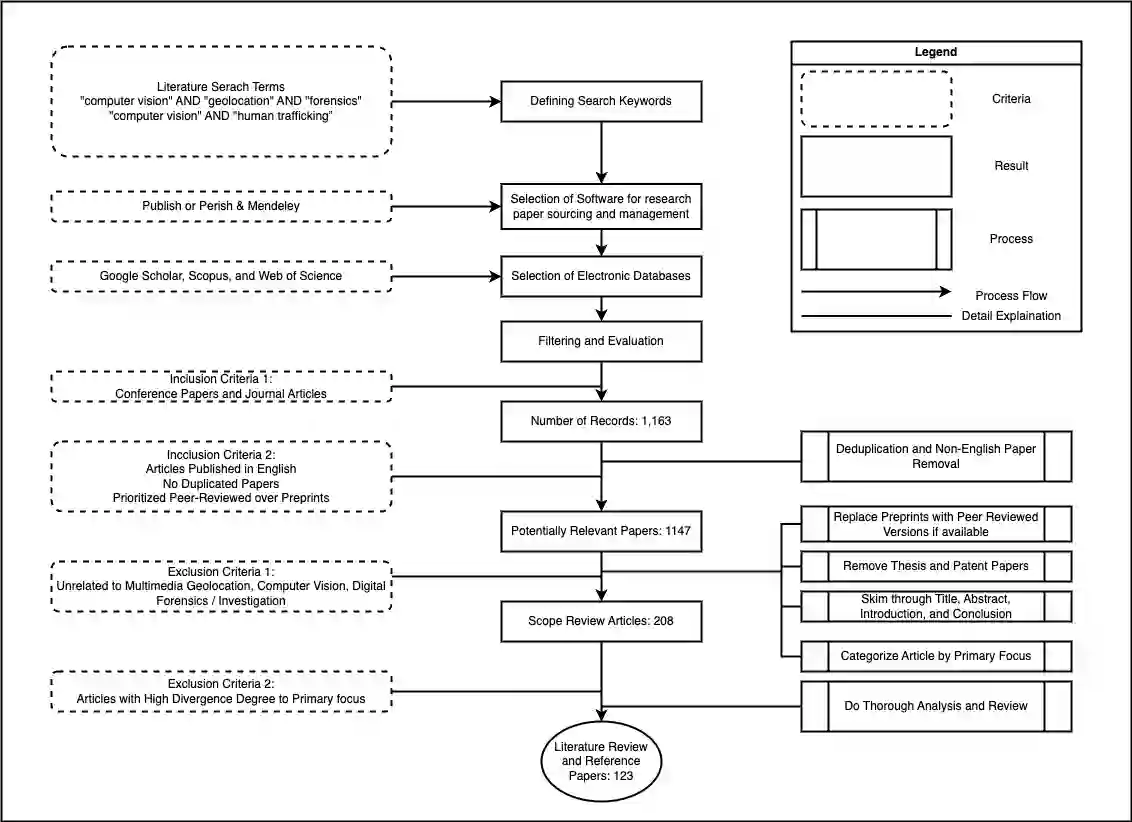
The task of multimedia geolocation is becoming an increasingly essential component of the digital forensics toolkit to effectively combat human trafficking, child sexual exploitation, and other illegal acts. Typically, metadata-based geolocation information is stripped when multimedia content is shared via instant messaging and social media. The intricacy of geolocating, geotagging, or finding geographical clues in this content is often overly burdensome for investigators. Recent research has shown that contemporary advancements in artificial intelligence, specifically computer vision and deep learning, show significant promise towards expediting the multimedia geolocation task. This systematic literature review thoroughly examines the state-of-the-art leveraging computer vision techniques for multimedia geolocation and assesses their potential to expedite human trafficking investigation. This includes a comprehensive overview of the application of computer vision-based approaches to multimedia geolocation, identifies their applicability in combating human trafficking, and highlights the potential implications of enhanced multimedia geolocation for prosecuting human trafficking. 123 articles inform this systematic literature review. The findings suggest numerous potential paths for future impactful research on the subject.
翻译:多媒体地理定位任务正日益成为数字取证工具包中不可或缺的组成部分,以有效打击人口贩卖、儿童性剥削及其他非法行为。通常,当多媒体内容通过即时通讯和社交媒体共享时,基于元数据的地理位置信息会被剥离。对这些内容进行地理定位、地理标记或寻找地理线索的复杂性,往往给调查人员带来过重负担。近期研究表明,人工智能(尤其是计算机视觉与深度学习)的当代进展在加速多媒体地理定位任务方面展现出显著潜力。本系统文献综述深入审视了利用计算机视觉技术进行多媒体地理定位的最新进展,并评估了其在加速人口贩卖调查中的潜力。综述全面概述了基于计算机视觉方法在多媒体地理定位中的应用,识别了其在打击人口贩卖中的适用性,并强调了增强多媒体地理定位对起诉人口贩卖的潜在影响。本系统文献综述参考了123篇文献。研究结果指出了该领域未来可产生深远影响的多个潜在研究方向。




相关内容




 微信扫码咨询专知VIP会员