

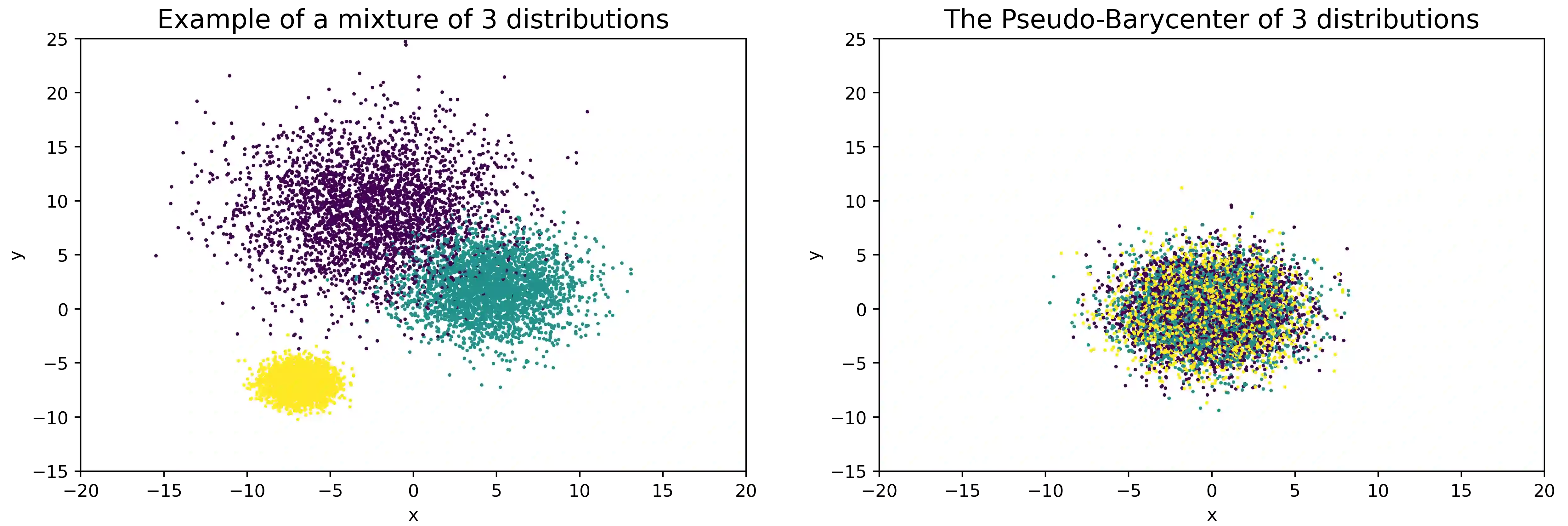
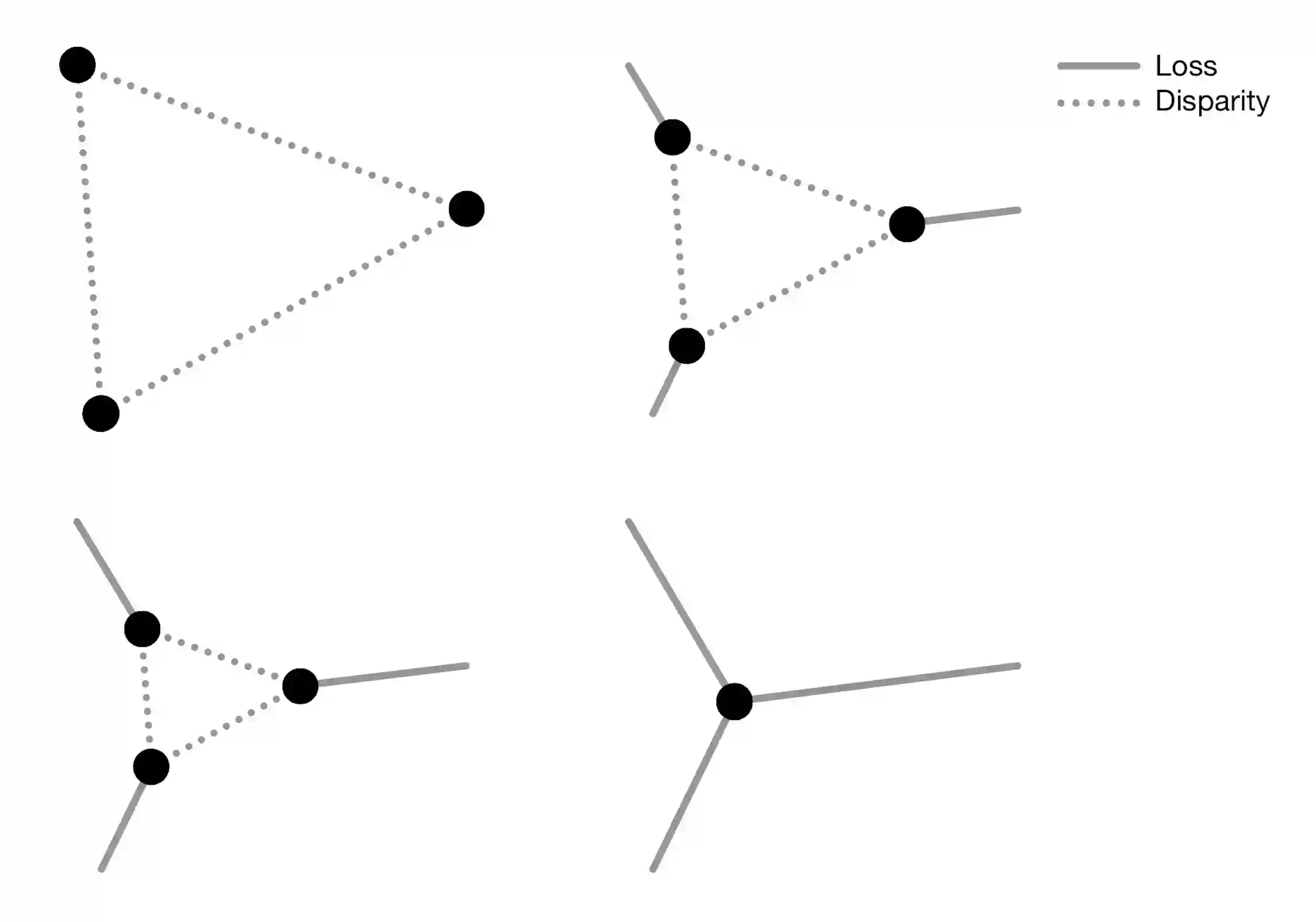
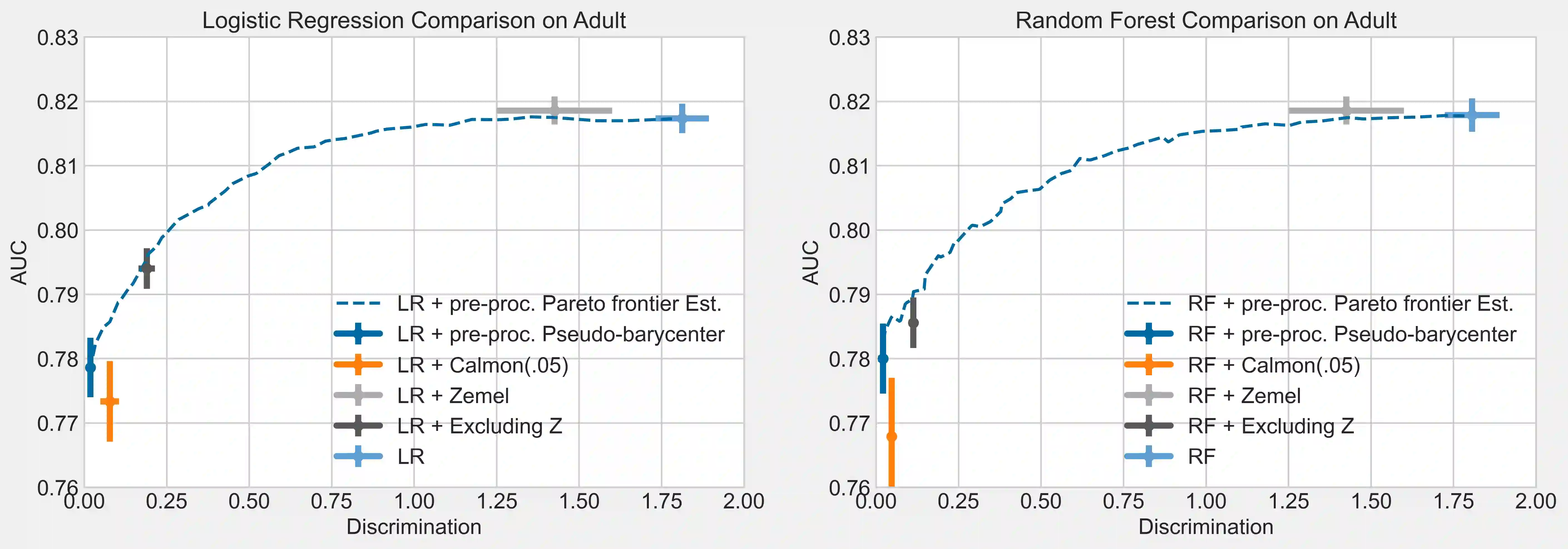
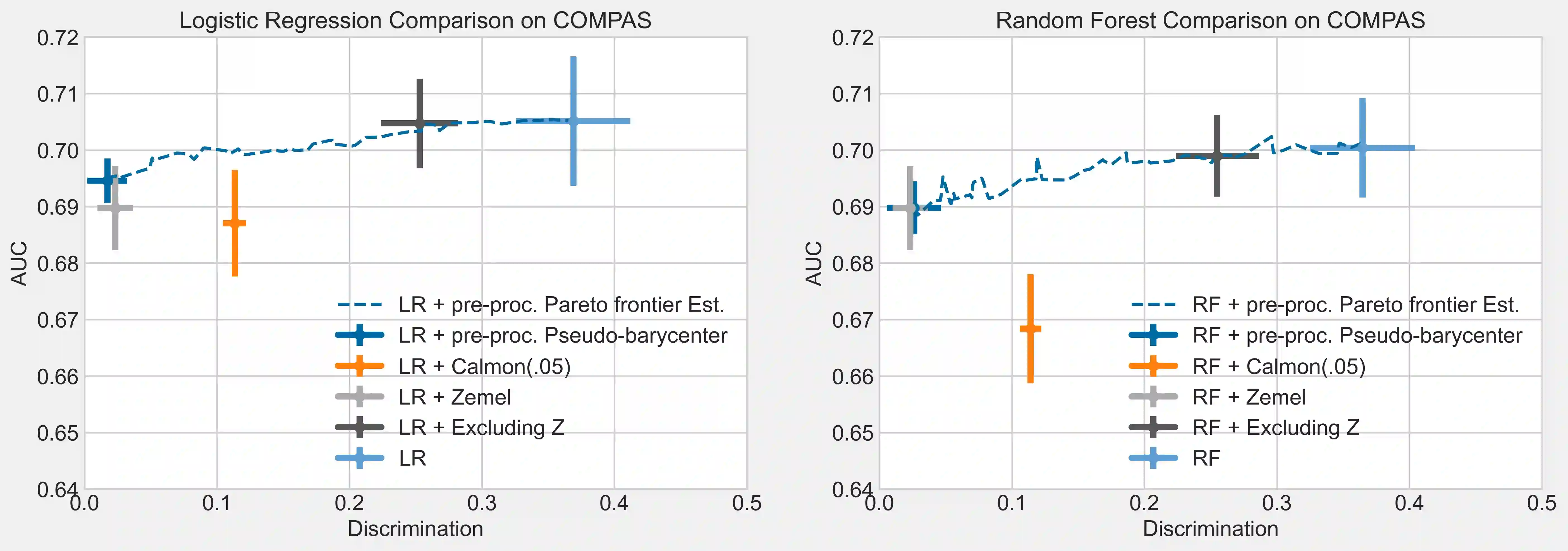
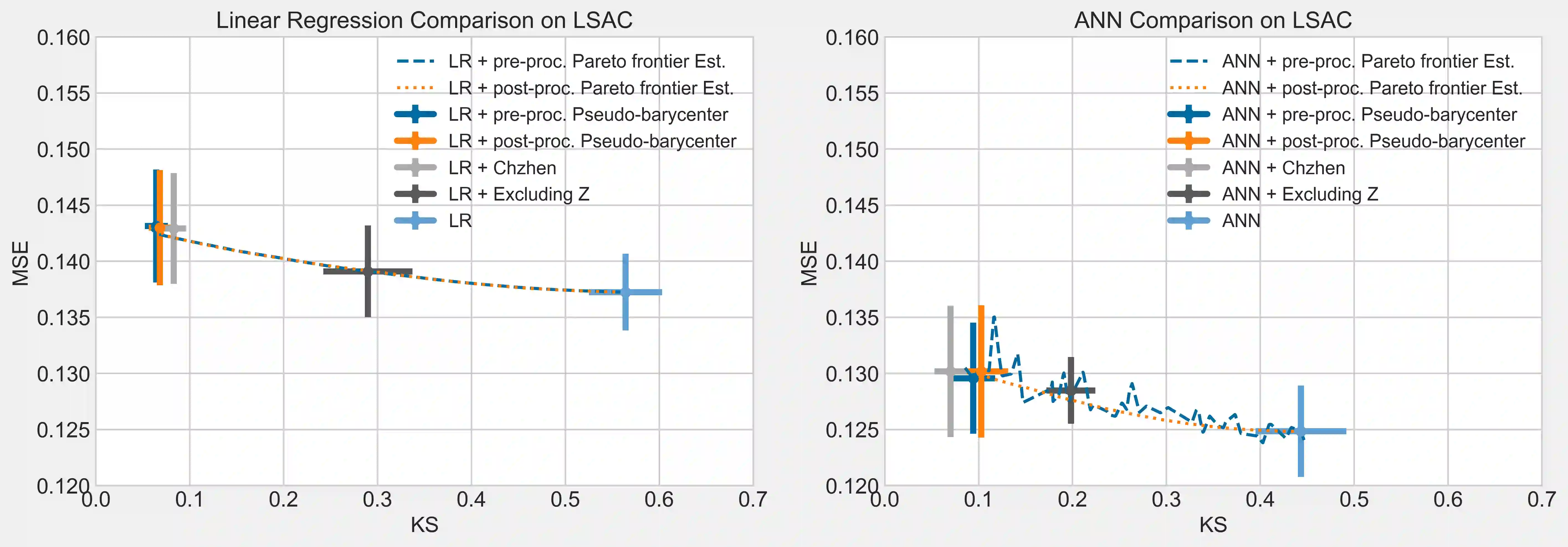
As machine learning powered decision-making becomes increasingly important in our daily lives, it is imperative to strive for fairness in the underlying data processing. We propose a pre-processing algorithm for fair data representation via which supervised learning results in estimations of the Pareto frontier between prediction error and statistical disparity. Particularly, the present work applies the optimal affine transport to approach the post-processing Wasserstein-2 barycenter characterization of the optimal fair $L^2$-objective supervised learning via a pre-processing data deformation. Furthermore, we show that the Wasserstein-2 geodesics from the conditional (on sensitive information) distributions of the learning outcome to their barycenter characterizes the Pareto frontier between $L^2$-loss and the average pairwise Wasserstein-2 distance among sensitive groups on the learning outcome. Numerical simulations underscore the advantages: (1) the pre-processing step is compositive with arbitrary conditional expectation estimation supervised learning methods and unseen data; (2) the fair representation protects the sensitive information by limiting the inference capability of the remaining data with respect to the sensitive data; (3) the optimal affine maps are computationally efficient even for high-dimensional data.
翻译:随着机器学习驱动的决策在日常生活日益重要,确保底层数据处理的公平性势在必行。我们提出一种用于公平数据表示的预处理算法,通过该算法进行监督学习可估计预测误差与统计差异之间的Pareto前沿。具体而言,本工作应用最优仿射传输逼近最优公平$L^2$目标监督学习经预处理数据形变后的后处理Wasserstein-2重心表征。进一步表明,学习结果条件(基于敏感信息)分布到其重心的Wasserstein-2测地线刻画了$L^2$损失与敏感群体间学习结果平均成对Wasserstein-2距离的Pareto前沿。数值模拟凸显优势:(1)预处理步骤可与任意条件期望估计监督学习方法及未见数据复合使用;(2)公平表示通过限制剩余数据对敏感数据的推理能力保护敏感信息;(3)最优仿射映射即使对高维数据也具有计算高效性。




相关内容





 微信扫码咨询专知VIP会员