

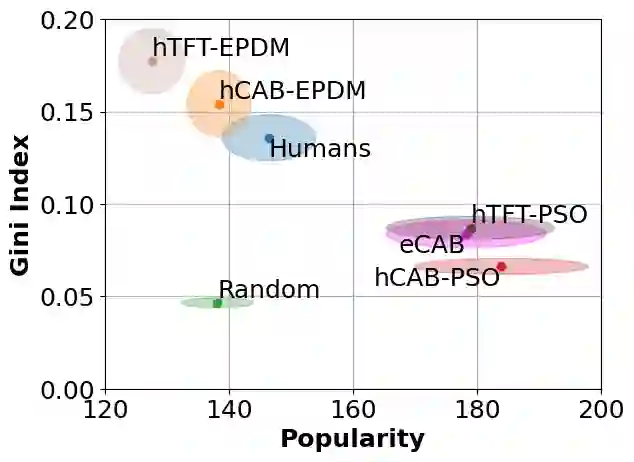
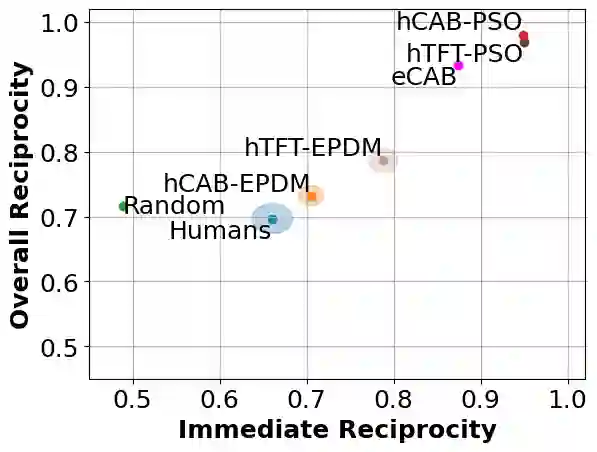
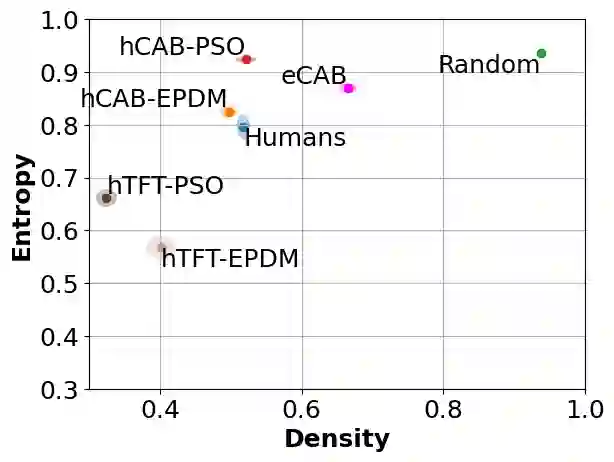
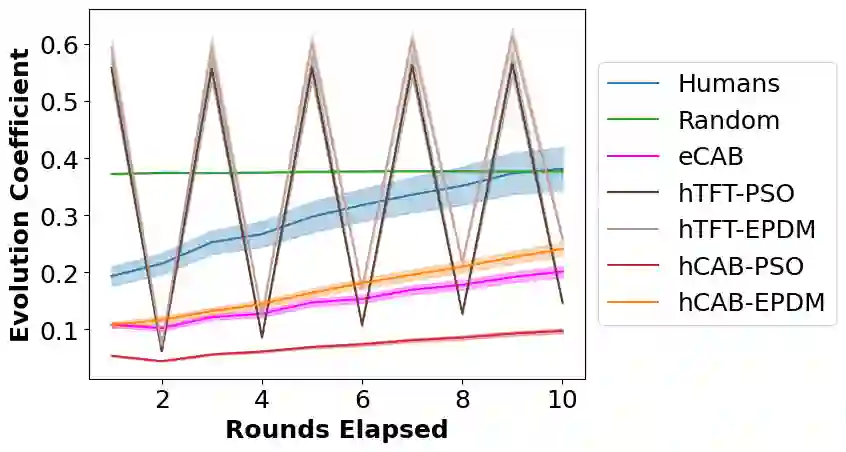
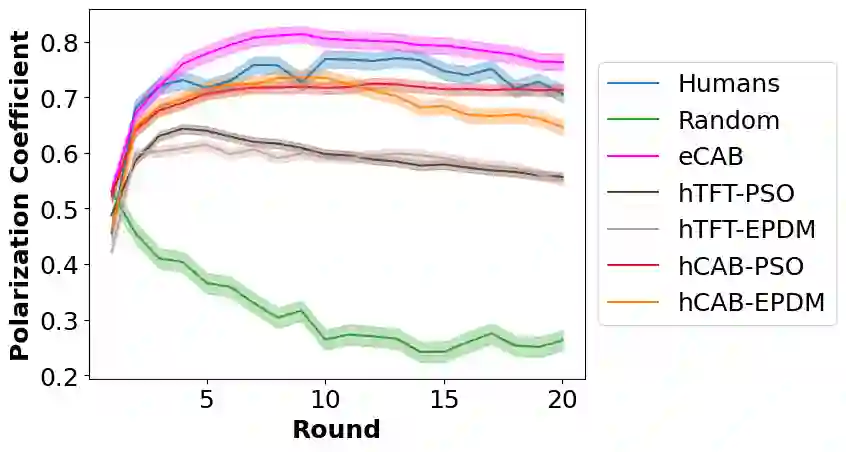
Human networks greatly impact important societal outcomes, including wealth and health inequality, poverty, and bullying. As such, understanding human networks is critical to learning how to promote favorable societal outcomes. As a step toward better understanding human networks, we compare and contrast several methods for learning models of human behavior in a strategic network game called the Junior High Game (JHG) [39]. These modeling methods differ with respect to the assumptions they use to parameterize human behavior (behavior matching vs. community-aware behavior) and the moments they model (mean vs. distribution). Results show that the highest-performing method, called hCAB, models the distribution of human behavior rather than the mean and assumes humans use community-aware behavior rather than behavior matching. When applied to small societies, the hCAB model closely mirrors the population dynamics of human groups (with notable differences). Additionally, in a user study, human participants had difficulty distinguishing hCAB agents from other humans, thus illustrating that the hCAB model also produces plausible (individual) behavior in this strategic network game.
翻译:人类网络对重要的社会结果(包括财富与健康不平等、贫困及欺凌现象)具有深远影响。因此,理解人类网络对于学习如何促进有利的社会结果至关重要。作为深入理解人类网络的初步探索,我们在名为"初中生博弈"(Junior High Game, JHG)[39]的战略网络游戏中,对几种学习人类行为模型的方法进行了比较与对比。这些建模方法在参数化人类行为所依据的假设(行为模仿 vs. 社区感知行为)以及所建模的矩(均值 vs. 分布)方面存在差异。结果表明,性能最优的方法(称为hCAB)建模的是人类行为的分布而非均值,并假设人类采用社区感知行为而非行为模仿。当应用于小型社会时,hCAB模型能紧密反映人类群体的群体动态(存在显著差异)。此外,在一项用户研究中,人类参与者难以区分hCAB智能体与其他人类参与者,这证明hCAB模型在该战略网络博弈中也能产生可信的(个体)行为。




相关内容


 微信扫码咨询专知VIP会员