

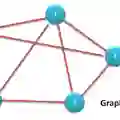
We introduce a model involving two adversaries Buster and Fixer taking turns modifying a connected graph, where each round consists of Buster deleting a subset of edges and Fixer responding by adding edges from a finite reserve set of weighted edges to leave the graph connected, with Buster limited by the total number of edges he is allowed to delete throughout the game. Fixer wins if she can reconnect the graph after Buster has reached his limit of edges to delete, while Buster wins if he can delete edges in such a way that Fixer cannot reconnect the graph using the remaining edges in reserve. With the weights representing the cost for Fixer to use specific reserve edges to reconnect the graph, we prove that a greedy strategy for Fixer always results in an optimal result for Fixer: victory, if possible, for as cheaply as can be guaranteed against any Buster strategy, and if defeat cannot be avoided, the cheapest possible loss that can be guaranteed against any Buster strategy.
翻译:我们提出一个涉及两个对抗者Buster和Fixer的模型,双方轮流修改连通图。每轮博弈中,Buster删除边子集,Fixer则通过有限储备加权边集添加边以保持图连通,且Buster在整个游戏中可删除的边总数受到限制。当Buster达到其删除边数上限时,若Fixer能重连图则获胜,反之若Buster能以某种方式删除边使得Fixer无法利用储备边重连图则Buster获胜。通过设定权重表示Fixer使用特定储备边重连图的成本,我们证明Fixer的贪心策略总能达到最优结果:若存在获胜可能,则能以对抗任何Buster策略时所能保证的最小代价获胜;若失败不可避免,则能保证对抗任何Buster策略时实现最低成本的失败。




相关内容

 微信扫码咨询专知VIP会员